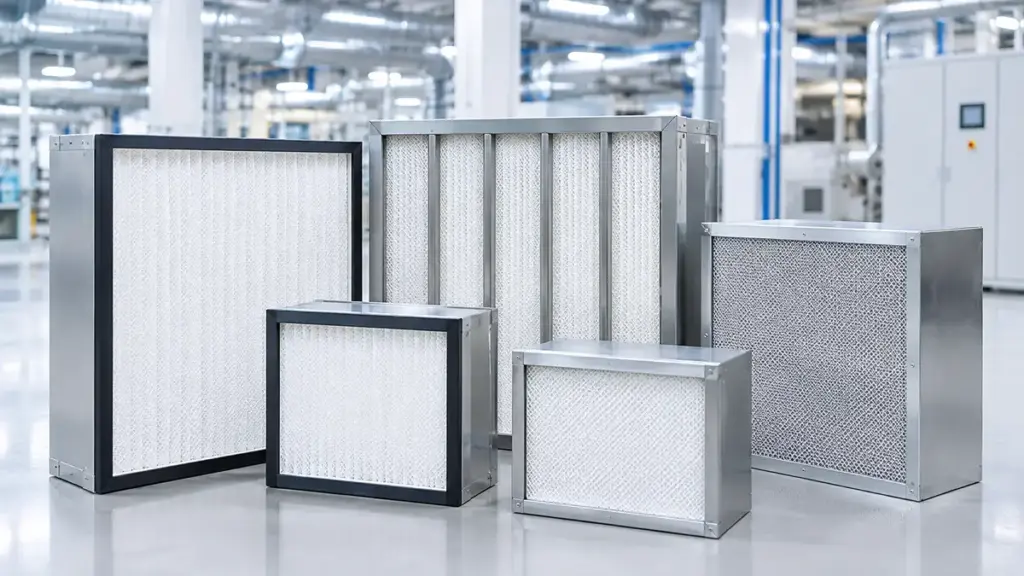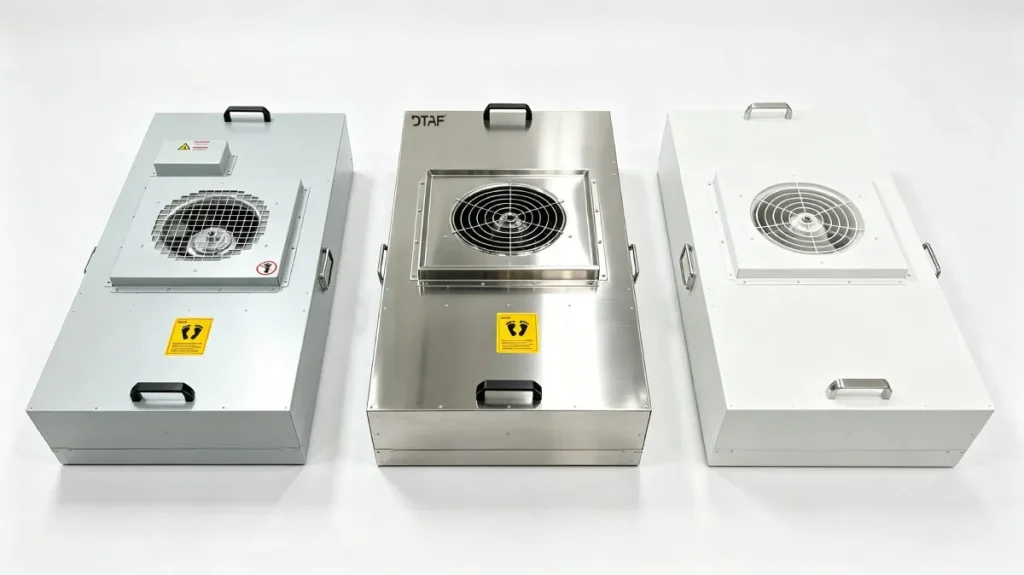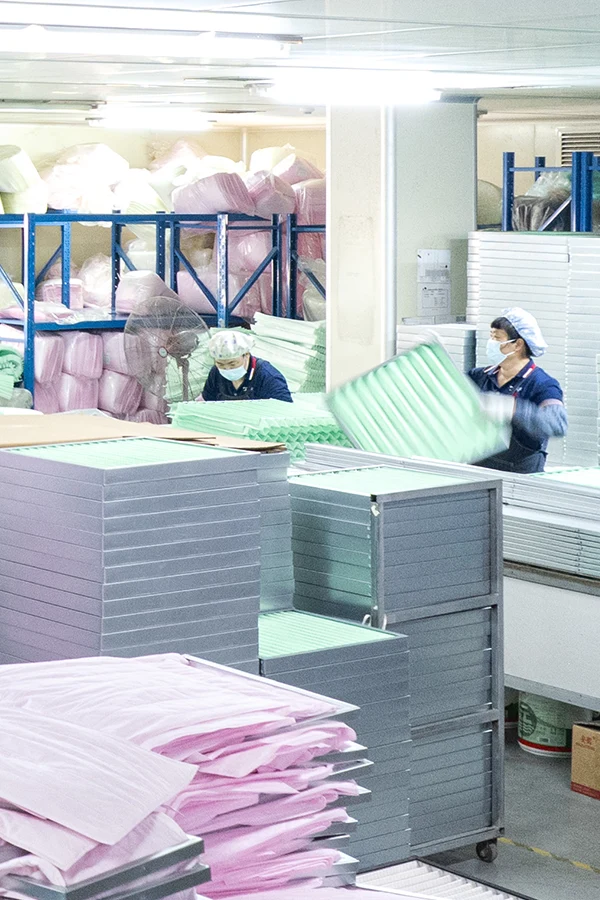
HEPA and ULPA filters both remove airborne particles, but they are designed for different levels of contamination control. HEPA filters are suitable for most cleanroom and HVAC applications, while ULPA filters are used for environments that require higher filtration efficiency.
FILE DTA provides customized HEPA and ULPA filter solutions for cleanrooms, industrial facilities, and specialized filtration systems. This guide compares their efficiency, gradi, applicazioni, and selection factors to help you choose the right filter.
What Are HEPA and ULPA Filters?
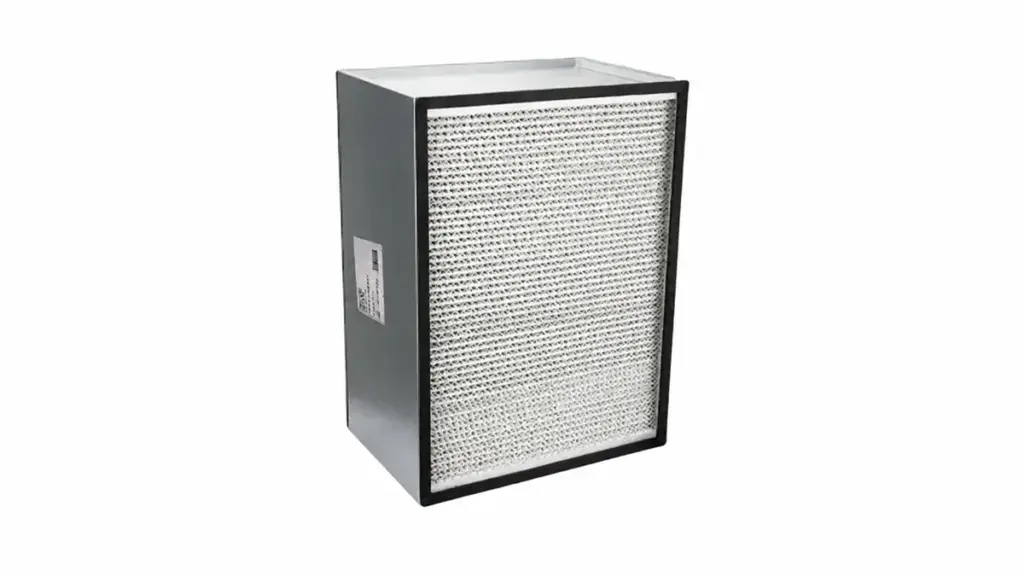
HEPA filters balance performance and cost for most cleanrooms, while ULPA filters provide extreme filtration for sensitive processes at a higher operational cost.
HEPA (High-Efficiency Particulate Air) Filters
HEPA filters are the standard choice for high-efficiency air filtration. They are designed to capture at least 99.97% of particles at 0.3 µm, providing reliable contamination control for most cleanroom and HVAC applications.
Commonly used in ISO Class 5–8 cleanrooms, HEPA filters offer a practical balance between filtration efficiency, airflow resistance, and operating cost. They are widely applied in pharmaceutical manufacturing, healthcare facilities, laboratories, and general industrial environments.
COLLERA (Ultra-Low Penetration Air) Filters
ULPA filters provide a higher level of particle removal for applications requiring extreme cleanliness. They can capture at least 99.999% of particles around 0.12 µm, making them suitable for environments where even trace contamination can affect product quality.
These filters are mainly used in ISO Class 3–4 cleanrooms, including semiconductor manufacturing, advanced electronics, and other ultra-critical processes.
HEPA vs ULPA: What Are the Main Differences?
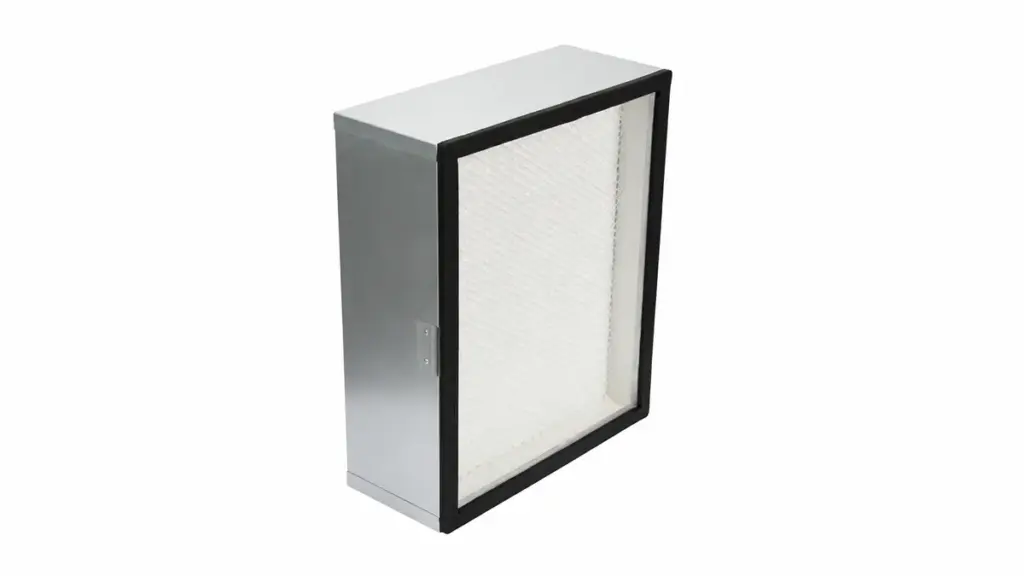
The choice between HEPA and ULPA filters is a direct trade-off: ULPA offers higher efficiency for smaller particles but at a significant cost to airflow, energy, and budget.
How Do HEPA and ULPA Filters Work?
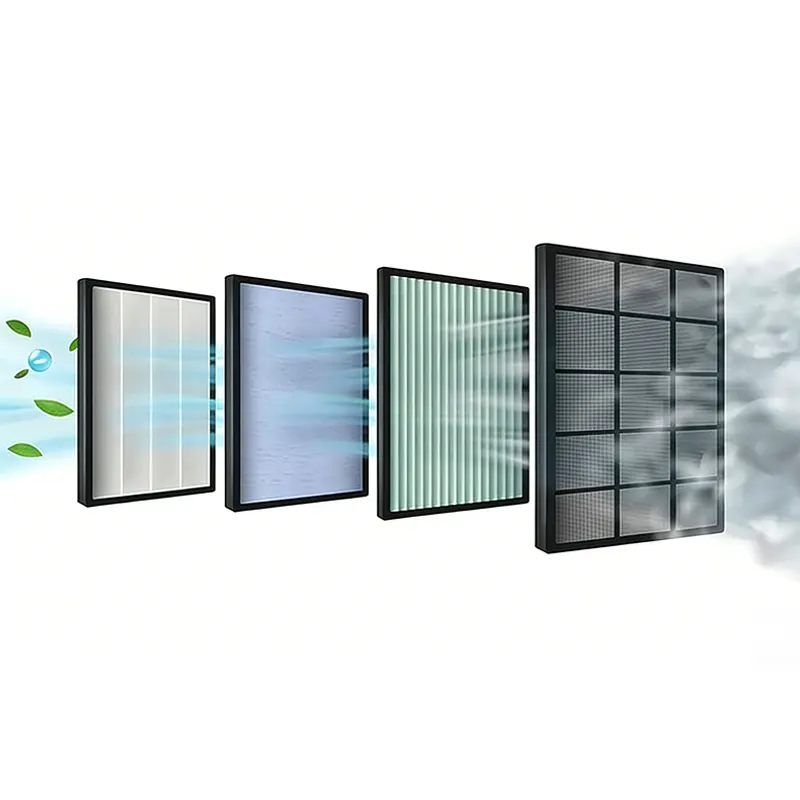
These filters are not simple sieves. They use a chaotic maze of fibers to physically capture particles of all sizes through a combination of impaction, interception, and diffusion.
The Three Core Particle Capture Mechanisms
HEPA and ULPA filters do not work like simple sieves. They capture airborne particles through three main mechanisms:
- Inertial Impaction: Larger particles cannot follow airflow changes and collide with filter fibers, where they are trapped.
- Interception: Medium-sized particles follow airflow paths and are captured when they contact fiber surfaces.
- Diffusion: Ultrafine particles move randomly due to Brownian motion, increasing the chance of contact with fibers.
Understanding the Most Penetrating Particle Size (MPPS)
Filter efficiency reaches its lowest point at the Most Penetrating Particle Size (MPPS), typically around 0.1–0.3 µm for HEPA filters. This is why filters are tested at their MPPS to verify worst-case performance.
Particles larger than the MPPS are mainly captured through impaction and interception, while smaller particles are captured through diffusion. ULPA filters achieve higher efficiency by optimizing the filter media structure to improve the capture of ultrafine particles.
Source Certified HEPA & ULPA Filters for Your Application
How Are HEPA and ULPA Efficiency Grades Classified?
HEPA and ULPA filter grades are classified by the EN 1822 standard, which evaluates performance based on worst-case efficiency at the Most Penetrating Particle Size (MPPS).
When a filter is labeled as H14 or U15, the classification represents a verified efficiency level defined by IN 1822, rather than a general marketing description. This standard specifies the classification, testing methods, and performance requirements for EPA, HEPA, and ULPA filters.
Which Filter Designs, Media, Frames, and Seals Are Available?
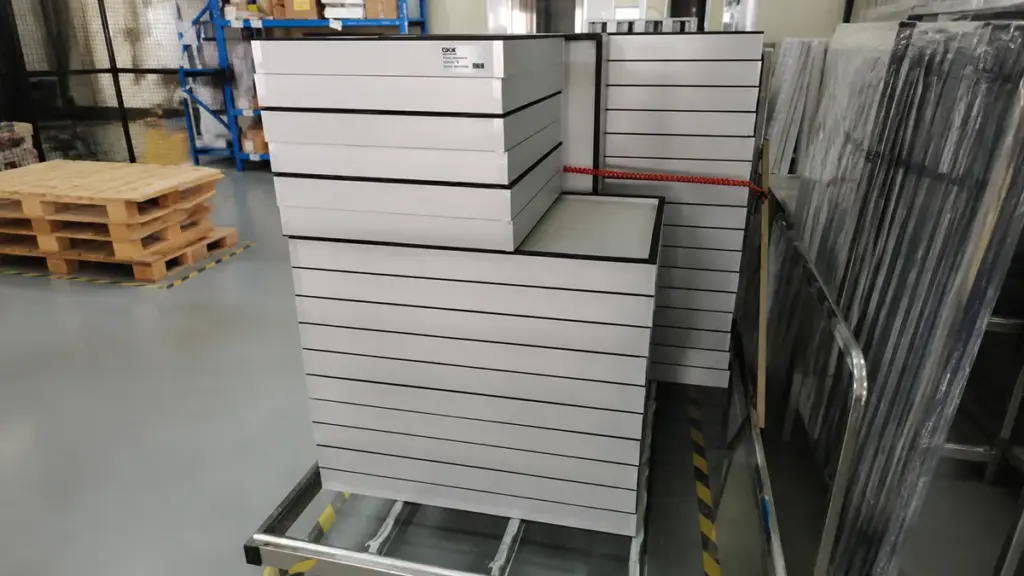
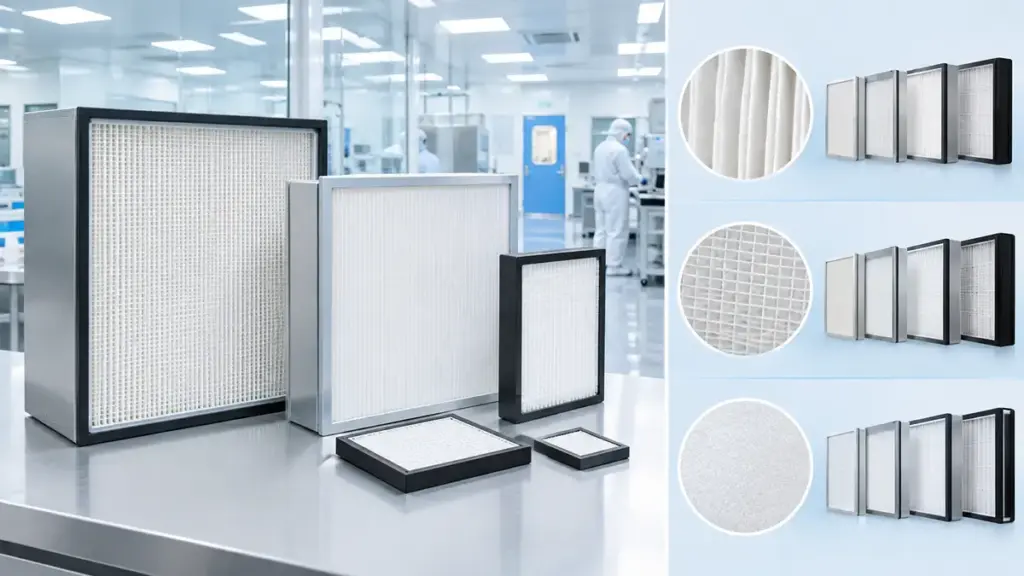
A filter’s performance depends on its physical construction. The design, media, frame, and seal must all match the specific demands of the application and environment.
Filter Designs and Geometries
Filter geometry affects airflow performance, installation compatibility, and overall system efficiency. Common HEPA and ULPA filter designs include:
- Box and cylindrical filters: Commonly used in terminal units, laminar flow equipment, and specialized air filtration systems.
- Pleated filters: Increase media surface area to achieve high filtration efficiency while maintaining reasonable airflow resistance.
- V-bank filters: Use multiple pleated filter packs arranged in a V-shape to handle high airflow volumes with lower pressure drop, making them suitable for large HVAC and cleanroom systems.
Filter Media Types and Materials
The filter media determines filtration efficiency, caduta di pressione, durability, and chemical resistance.
- Glass fiber media: A traditional choice for high-efficiency HEPA and ULPA filters, offering excellent particle capture but requiring careful handling due to its fragile structure.
- Synthetic and PTFE membrane media: Provide improved durability, moisture resistance, and lower pressure drop while maintaining high filtration efficiency, making them suitable for demanding environments.
Frame Constructions and Materials
The filter frame provides structural support and ensures proper installation within the housing. Common frame materials include:
- Galvanized steel: A cost-effective option for general applications.
- Alluminio: Lightweight and suitable where weight reduction is important.
- Stainless steel: Used in pharmaceutical, biotechnology, and other critical environments requiring corrosion resistance and frequent cleaning.
Frame designs may also include protective guards, internal supports, and specialized mounting features to improve durability and installation reliability.
Seal and Gasket Configurations
A reliable sealing system prevents air bypass and ensures the filter achieves its rated performance.
Common sealing options include:
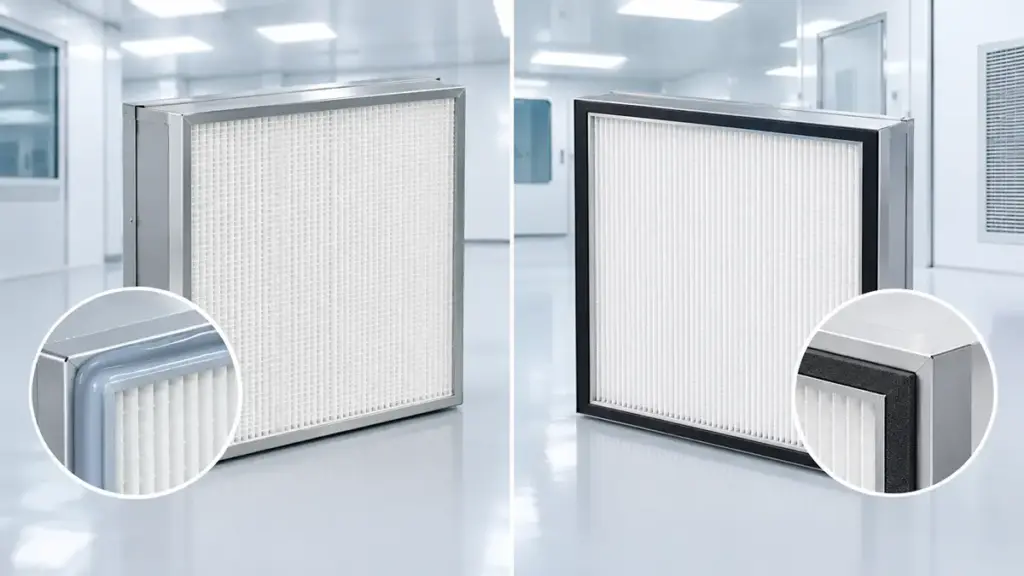
- Gel seal (knife-edge seal): Provides high leak integrity and is commonly used in critical cleanroom applications requiring strict contamination control.
- Compression gasket seals: Made from materials such as neoprene, EPDM, or silicone, offering a practical and cost-effective solution for general HEPA installations.
The choice between gel seals and gasket seals depends on application requirements, installation conditions, and whether in-situ leak testing is required.
Where Are HEPA and ULPA Filters Used?
HEPA filters are workhorses in healthcare, industry, and homes. ULPA filters are reserved for ultra-critical applications like advanced semiconductor manufacturing where near-perfect particle removal is mandatory.
The applications for high-efficiency filters are vast, but the choice between HEPA and ULPA is driven entirely by the level of contamination control required. One is a versatile standard, the other is a specialized tool.
HEPA filters are widely used in healthcare, pharmaceutical manufacturing, electronics, laboratories, and other environments where airborne particle control is required. For applications involving elevated operating temperatures, high temperature HEPA filters are designed with specialized materials and construction to maintain filtration performance under demanding conditions.
How to Select and Specify the Right Filter
Proper filter selection isn’t just about efficiency. It requires matching filter grade and pressure drop to your cleanroom class, HVAC limits, and total lifecycle costs.
| Selection Stage | Key Specification Actions |
|---|---|
Assess Cleanliness Requirements and Process Risk |
|
Evaluate HVAC System Compatibility and Constraints |
|
Define Critical Parameters in the Specification |
|
Plan for Lifecycle Cost and Ongoing Validation |
|
Testing, Manutenzione, and Custom Procurement
A filter’s lifecycle is a closed loop. Test standards dictate procurement, and factory data sets the baseline for maintenance, ensuring long-term system reliability and controlled costs.
Filter Testing and CeCertification and Testing
The performance of HEPA and ULPA filters must be verified through standardized testing rather than relying on manufacturer claims. Filters are tested both before shipment and after installation to confirm filtration efficiency and structural integrity.
Key testing standards include IN 1822, ISO 29463, and IEST Recommended Practices (RPs), which define filter classification and testing procedures.
The main verification methods include:
- Leak testing: Detects defects such as damaged media, pinholes, or seal failures.
- Efficiency testing: Measures particle removal performance at the filter’s Most Penetrating Particle Size (MPPS).
Per applicazioni critiche, each filter should be supplied with an individual test certificate showing its measured efficiency, caduta di pressione, airflow rating, e i risultati dei test di tenuta.
Routine Maintenance and Replacement
HEPA and ULPA filter performance gradually decreases as particles accumulate. Regular monitoring and timely replacement help maintain system efficiency and prevent contamination risks.
Maintenance programs typically include:
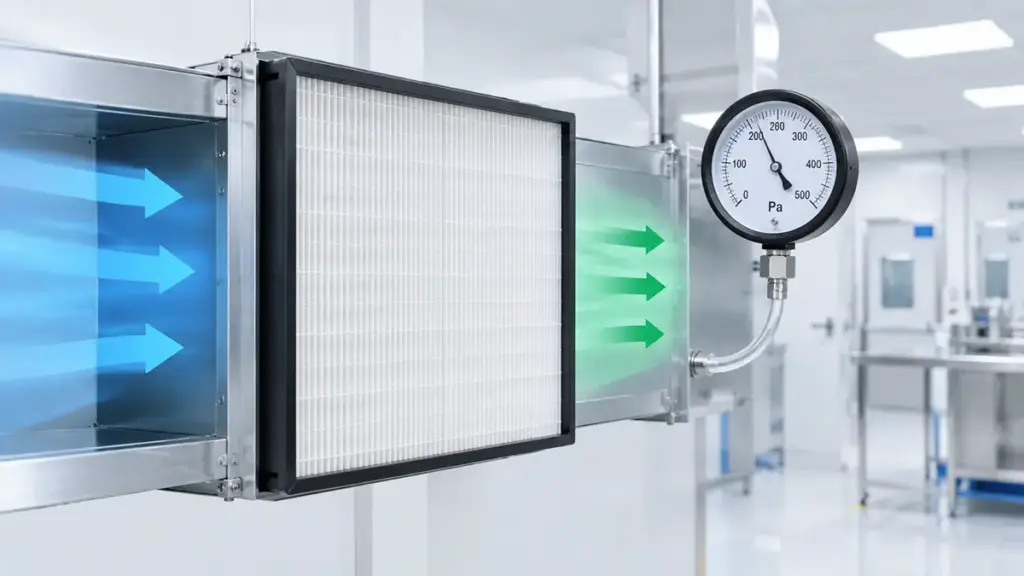
- Monitoring differential pressure (ΔP) to track filter loading.
- Inspecting filter media, frames, and seals for damage.
- Performing periodic in-situ leak tests to verify installed filter integrity.
Filters should generally be replaced when:
- They fail an in-situ leak test.
- Pressure drop exceeds the recommended limit.
- The filter shows physical or chemical damage.
Custom Procurement Specifications
Selecting high-efficiency filters requires detailed technical specifications rather than a basic purchase order. Procurement documents should clearly define:
- Filter efficiency class (such as H14 or U15)
- Required airflow capacity
- Filter dimensions and housing compatibility
- Suitable materials for the operating environment
Per applicazioni critiche, the purchase specification should require individual factory testing and certification before shipment. Additional requirements may include low-outgassing materials for semiconductor applications, chemical-resistant components for pharmaceutical environments, or high-temperature construction for industrial processes.
Domande frequenti
What is the difference between HEPA and ULPA filters?
The primary difference is filtration efficiency for very small particles. HEPA filters capture at least 99.97% Di 0.3 µm particles. ULPA filters are more efficient, capturing at least 99.999% of even smaller particles around 0.12 µm. This higher performance comes at the cost of increased pressure drop, higher price, and a shorter service life.
What efficiency grades are classified as HEPA and ULPA?
Under the EN 1822/ISO 29463 standard, filters are classified into different grades. HEPA filters correspond to classes H13 (Efficienza ≥99,95%.) e H14 (≥99.995%). ULPA filters are even more efficient, falling into classes U15 (≥99.9995%), U16, and U17. Lower efficiency filters (E10-E12) are considered EPA filters, not HEPA.
Is ULPA always better than HEPA for a cleanroom?
NO. ULPA filters provide higher filtration efficiency but also create greater airflow resistance and higher operating costs. HEPA filters are suitable for most cleanroom applications, while ULPA is mainly used for extremely critical environments such as semiconductor manufacturing.
Which industries typically require H13, H14, or ULPA filters?
H13 and H14 HEPA filters are widely used in healthcare, pharmaceutical manufacturing, and laboratory cleanrooms. H14 is suitable for more critical applications, while ULPA filters are mainly used in industries requiring the highest contamination control, such as semiconductor manufacturing and advanced electronics.
Considerazioni finali
HEPA and ULPA filters are not interchangeable. HEPA filters meet the needs of most cleanroom and HVAC applications, while ULPA filters are designed for ultra-critical environments where strict particle control is required.
The right choice depends on your cleanliness requirements, airflow system, e condizioni operative. Contact our engineering team for OEM filter specifications and customized filtration solutions.