Pocket filters are widely used in commercial HVAC systems, air handling units (UTA) and industrial ventilation systems. Their multi-pocket design provides a large filtration area within a relatively compact frame, making them a practical choice for handling substantial volumes of air. DTAF offers a range of pocket air filters for commercial and industrial HVAC applications, with different filter media, efficiency grades and custom configurations available.
Tuttavia, choosing a pocket filter involves more than selecting an efficiency grade. Dimensioni, pocket configuration, flusso d'aria, pressure drop and the existing filter installation all affect performance.
This guide covers the main factors to consider when selecting a pocket filter, including traditional F5–F9 grades, common applications and replacement requirements.
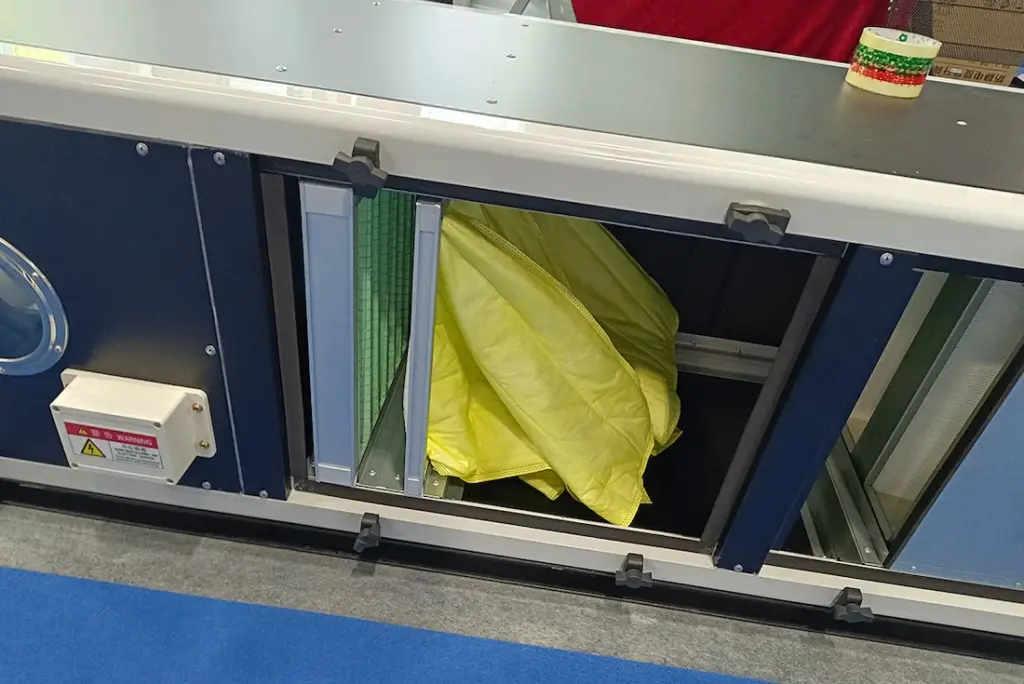
What Is a Pocket Filter?
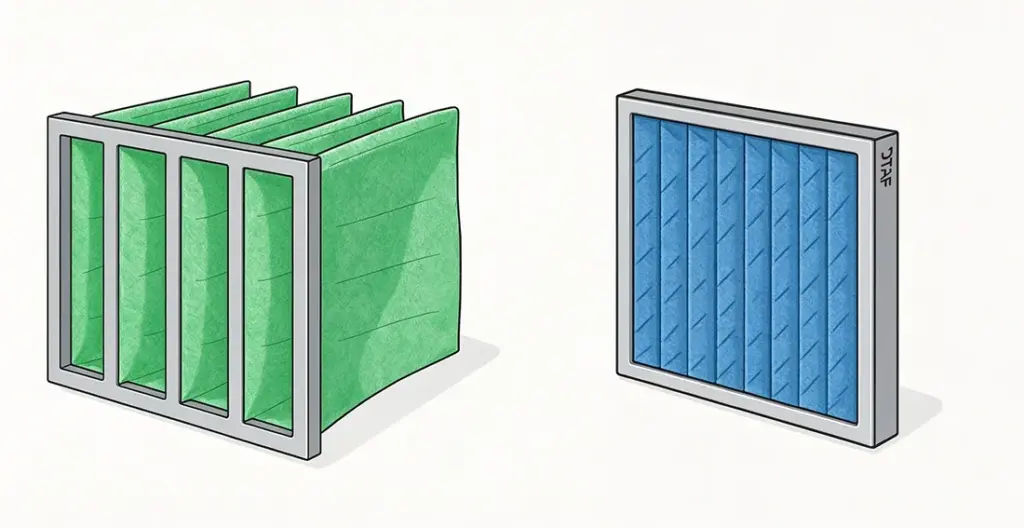
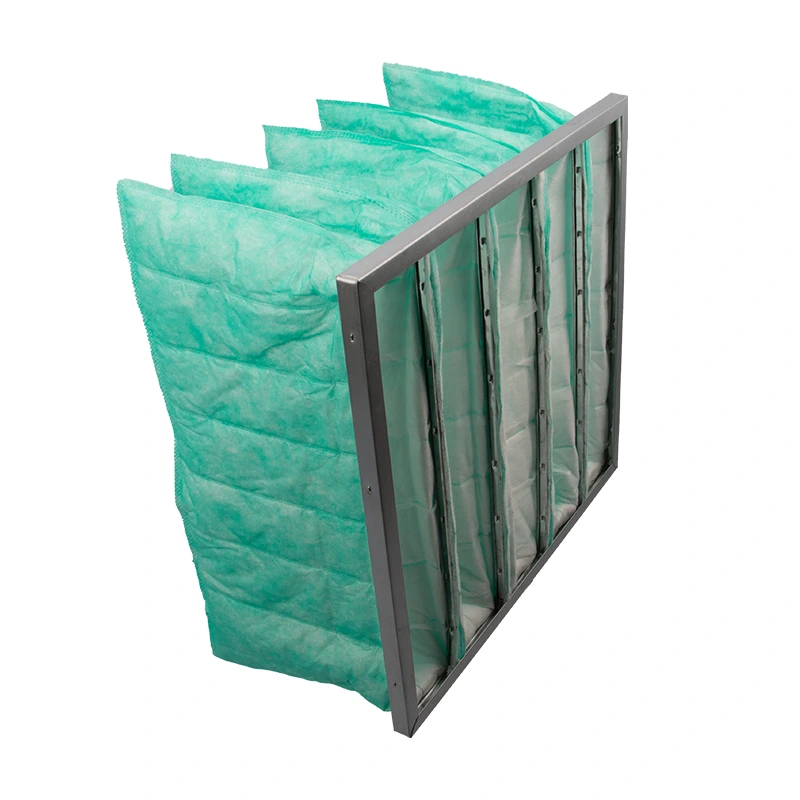
A pocket filter, also called a bag filter, is an air filter made with multiple fabric-like pockets attached to a supporting frame. As air passes through the filter media, airborne particles are captured within the material.
Compared with flat panel filters, the pockets provide a larger effective filtration area within the same front-facing dimensions. This design makes pocket filters suitable for HVAC systems that require continuous airflow and relatively high dust-holding capacity.
Pocket filters are commonly installed in air handling units, commercial ventilation equipment and industrial air filtration systems. A seconda del design del sistema, they may serve as intermediate filters or as part of a multi-stage filtration arrangement.
The filter media, pocket depth and number of pockets can vary according to the required performance and available installation space.
F5, F6, F7, F8 and F9 Pocket Filter Grades
F5, F6, F7, F8, F9 are traditional filter classifications under the former EN 779 standard. These designations are still commonly found in existing equipment specifications and replacement filter requirements.
The appropriate grade depends on the air quality target, the filtration stages already installed and the operating conditions of the HVAC system.
| Traditional grade | Typical selection consideration |
|---|---|
| F5 | Lower-grade filtration requirements in systems using legacy specifications |
| F6 | General ventilation applications requiring a higher filtration level than F5 |
| F7 | Commonly specified for commercial HVAC and AHU filtration |
| F8 | Applications requiring a higher level of filtration under legacy specifications |
| F9 | Applications with more demanding filtration requirements under legacy specifications |
These descriptions are general selection guidance, not a guarantee of a particular particle removal efficiency or a universal application assignment. Actual performance depends on the applicable test standard and the filter’s test results.
IN 779 has been superseded by ISO 16890. The old F5–F9 classifications should not be converted directly into specific ISO 16890 ePM classes without supporting test data.
When ordering replacement filters, check the original equipment specifications and confirm the required classification with the supplier.
How to Choose the Right Pocket Filter
A filter that fits the frame may still be unsuitable for the system. Before placing an order, check the following factors.
| Selection factor | What to check | Why it matters |
|---|---|---|
| Filter grade | Required efficiency and test standard | Helps match the filtration target |
| Dimensioni | Width, height and depth | Ensures a proper fit in the filter housing |
| Pocket configuration | Number and length of pockets | Affects filtration area and installation clearance |
| Flusso d'aria | Required operating airflow | Helps ensure the filter suits the system’s operating conditions |
| Pressure drop | Initial pressure drop at the specified airflow | Affects fan energy use and system resistance |
| Mezzi filtranti | F5,F6,F7,F8,F9 Non-woven fabric or other specified media | Influences filtration performance and application suitability |
| Telaio | Galvanized steel,Aluminum frame, plastic frame | Must be compatible with the housing and operating environment |
Airflow and pressure drop deserve particular attention. A filter should be evaluated at the airflow it is expected to handle, rather than by efficiency grade alone. Higher resistance can increase the energy required to move air, while a poorly matched filter may affect the overall system’s operating performance.
It is also worth checking the available depth before selecting a pocket design. The pockets need enough space to remain properly positioned without obstructing one another or interfering with nearby components.
Pocket Filter vs. Filtro a pannello pieghettato
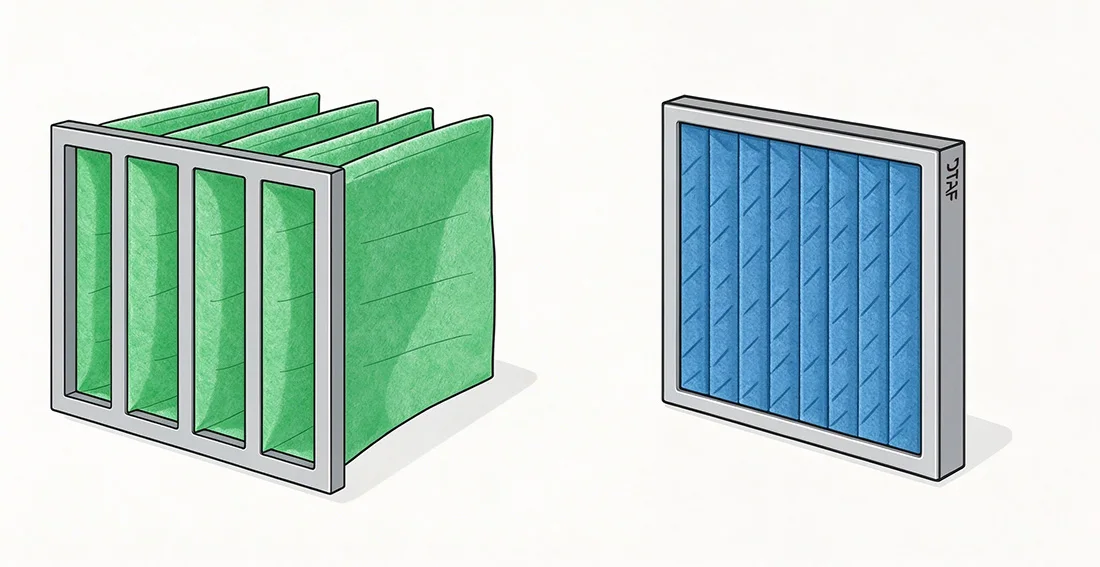
Pocket filters and pleated panel filters are both used in HVAC systems, but their designs serve different installation and operating needs.
| Caratteristica | Pocket filter | Pleated panel filter |
|---|---|---|
| Progetto | Multiple extended pockets | Pleated media within a shallow frame |
| Installation depth | Generally greater | Generally shallower |
| Filtration area | Provided by the extended pockets | Provided by the pleated media |
| Typical application | AHUs and larger ventilation systems | Compact filter sections and space-limited systems |
| Replacement considerations | Pocket length, bag count and frame size | Panel dimensions, depth and frame compatibility |
Neither design is automatically better for every application. A pocket filter may be suitable where a larger filtration area and extended filter depth are available. A pleated panel filter may be more practical where installation space is limited.
Before switching between the two, confirm the housing dimensions, requisiti del flusso d'aria, pressure drop and equipment manufacturer’s specifications. The replacement should suit the system rather than simply fit into the opening.
Pocket Filters for AHU and Industrial HVAC Applications
Pocket filters are used in commercial buildings, factories, hospitals and other facilities with mechanical ventilation systems. Their role depends on the overall filtration design and the air quality requirements of the application.
In an AHU, a pocket filter may be installed after a pre-filter to capture additional airborne particles before the air reaches downstream equipment. Some systems also include higher-efficiency filters where the application requires them.
For industrial ventilation, the choice of filter media and grade should reflect the type and concentration of airborne contaminants, the operating airflow and the surrounding environment.
A suitable filtration arrangement can help maintain air cleanliness and protect downstream components. Tuttavia, the required filter grade and replacement interval should be determined from the system design and operating conditions, not from the application name alone.
How to Order the Right Replacement Pocket Filter
When replacing an existing filter, providing accurate specifications helps avoid fitting problems and unnecessary delays.
If possible, prepare the following information before requesting a quotation:
- Dimensioni: Width × height × depth of the complete filter.
- Filter grade: The specified grade and applicable test standard.
- Pocket details: Number of pockets and pocket length.
- Operating conditions: Required airflow and available pressure-drop information.
- Construction: Mezzi filtranti, frame material and any sealing requirements.
- Quantity: Required quantity and whether the order will be repeated.
If the original specifications are unavailable, photos of the existing filter and its product label can help the supplier identify a possible replacement. Final compatibility should still be confirmed against the actual dimensions and operating requirements.
For custom orders, confirm the drawing, tolerances, filter construction and performance requirements before production.
Explore DTAF Pocket Filters for HVAC Systems
Whether you need replacement filters or custom specifications, our team can help you identify a suitable option based on your required dimensions, filter grade and airflow conditions.
Domande frequenti
1. What is the difference between F5, F6, F7, F8 and F9 pocket filters?
F5 to F9 are filter efficiency classifications under the former EN 779 standard. In general, higher grades indicate better filtration performance, but the right choice depends on the required air quality, airflow resistance and HVAC system design. IN 779 has been superseded by ISO 16890, so check the relevant test standard and product specifications when comparing filters.
2. How often should pocket filters be replaced?
TThe replacement interval depends on dust concentration, operating hours, airflow and the filter’s pressure drop. Instead of following a fixed schedule alone, monitor the differential pressure across the filter and replace it when it reaches the manufacturer’s recommended final resistance or the HVAC system’s specified limit.
3. How do I choose the right pocket filter for an AHU?
To select a suitable pocket filter for an air handling unit (UTA), check the required dimensions, filtration grade, airflow rate, caduta di pressione iniziale, pocket depth and frame material. You should also consider the operating environment and the specifications of the existing filter. For a replacement, providing the original filter’s dimensions and technical data can help ensure compatibility.
Pocket Filter Solutions from DTAF
DTAF supplies air filtration products for commercial and industrial applications. When selecting a pocket filter, provide your required grade, dimensioni, airflow and installation details so the product can be matched to your system requirements.
For replacement projects or custom specifications, contact DTAF with your existing filter details to discuss a suitable solution.