Vai al contenuto
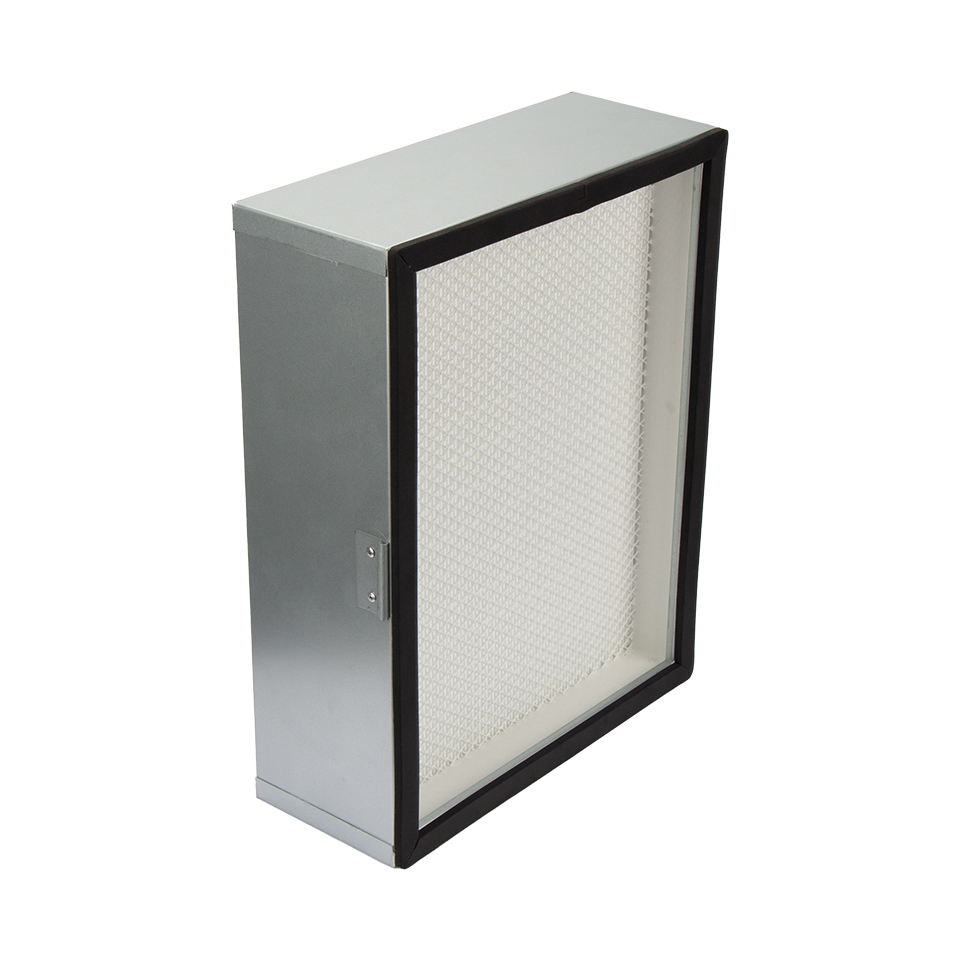
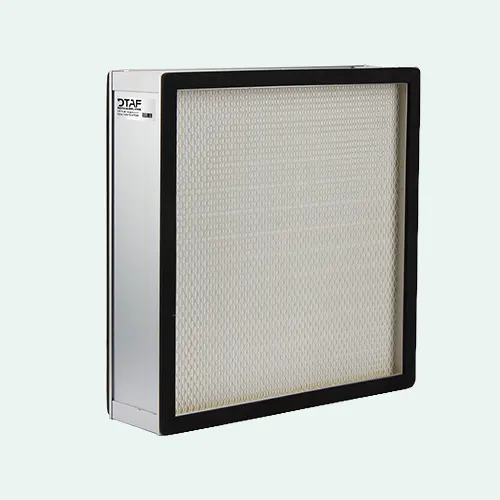
High temperature HEPA filters are used in processes that require clean air control under elevated temperatures, including pharmaceutical depyrogenation tunnels, industrial ovens, and high-temperature clean air systems. Unlike standard HEPA filters, they use heat-resistant materials to maintain filtration performance and structural stability in demanding environments.
This guide explains how high temperature HEPA filters work, which components affect temperature resistance, where they are used, and how to select the right filter for different operating conditions.
DTAFIL provides customized high temperature HEPA filter solutions with different materials, frame designs, and temperature ratings to meet specific industrial requirements.
What Is a High Temperature HEPA Filter?
Defining High-Temperature HEPA Filtration
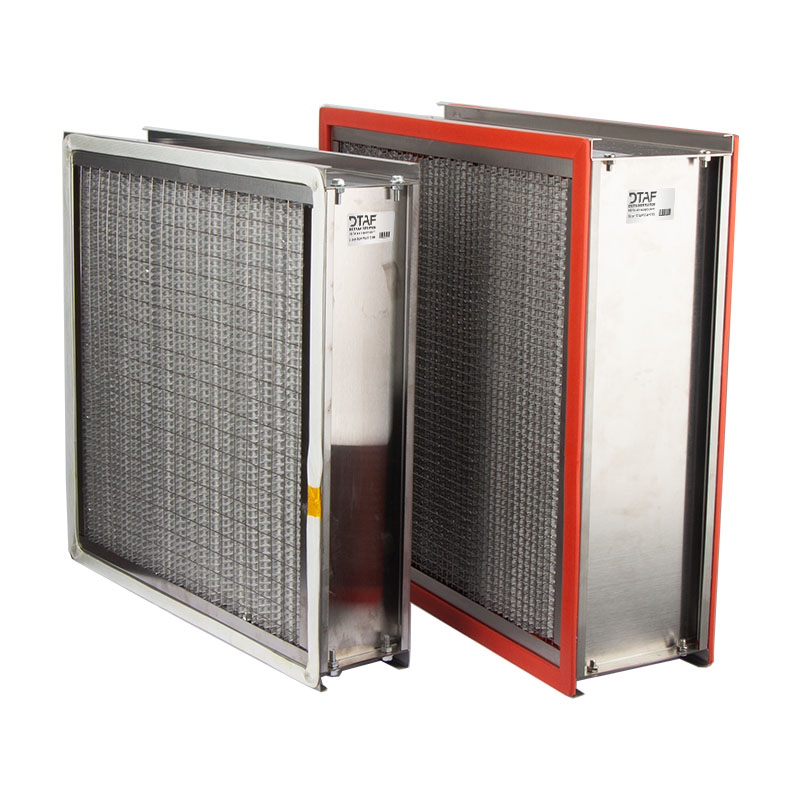
A high temperature HEPA filter delivers its high-efficiency performance at sustained temperatures above 120 °C (250 °F). Depending on construction materials, specialized models can be designed for applications ranging from approximately 250°C to over 500°C.
Specialized Construction for Thermal Stability
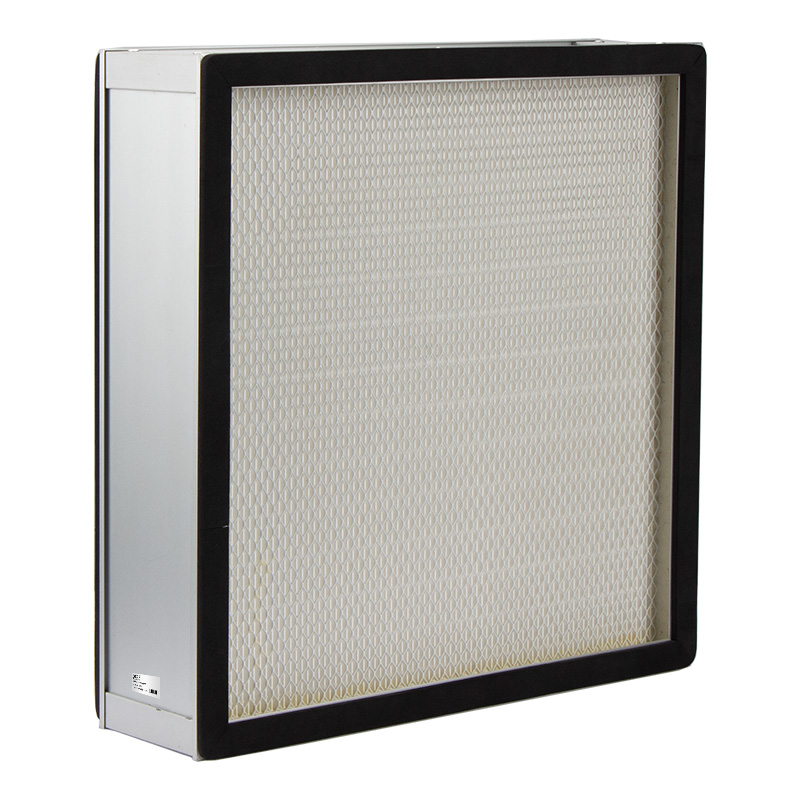
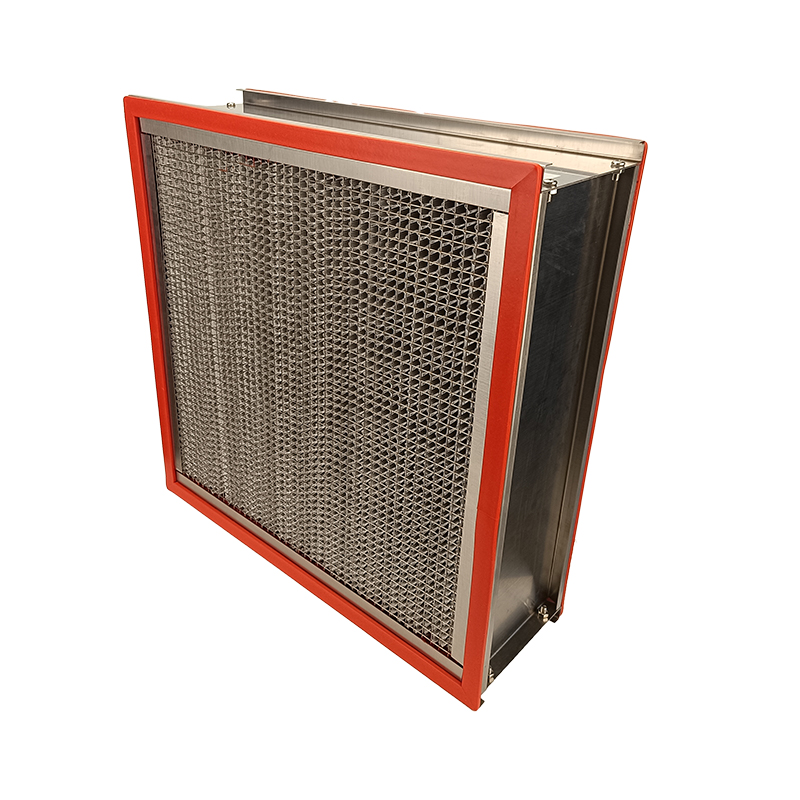
The filter’s ability to withstand extreme heat comes from its robust construction. The filter media consists of heat-resistant borosilicate glass fibers, which are pleated to handle thermal stress without damage. Instead of polymeric seals that would melt or degrade, these filters use high-temperature silicone, ceramic-based sealants, or specialty epoxies to bond the media pack into the frame. The frames themselves are constructed from stainless steel to prevent warping and maintain structural integrity during repeated heating and cooling cycles.
How It Differs from a Standard HEPA Filter
| Feature | Standard HEPA Filter | High Temperature HEPA Filter |
|---|---|---|
| Temperature Range | Designed for normal HVAC and cleanroom environments | Designed for elevated temperatures, typically above 120°C |
| Filter Materials | Polymer seals, aluminum or basic frame materials | Glass fiber media, stainless steel frames, ceramic or high-temperature sealants |
| Thermal Stability | Limited resistance to heat exposure and thermal cycling | Designed to withstand continuous heat exposure and repeated thermal cycles |
| Applicazioni | HVAC systems, cleanrooms, and general air filtration | Depyrogenation tunnels, industrial ovens, and high-temperature clean air systems |
In pharmaceutical manufacturing, these filters are essential for depyrogenation tunnels, where thermal sterilization processes must comply with strict quality requirements such as those described in FDA Current Good Manufacturing Practice (CGMP) regulations.
HEPA filters are commonly used in environments where airborne contamination control is required. Understanding HEPA and ULPA classifications, efficiency ratings, and application differences helps engineers select the appropriate filtration solution.
Where Are High Temperature HEPA Filters Used?
High temperature HEPA filters are essential where extreme heat and particle-free air are non-negotiable, protecting sensitive products and processes from contamination in specialized industrial environments.
Pharmaceutical and Biotech Manufacturing
- Dry-heat sterilization and depyrogenation: They are critical in tunnels and ovens used for glass vials and syringes, where operating temperatures run from 260°C up to 400°C to destroy pyrogens.
- Clean ovens and HVAC systems: Used for sterilizing instruments and within high-temperature HVAC systems for lyophilization, they ensure that the hot air used for sterilization doesn’t re-contaminate the items.
- Regulatory compliance: Their use is mandated to meet strict cGMP standards for sterility and pyrogen control in injectable drugs and medical devices.
Automotive and Electronics Production
- Automotive paint and curing ovens: These filters are installed in paint booths to prevent airborne dust from creating imperfections on the vehicle body during high-temperature baking cycles.
- Semiconductor and display manufacturing: During wafer and substrate drying, the heated air must be completely free of particles that could cause fatal defects on the micro-circuitry.
- Circuit board and LED production: In clean environments using high-temperature reflow or curing ovens, these filters protect sensitive electronic components from microscopic dust that causes quality issues.
Food and Beverage Processing
- High-temperature drying ovens: They are essential in the production of milk powder and infant formula, where product purity is paramount.
- Aseptic food processing: Any baking or drying stage that requires clean hot air for safety uses these filters to protect open food from airborne microbial and particulate contamination.
Heavy Industry and Power Generation
In harsh industrial settings, controlling hot, particulate-laden exhaust is critical for protecting equipment, ensuring worker safety, and meeting environmental regulations.
- Metalworking and foundries: Installed near furnaces and casting operations, they capture fine metal fumes and slag particulates from hot air streams.
- Exhaust filtration: For welding, plasma, and laser cutting, these filters capture hot sparks and fumes at the source, preventing fire risk in downstream ductwork.
Need a High Temperature HEPA Filter for Your Process?
Which Components Determine Temperature Resistance?
A filter’s temperature rating isn’t about one part. It is determined by the weakest link in the system, from the media and frame to the sealant holding it together.
| Component | Common Materials | Function in High Temperature Applications |
|---|---|---|
| Filtro multimediale | Borosilicate glass fiber | Maintains filtration efficiency and particle capture performance under heat exposure |
| Telaio | Stainless steel, ceramic materials | Provides structural support and prevents deformation at high temperatures |
| Separators | Stainless steel, ceramic, aluminum | Maintains pleat spacing and ensures stable airflow distribution |
| Sealants & Gaskets | High-temperature silicone, ceramic compounds | Prevents air bypass and maintains sealing performance during operation |
How Do Temperature and Thermal Cycling Affect Performance?
Temperature and cycling degrade mechanical integrity and increase pressure drop, creating performance risks that often outweigh any minor gains in media efficiency.
Impact on Filtration Efficiency and Pressure Drop
High-temperature HEPA filter media, can maintain stable filtration efficiency under elevated temperatures. However, increased temperature may raise pressure drop due to changes in air properties, requiring sufficient fan capacity to maintain airflow.
In practice, performance is often limited by mechanical issues rather than media efficiency. Excessive heat can degrade seals and create bypass leakage, which significantly reduces overall filtration performance.
Continuous Operation vs. Short-Term Temperature Spikes
High-temperature HEPA filters are rated for either continuous operation or short-term peak exposure. Continuous temperatures above the rated limit accelerate material degradation and shorten filter life.
Some specialized filters can withstand brief temperature spikes during processes such as sterilization cycles, but peak temperature ratings should not be treated as normal operating conditions.
Effects of Thermal Cycling
Repeated heating and cooling cycles create mechanical stress because filter components expand and contract at different rates. Over time, this can result in:
- Seal cracks and leakage
- Media or pleat damage
- Particle shedding
- Reduced filter integrity
How Should You Compare High Temperature HEPA Filter Performance?
A true comparison of high-temperature HEPA filters demands standardized operating conditions. Looking at efficiency or pressure drop in isolation will lead to poor purchasing decisions.
The best choice is the one that provides the required contamination control while matching your operating conditions and HVAC capabilities.
| Evaluation Factor | What to Check | Why It Matters |
|---|---|---|
| Operating Temperature | Continuous operating temperature and peak temperature ratings | Prevents material failure caused by excessive heat exposure |
| Filtration Efficiency | Efficiency class and testing standards such as H13/H14 under EN 1822 | Ensures required contamination control performance |
| Airflow Capacity | Rated airflow and face velocity requirements | Maintains proper system performance and air supply |
| Pressure Drop | Initial and final pressure drop values | Affects energy consumption and filter replacement frequency |
| Thermal Cycling Resistance | Performance after repeated heating and cooling cycles | Determines long-term reliability and service life |
How to Install and Validate High Temperature HEPA Filters
A perfect high-temperature HEPA filter can fail instantly due to mishandling, poor sealing, or improper thermal cycling. Getting installation and verification right is non-negotiable.
A high temperature HEPA filter can only perform as designed when it is installed correctly and verified under actual operating conditions. Even a certified filter may fail if installation damage, poor sealing, or improper thermal handling creates leakage paths or structural stress.
Seal Integrity and Installation Damage
The most common installation failure is not the filter media itself, but the sealing system. Any gap between the filter and housing can allow unfiltered air to bypass the filtration media, reducing overall system performance.
Common installation risks include:
- Damaged filter media: Tears, pinholes, or deformed pleats caused by improper handling can reduce filtration efficiency and create leakage points.
- Poor gasket compression: Uneven mounting surfaces, incorrect installation pressure, or damaged gaskets can prevent a complete seal between the filter and housing.
- Frame deformation: High temperature filters use precision frames to maintain structural stability.
Before operation, the filter should be inspected carefully to ensure the media, frame, and gasket remain intact.
Thermal Shock and Material Compatibility
High temperature HEPA filters are designed to withstand elevated temperatures, but rapid temperature changes can create mechanical stress between different components.
The filter media, frame, separators, and sealants expand and contract at different rates during heating and cooling cycles. Excessive thermal stress may lead to:
- Cracking or degradation of sealing materials
- Deformation of the filter frame
- Damage to the media pack
- Increased risk of bypass leakage
For applications involving repeated heating cycles, the filter should be selected based on both the maximum operating temperature and the thermal cycling conditions of the process. Controlled temperature ramp rates can also help reduce stress on the filter structure.
Performance Verification After Installation
Factory test reports confirm that a filter meets specifications before shipment, but on-site testing is necessary to verify actual system performance.
Critical verification steps include:
- Leak testing: Perform in-situ integrity testing, such as PAO or DOP scanning, to detect bypass leakage around seals or through damaged media.
- Airflow and pressure drop checks: Confirm that the installed filter maintains the required airflow without exceeding system pressure limitations.
- Cleanliness verification: For critical environments, verify downstream air quality and ensure the system achieves the required cleanliness classification.
Proper installation and commissioning ensure that a high temperature HEPA filter delivers the expected efficiency, reliability, and service life in demanding industrial applications.
What Specifications Should Buyers Send to a Manufacturer?
Provide precise operating conditions, mechanical designs, application details, and testing requirements. This is the only way to ensure the filter performs correctly at high temperatures.
Here’s a breakdown of the essential data points a manufacturer needs. Treat this as a checklist for your next RFQ.
| Categoria | Required Information |
|---|---|
| Operating Conditions | Operating temperature range, airflow rate, pressure drop limits, and gas composition |
| Filtration Requirements | Efficiency class, testing standards, and cleanliness requirements |
| Mechanical Design | Filter dimensions, frame materials, gasket type, and sealing method |
| Application Details | Equipment type, installation orientation, and operating environment |
| Testing & Certification | Efficiency testing, leak testing, material certificates, and validation requirements |
Domande frequenti
What is a high temperature HEPA filter?
A high temperature HEPA filter is an air filter that meets HEPA efficiency standards (≥99.95% removal of 0.3 µm particles) while designed for applications where operating temperatures exceed the limits of standard HEPA filters, commonly above 120°C. These filters are constructed with heat-resistant materials like glass fiber media, stainless steel frames, and specialized sealants to maintain structural integrity and filtration performance in environments that typically range from 250°C to 450°C (482°F to 842°F).
What temperature can a high temperature HEPA filter withstand?
Most high-temperature HEPA filters are rated for continuous operation between 250°C and 350°C (482°F to 662°F). Some specialized models can tolerate short-term peak temperatures up to 500°C (752°F). This is significantly higher than standard HEPA filters, which are often limited to temperatures around 70°C (158°F).
Which materials are used for heat-resistant HEPA filters?
Heat-resistant HEPA filters use a specific set of materials to withstand high temperatures. The filter media is typically made of borosilicate glass fiber. Frames are almost always constructed from stainless steel to prevent warping. Sealants that bond the media to the frame are made from high-temperature silicone or ceramic compounds. Gaskets, which seal the filter into its housing, are typically made from silicone, glass fiber, or ceramic fiber.
How does thermal cycling affect HEPA filter integrity?
Thermal cycling—the repeated heating and cooling of the filter—creates internal stress because different materials (frame, media, sealant) expand and contract at different rates. This stress can lead to seal failure, cracks in the filter media, and the degradation of bonding materials. Over time, this can cause bypass leaks and compromise filtration performance.
What operating data should be included in an industrial oven filter RFQ?
A comprehensive RFQ for an industrial oven filter should include the detailed operating temperature profile (normal, peak, and cycling), the required airflow and maximum allowable pressure drop, the composition of the gas stream (including any contaminants or corrosive chemicals), the required filtration efficiency class (per esempio., H13), and precise mechanical dimensions including frame and seal materials.
Final Thoughts
Selecting a high temperature HEPA filter requires matching the filter design with actual process conditions, including operating temperature, airflow requirements, efficienza di filtrazione, and material compatibility.
DTAFIL provides customized high temperature HEPA filter solutions for pharmaceutical depyrogenation, industrial ovens, and high-temperature clean air systems. Contact our engineering team with your operating parameters to receive a suitable filter recommendation for your application.