...

Casa

>

HEPA and ULPA Filters: A Complete Guide to Efficiency, Grades, and Applications

HEPA and ULPA Filters: A Complete Guide to Efficiency, Grades, and Applications

Share:

Sommario

Choosing the right HEPA and ULPA filters is critical for maintaining cleanroom performance, controlling energy consumption, and optimizing long-term operating costs. While ULPA filters offer higher particle removal efficiency, they are not always the most suitable choice for every facility. The ideal filtration solution depends on cleanliness requirements, airflow limitations, and specific application needs.

As a professional filtration manufacturer, DTAFIL provides certified HEPA and ULPA filter solutions designed for cleanrooms, HVAC systems, and other critical environments. This guide compares HEPA and ULPA filter performance based on industry standards, including EN 1822 efficiency classifications (H13–U17), Most Penetrating Particle Size (MPPS) testing, pressure drop considerations, and lifecycle costs, helping you select the right filter solution while balancing contamination control, system compatibility, and operating efficiency.

What Are HEPA and ULPA Filters?

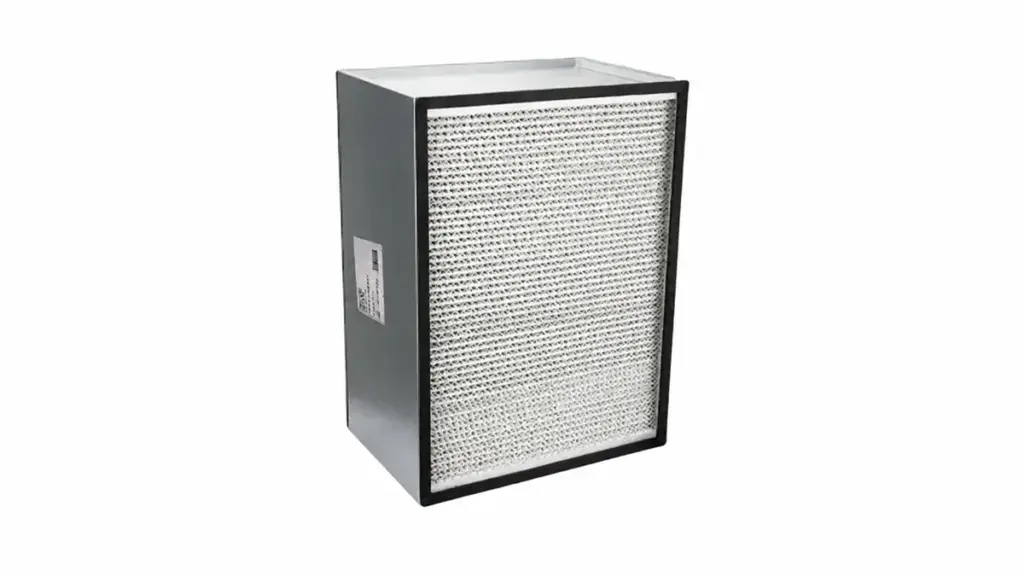
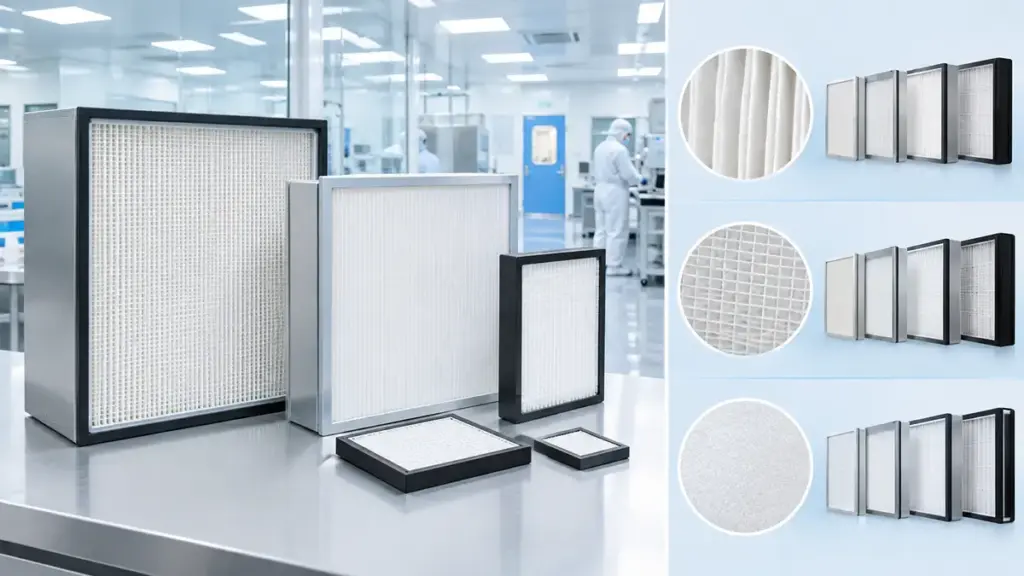
HEPA & Filtri ULPA

HEPA filters balance performance and cost for most cleanrooms, while ULPA filters provide extreme filtration for sensitive processes at a higher operational cost.

HEPA (High-Efficiency Particulate Air) Filters

HEPA filters are the standard choice for high-efficiency air filtration. They are designed to capture at least 99.97% of particles at 0.3 µm, providing reliable contamination control for most cleanroom and HVAC applications.

Commonly used in ISO Class 5–8 cleanrooms, HEPA filters offer a practical balance between filtration efficiency, airflow resistance, and operating cost. They are widely applied in pharmaceutical manufacturing, healthcare facilities, laboratories, and general industrial environments.

COLLERA (Ultra-Low Penetration Air) Filters

ULPA filters provide a higher level of particle removal for applications requiring extreme cleanliness. They can capture at least 99.999% of particles around 0.12 µm, making them suitable for environments where even trace contamination can affect product quality.

These filters are mainly used in ISO Class 3–4 cleanrooms, including semiconductor manufacturing, advanced electronics, and other ultra-critical processes.

Performance and Cost Trade-Offs

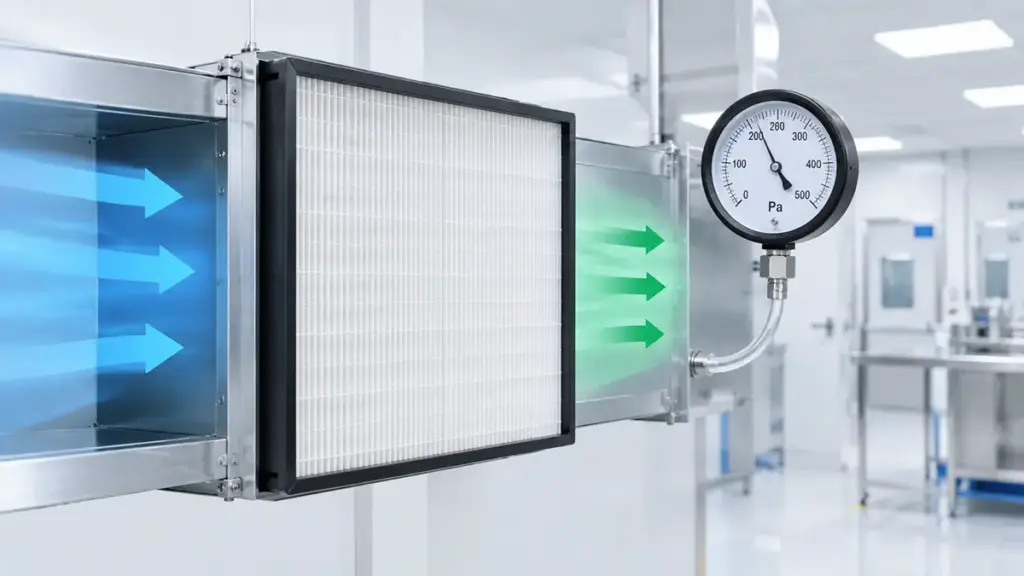
The higher efficiency of ULPA filters comes with increased airflow resistance. Their denser filter media creates a higher pressure drop, which may require more fan power and increase energy consumption.

For most applications, HEPA filters provide sufficient protection with lower operating costs. ULPA filters are typically selected only when controlling ultrafine particles is critical to process performance and product reliability.

HEPA vs ULPA: What Are the Main Differences?
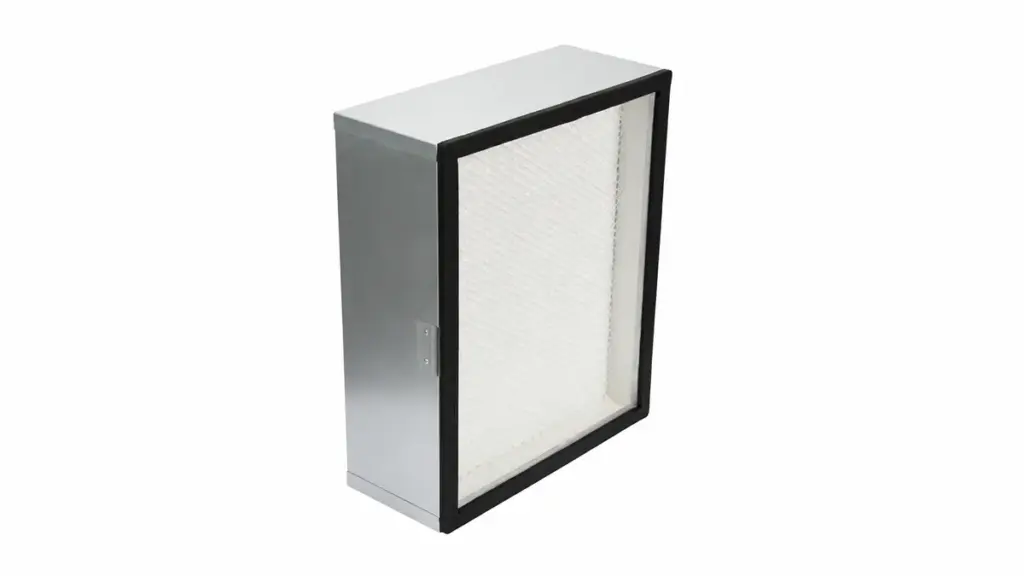
HEPA & Filtri ULPA

The choice between HEPA and ULPA filters is a direct trade-off: ULPA offers higher efficiency for smaller particles but at a significant cost to airflow, energy, and budget.

Filtration Efficiency and Particle Capture

The biggest difference between HEPA and ULPA filters is their particle capture efficiency. HEPA filters are typically rated to remove 99.97% of particles at 0.3 µm, while ULPA filters provide higher efficiency for smaller particles, catturare 99.999% of particles around 0.12 µm.

This higher efficiency makes ULPA filters suitable for processes where even minimal contamination can affect product quality, while HEPA filters remain the standard choice for most controlled environments.

Airflow Resistance and Energy Consumption

ULPA filters achieve higher filtration performance through denser filter media. However, this structure also creates greater airflow resistance, resulting in a higher pressure drop compared with HEPA filters.

A higher pressure drop means the HVAC system requires more fan power to maintain the same airflow, which can increase energy consumption and operating costs over time.

Cost and Service Considerations

HEPA filters are generally more economical due to their lower purchase cost, lower energy requirements, and wider availability. ULPA filters involve higher initial and operating costs because of their advanced media structure and stricter performance requirements.

For this reason, ULPA filtration is usually specified only when the application requires extremely low particle levels and maximum contamination control.

Applications and Cleanroom Requirements

The choice between HEPA and ULPA depends mainly on the required cleanliness level and process sensitivity.

HEPA filters are widely used in ISO Class 5–8 cleanrooms, including pharmaceutical manufacturing, healthcare facilities, laboratories, and general industrial applications.

ULPA filters are reserved for ISO Class 3–4 cleanrooms and other ultra-critical environments, such as semiconductor manufacturing, advanced electronics, and nanotechnology processes where ultrafine particles can impact product performance.

How Do HEPA and ULPA Filters Work?

These filters are not simple sieves. They use a chaotic maze of fibers to physically capture particles of all sizes through a combination of impaction, interception, and diffusion.

The Three Core Particle Capture Mechanisms

HEPA and ULPA filters do not work like simple sieves. They capture airborne particles through three main mechanisms:

  • Inertial Impaction: Larger particles cannot follow airflow changes and collide with filter fibers, where they are trapped.
  • Interception: Medium-sized particles follow airflow paths and are captured when they contact fiber surfaces.
  • Diffusion: Ultrafine particles move randomly due to Brownian motion, increasing the chance of contact with fibers.

Understanding the Most Penetrating Particle Size (MPPS)

Filter efficiency reaches its lowest point at the Most Penetrating Particle Size (MPPS), typically around 0.1–0.3 µm for HEPA filters. This is why filters are tested at their MPPS to verify worst-case performance.

Particles larger than the MPPS are mainly captured through impaction and interception, while smaller particles are captured through diffusion. ULPA filters achieve higher efficiency by optimizing the filter media structure to improve the capture of ultrafine particles.

Why ULPA Filters Achieve Higher Efficiency

ULPA filters use denser filter media than HEPA filters, reducing the space between fibers and increasing particle capture efficiency. However, this higher efficiency also creates greater airflow resistance, resulting in higher pressure drop and increased energy requirements.

Source Certified HEPA & ULPA Filters for Your Application
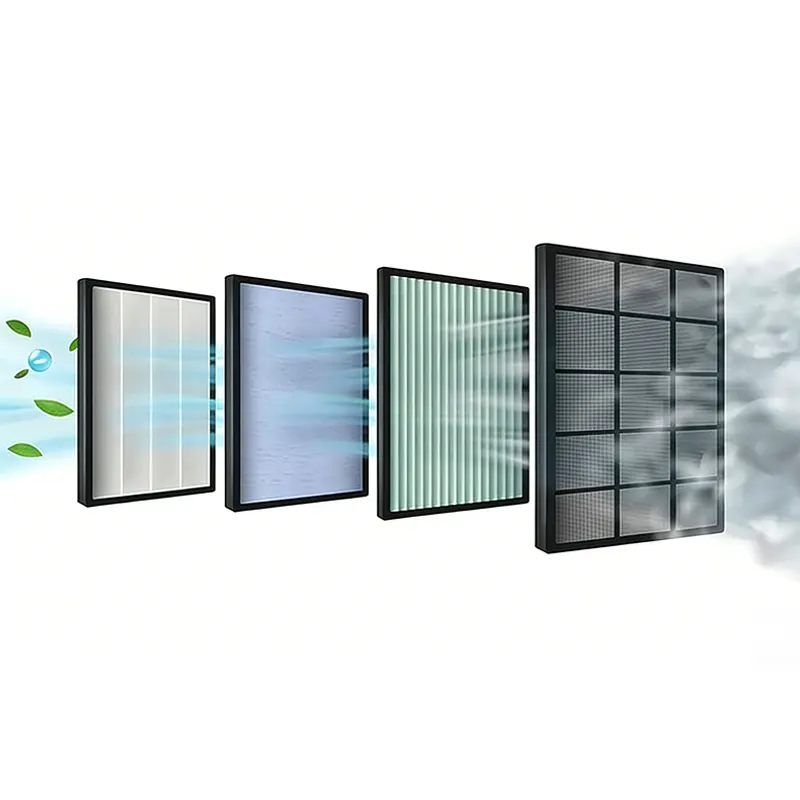
Need the right filtration solution for your cleanroom or HVAC system? Our engineering team provides OEM HEPA and ULPA filters with customized dimensions, certified performance testing, and reliable factory-direct support.

Get a Custom Filter Quote →

HEPA and ULPA filter solutions

How Are HEPA and ULPA Efficiency Grades Classified?

HEPA and ULPA filter grades are classified by the EN 1822 standard, which evaluates performance based on worst-case efficiency at the Most Penetrating Particle Size (MPPS).

When a filter is labeled as H14 or U15, the classification represents a verified efficiency level defined by EN 1822, rather than a general marketing description. This standard specifies the classification, testing methods, and performance requirements for EPA, HEPA, and ULPA filters.

HEPA Filter Grades: H13–H14

Under EN 1822, HEPA filters are classified into two main grades:

  • H13: Provides an overall efficiency of ≥99.95% at MPPS. H13 filters are widely used in cleanrooms, pharmaceutical facilities, laboratories, and other controlled environments requiring reliable contamination control.
  • H14: Provides a higher overall efficiency of ≥99.995% at MPPS. H14 filters are commonly selected for more critical applications, including pharmaceutical production, biosafety laboratories, and advanced manufacturing environments.

ULPA Filter Grades: U15–U17

ULPA filters offer the highest efficiency levels for applications where extremely low particle concentrations are required.

  • U15: ≥99.9995% efficiency at MPPS
  • U16: ≥99.99995% efficiency at MPPS
  • U17: ≥99.999995% efficiency at MPPS, representing the highest classification under EN 1822 and used in ultra-critical environments such as advanced semiconductor manufacturing.

Integral vs. Local Efficiency

EN 1822 evaluates filter performance through both integral and local efficiency testing to ensure consistent filtration quality.

  • Integral Efficiency: Measures the overall filtration performance across the entire filter media area and confirms that the filter meets its rated efficiency level.
  • Local Efficiency: Uses scanning methods to identify weak points, such as leaks or defects, that could reduce actual filtration performance.

A filter must pass both tests to achieve its specified classification, ensuring reliable performance throughout the entire filter surface. protection without any hidden weak spots.

Which Filter Designs, Media, Frames, and Seals Are Available?
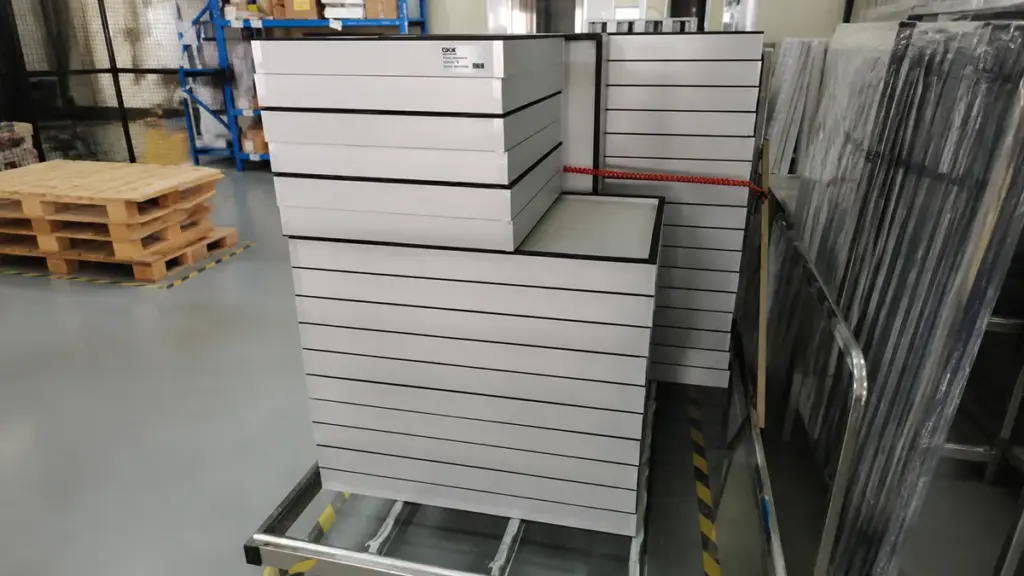
250 350 HEPA filter5

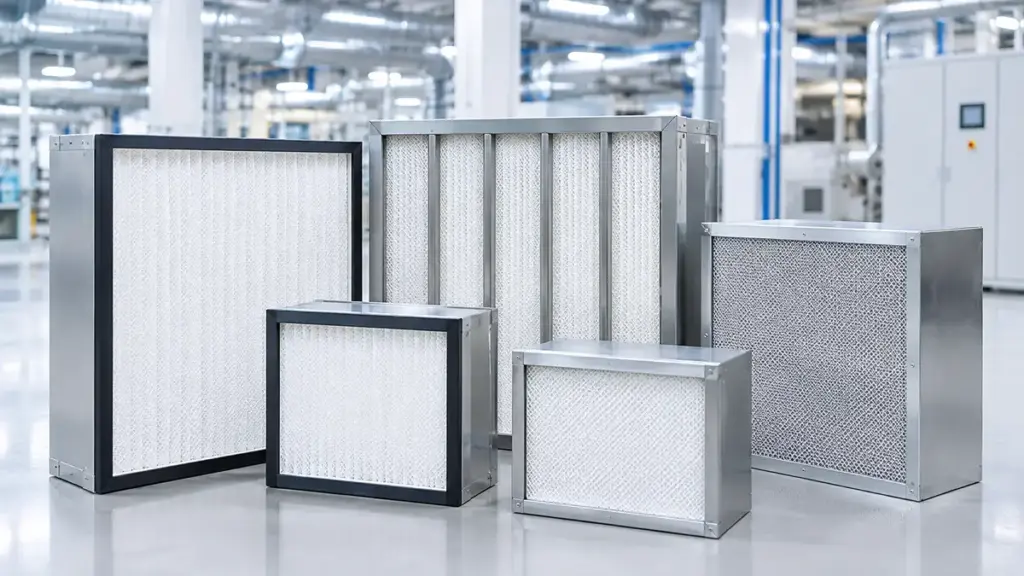
A filter’s performance depends on its physical construction. The design, media, frame, and seal must all match the specific demands of the application and environment.

Filter Designs and Geometries

The physical shape of a filter dictates how it fits into equipment and handles airflow. You’ll encounter a few standard configurations in the field.

  • Box (panel) and cylindrical cells are the workhorses for terminal units, laminar flow hoods, and specialized equipment where air is pushed through a contained space.
  • Pleated media packs increase the filter’s surface area, which is crucial for balancing efficiency and airflow. Modern separatorless designs use hot-melt beads to maintain pleat spacing, a significant improvement over older aluminum separators that added weight and potential leak paths.
  • V-bank or compact filters arrange multiple media packs into a V-shape within a single frame. This design handles high airflow volumes in large HVAC systems while minimizing the pressure drop, making it a common choice for facility-wide cleanroom air handling.

Filter Media Types and Materials

The filter media is the engine of the system, and its material determines the filter’s efficiency, durability, and pressure drop.

  • Glass fiber (microglass) is the traditional high-efficiency medium. It provides excellent filtration but is fragile and can be damaged by improper handling, which compromises its integrity.
  • Synthetic polymer and PTFE membrane media are more robust alternatives. They offer greater durability, a lower pressure drop for the same efficiency, and better resistance to moisture or chemicals, making them suitable for tougher environments.
  • The choice of media directly dictates the filter’s classification. Denser ULPA media is required to capture the smallest particles but creates significantly higher airflow resistance compared to the more common HEPA media.

Frame Constructions and Materials

The frame provides the structural support and interface for installation. The material and design are selected based on the operational environment.

  • Frames are typically made from acciaio zincato, acciaio inossidabile, or lightweight aluminum. The choice depends on factors like weight limits, corrosion risk, and cost.
  • Stainless steel frames are standard in pharmaceutical or biocontainment areas. These environments demand high corrosion resistance to withstand frequent, aggressive cleaning and disinfection cycles.
  • Frame designs also include functional features like protective face guards to prevent media damage, internal support structures, and specific flanges for mounting securely into filter housings.

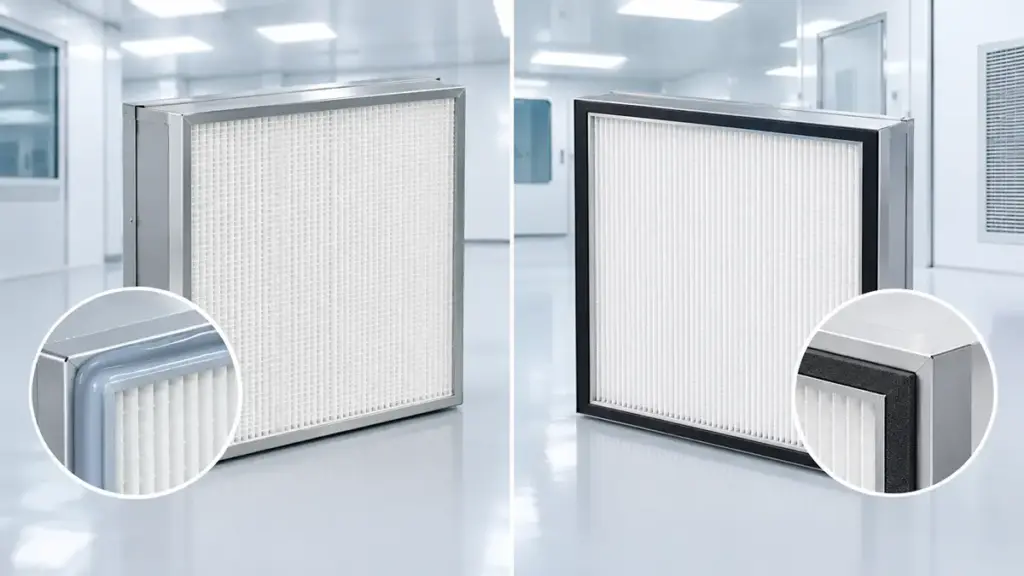
Seal and Gasket Configurations

Proper sealing is essential because air bypass around the filter media can reduce the effective filtration performance of the system.

  • Knife-edge and gel seal systems create an extremely reliable, leak-free seal. In this setup, a blade on the filter frame sinks into a channel of gel in the housing. This is essential for demanding applications in pharmaceutical and semiconductor cleanrooms where zero bypass is the standard.
  • Compression gaskets made from neoprene, EPDM, or silicone are a more common and cost-effective solution for general HEPA installations where the leak-tightness requirements are less extreme.
  • The decision between a gel seal and a gasket comes down to the required leak integrity of the system, the installation type, and whether mandatory in-situ leak testing (like PAO scanning) is part of the operational protocol.

Where Are HEPA and ULPA Filters Used?

HEPA filters are workhorses in healthcare, industry, and homes. ULPA filters are reserved for ultra-critical applications like advanced semiconductor manufacturing where near-perfect particle removal is mandatory.

The applications for high-efficiency filters are vast, but the choice between HEPA and ULPA is driven entirely by the level of contamination control required. One is a versatile standard, the other is a specialized tool.

Healthcare, Laboratories, and Cleanrooms

In controlled environments, air quality isn’t a luxury; it’s a core component of safety and product yield. This is where HEPA and ULPA filters are non-negotiable.

  • HEPA filters are standard in hospitals for operating rooms, isolation wards, and ICUs to control airborne contaminants and prevent infection.
  • Cleanrooms for semiconductor, pharmaceutical, and electronics manufacturing rely on HEPA filtration for primary contamination control.
  • ULPA filters are reserved for the most sensitive cleanrooms and specialized labs, such as in advanced microelectronics, where near-total particle removal is required.
  • Research and biological labs use HEPA filters in safety cabinets and ventilation systems to protect experiments and personnel from cross-contamination.

Commercial and Residential Buildings

Outside of highly technical settings, HEPA filtration has become the benchmark for improving indoor air quality in places where people live and work.

  • In homes, HEPA filters are common in portable air purifiers and vacuum cleaners to capture allergens like dust, pollen, and pet dander.
  • Residential HVAC systems can be equipped with HEPA filters to improve indoor air quality throughout an entire house.
  • Office buildings, schools, and hotels increasingly use HEPA filtration in their air handling systems to provide cleaner, healthier air for occupants.

Industrial and Hazardous Environments

For industrial processes, HEPA filters are essential for protecting workers, equipment, and the environment from hazardous fine particulates.

  • Industrial dust collection systems use HEPA filters to capture fine particulates from processes like metalworking, powder coating, and laser cutting.
  • They are critical in nuclear facilities to contain radioactive particles and are standard in equipment for asbestos and lead abatement.
  • Food and beverage processing plants use HEPA filtration to reduce airborne microbial contamination and maintain sanitary conditions.
  • Aerospace and high-tech manufacturing use these filters to prevent microscopic particles from damaging sensitive electronic and optical components during assembly.

How to Select and Specify the Right Filter

Proper filter selection isn’t just about efficiency. It requires matching filter grade and pressure drop to your cleanroom class, HVAC limits, and total lifecycle costs.

Selection Stage Key Specification Actions

Assess Cleanliness Requirements and Process Risk

  • Map the required cleanroom standard (per esempio., ISO Class 5–8) to the necessary filter grade (HEPA for most applications, ULPA for ISO 3–4).
  • Identify the critical particle size that poses a risk to the product or process (per esempio., ≥0.3 µm vs. ≥0.12 µm).
  • Select H13/H14 HEPA for general life sciences and healthcare, reserving U15+ ULPA for microelectronics or ultra-critical aseptic zones.
  • Ensure the chosen filter class complies with governing industry standards like ISO 14644, EN 1822, and GMP guidelines.

Evaluate HVAC System Compatibility and Constraints

  • Compare the filter’s pressure drop against your fan’s static pressure capacity, as ULPA filters create significantly higher resistance.
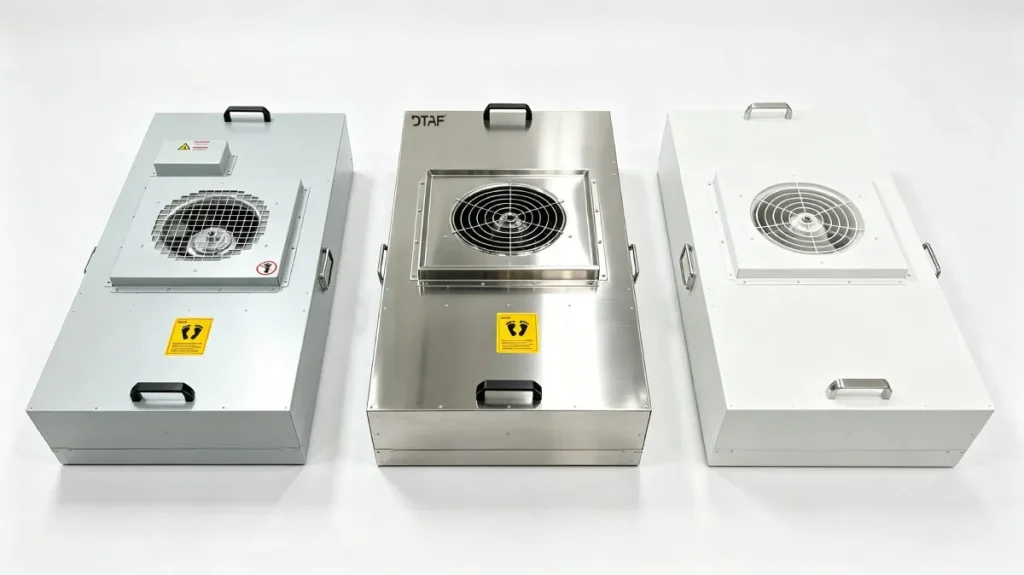
  • Verify the filter’s physical dimensions and sealing type (gel, gasket) match your existing housings or fan filter units.
  • Acknowledge that upgrading to ULPA may require fan upgrades, additional filter area, or system redesign to handle the higher pressure.
  • Define acceptable initial and end-of-life pressure drop limits to ensure compatibility with the air handling system.

Define Critical Parameters in the Specification

  • State the exact efficiency class (per esempio., H14, U15) and the governing test standard (per esempio., EN 1822).
  • Specify the rated airflow (CFM or m³/h) at which the filter’s performance is certified.
  • Lock in construction details, including frame material, media type, and sealing method (gel or gasket).
  • Mandate that each filter ship with an individual factory test report and define protocols for on-site acceptance testing.

Plan for Lifecycle Cost and Ongoing Validation

  • Calculate the total cost of ownership, factoring in filter price, energy use from pressure drop, and replacement labor.
  • Establish a monitoring plan using differential pressure gauges to track filter loading over time.
  • Set a clear replacement trigger, typically when the final pressure drop reaches double its initial value.
  • Schedule periodic in-situ leak testing (per esempio., annually) to validate filter integrity and maintain compliance.

Testing, Maintenance, and Custom Procurement

A filter’s lifecycle is a closed loop. Test standards dictate procurement, and factory data sets the baseline for maintenance, ensuring long-term system reliability and controlled costs.

Filter Testing and Certification

Ensuring a HEPA or ULPA filter performs as rated isn’t a matter of trust; it’s a matter of testing. Filters undergo verification both at the factory and after installation (in-situ) to confirm their efficiency and integrity. These procedures follow established industry standards to ensure consistency and reliability.

  • Governing Standards: Key protocols include EN 1822, ISO 29463, and the IEST Recommended Practices (RPs), which outline methods for classification and testing.
  • Core Tests: The two most critical tests are leak scanning and efficiency measurement. Leak scanning detects physical defects like pinholes or seal failures, while overall efficiency is measured at the filter’s Most Penetrating Particle Size (MPPS) to verify its capture rate under worst-case conditions.
  • Individual Certification: Each filter destined for a critical application must ship with its own test certificate. This document provides traceable proof of its actual performance, including its measured efficiency, pressure drop at a rated airflow, and the results of its leak scan.

Routine Maintenance and Replacement

A filter’s performance degrades over its service life. A structured maintenance program is essential for tracking this decline and replacing filters before they compromise system integrity or efficiency. This involves routine monitoring and periodic re-verification.

Maintenance programs focus on monitoring the differential pressure (ΔP) across the filter, which indicates how loaded orcloggedit is. Visual inspections for physical damage to the media, frame, or seals are also performed. To confirm the ongoing integrity of installed filters, periodic in-situ testing is conducted, often annually or semi-annually, depending on the criticality of the environment.

A filter is typically replaced when one of the following conditions is met:

  • It fails an in-situ leak test.
  • Its pressure drop exceeds the pre-defined final limit, which compromises system airflow.
  • It sustains obvious mechanical or chemical damage.

Custom Procurement Specifications

Procuring high-efficiency filters requires a detailed technical specification, not just a simple purchase order. Your PO must clearly define the performance and construction requirements to ensure you get what you pay for. Key specifications include the filter class (per esempio., H14, U15), required airflow capacity, precise dimensions for the housing, and materials compatible with the operating environment.

A critical, non-negotiable line item in any purchase order is the mandate for individual factory testing and certification. This ensures every single filter meets performance criteria before it even ships. For specialized applications, procurement specifications can include more advanced parameters, such as low-outgassing media and sealants for microelectronics, chemical-resistant components for pharmaceutical cleanrooms, or high-temperature construction for industrial processes.

Integrating the Lifecycle Process

The processes of procurement, testing, and maintenance are not separate functions but an integrated cycle. The testing standards you must comply with directly dictate the specifications you must include in your procurement documents; you need to buy filters that are built to be verifiable in the field.

Likewise, the baseline data from the factory test certificate—especially the initial pressure drop—becomes the starting point for your maintenance program. It establishes the benchmark against which you’ll track filter loading over time. By coordinating these activities, you ensure long-term system reliability, maintain regulatory compliance, and optimize operational costs by avoiding premature replacements or costly contamination events.

Domande frequenti

What is the difference between HEPA and ULPA filters?

The primary difference is filtration efficiency for very small particles. HEPA filters capture at least 99.97% of 0.3 µm particles. ULPA filters are more efficient, capturing at least 99.999% of even smaller particles around 0.12 µm. This higher performance comes at the cost of increased pressure drop, higher price, and a shorter service life.

What efficiency grades are classified as HEPA and ULPA?

Under the EN 1822/ISO 29463 standard, filters are classified into different grades. HEPA filters correspond to classes H13 (≥99.95% efficiency) and H14 (≥99.995%). ULPA filters are even more efficient, falling into classes U15 (≥99.9995%), U16, and U17. Lower efficiency filters (E10-E12) are considered EPA filters, not HEPA.

Is ULPA always better than HEPA for a cleanroom?

No, ULPA is not automatically the better choice. While it offers higher filtration efficiency, it creates more airflow resistance, which increases energy consumption and requires more powerful fans. HEPA filters provide sufficient performance for many cleanroom applications, such as ISO Class 5 and above, and are often preferred due to lower operational costs and longer lifespan. ULPA is typically justified only for the most critical environments, such as advanced semiconductor manufacturing.

How do pressure drop and airflow affect filter selection?

Pressure drop (airflow resistance) and airflow are key design trade-offs. A filter with a higher pressure drop requires more fan power to move the same amount of air. Since ULPA filters are denser than HEPA filters, they have a higher pressure drop. When selecting a filter, you must balance the required cleanliness level with the HVAC system’s capacity, energy budget, and filter replacement costs. A system must be able to provide the required airflow even as the filter loads with particles and its pressure drop increases.

Which industries typically require H13, H14, or ULPA filters?

H13 and H14 HEPA filters are standard in healthcare (operating rooms), pharmaceutical manufacturing (GMP cleanrooms), and life science labs. H14 is used for more critical applications like aseptic filling lines. ULPA filters are required in industries with extreme contamination control needs, primarily semiconductor fabrication (Classe ISO 1-4), advanced microelectronics, and high-risk aseptic zones.

Final Thoughts

Selecting the right HEPA or ULPA filter requires balancing filtration efficiency, airflow performance, and lifecycle cost. Our team helps customers specify certified filter solutions based on cleanroom requirements, equipment compatibility, and application needs.

Contact our engineering team for OEM filter specifications and custom solutions.

Get in Touch

Popular Blogs

Sembra che non riusciamo a trovare quello che stai cercando.

Ottieni oggi stesso la tua soluzione di filtrazione personalizzata

Connettiti con il nostro team di ingegneri per una consulenza tecnica gratuita. Come una fabbrica diretta, offriamo supporto end-to-end dalla selezione delle materie prime alla consegna del prodotto finale.
Prezzi diretti in fabbrica-1
Prezzi diretti in fabbrica
100Camera bianca di classe K-1
100Camera bianca di classe K
OEM personalizzato & R&D-1
OEM personalizzato & R&D
Consegna globale veloce-1
Consegna globale veloce

Contattaci

immagine popup
Partendo così presto? Ottimizziamo i costi di filtrazione.

Hai bisogno di soluzioni personalizzate? Inserisci le tue esigenze qui sotto e i nostri ingegneri forniranno un preventivo direttamente in fabbrica 12 ore.

Scarica l'ultimo catalogo elettronico del Master DTAF

Ottieni l'accesso completo alle specifiche tecniche, curve di prestazione aerodinamica, e funzionalità OEM/ODM da una fortuna 500 produttore di filtrazione di fiducia.

Prezzi diretti in fabbrica-1
Prezzi diretti in fabbrica
100Camera bianca di classe K-1
100Camera bianca di classe K
OEM personalizzato & R&D-1
OEM personalizzato & R&D
Consegna globale veloce-1
Consegna globale veloce

Richiedi download

*Rispettiamo la tua riservatezza e tutte le informazioni sono protette.