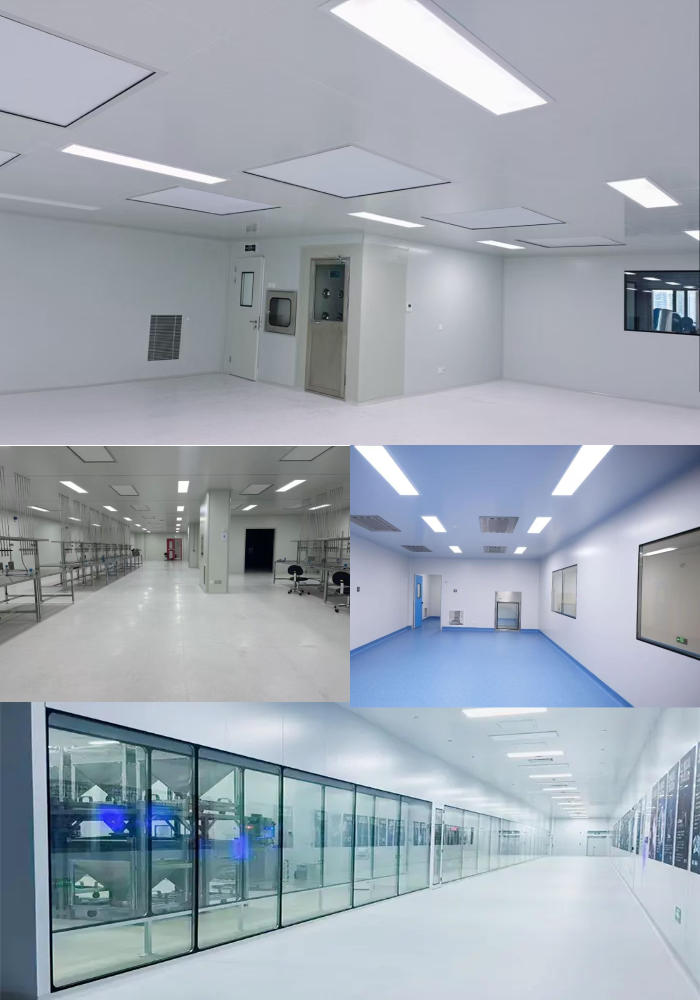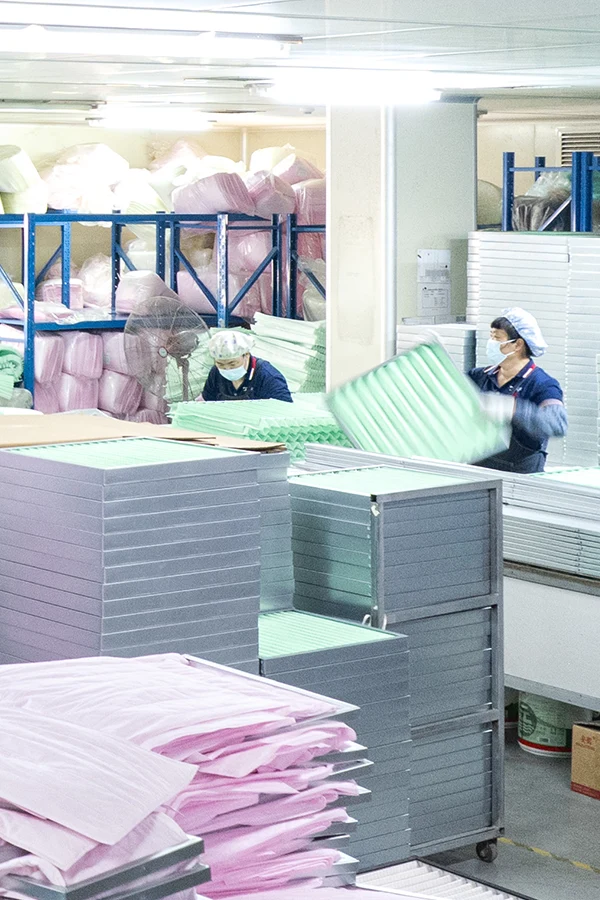
Choosing between HEPA and ULPA filters affects airflow, energy use, and contamination control. A higher efficiency grade is not automatically the better option: ULPA may add unnecessary resistance where HEPA performance is sufficient, while an underspecified filter can put particle-sensitive processes at risk.
This guide compares MPPS efficiency, queda de pressão, aplicações, and specification requirements under EN 1822 e ISO 29463. Buyers evaluating available HEPA and ULPA filter options can use these criteria to match filter performance with their system capacity and operating requirements.
What Is the Difference Between HEPA and ULPA Filters?
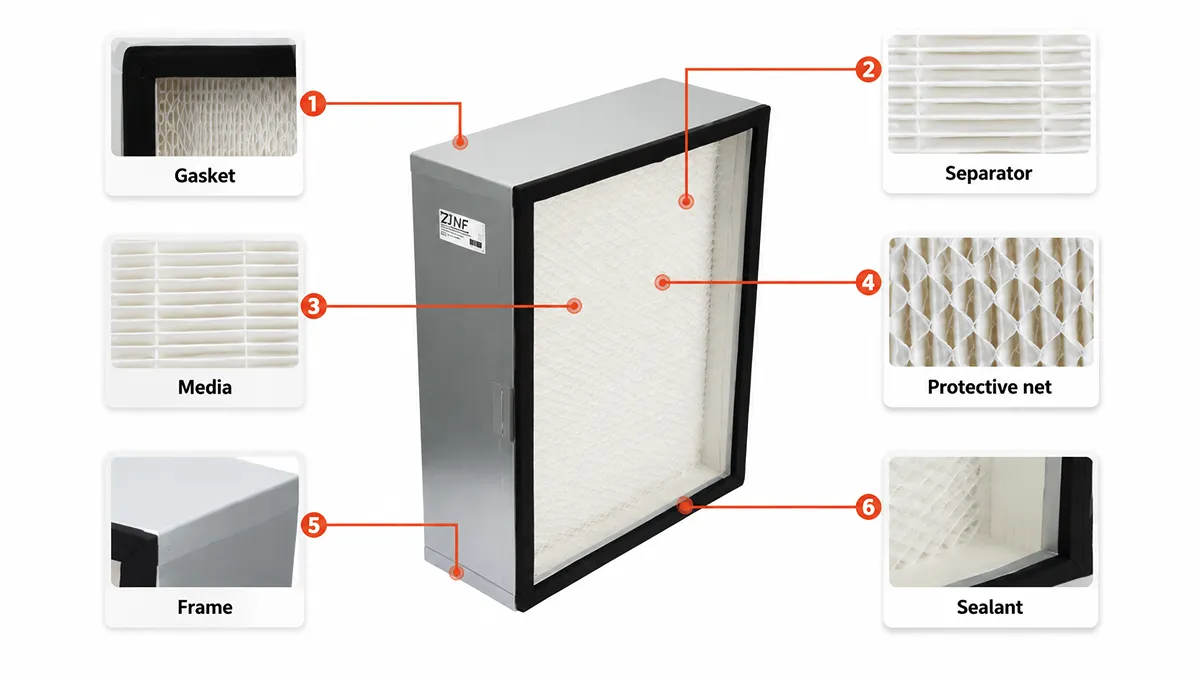
ULPA filters capture smaller particles with higher efficiency than HEPA filters, but this comes at the cost of higher airflow resistance, energy use, and overall expense.
Filtration Efficiency and Particle Size
HEPA and ULPA filters differ primarily in their permitted particle penetration. Under the common U.S. definition, a HEPA filter captures at least 99.97% de 0.3 µm particles. Under EN 1822, filters are classified by efficiency at their measured Most Penetrating Particle Size (MPPS): H13 and H14 are HEPA grades, while U15 through U17 are ULPA grades. ULPA filters allow substantially fewer particles to penetrate, but their higher efficiency can also increase airflow resistance.
Airflow Resistance and Energy Use
Replacing a HEPA filter with a ULPA filter in the same system may reduce airflow if the fan cannot overcome the additional resistance. The actual effect depends on filter dimensions, media area, construction, and rated airflow.
How Are HEPA and ULPA Grades Classified?
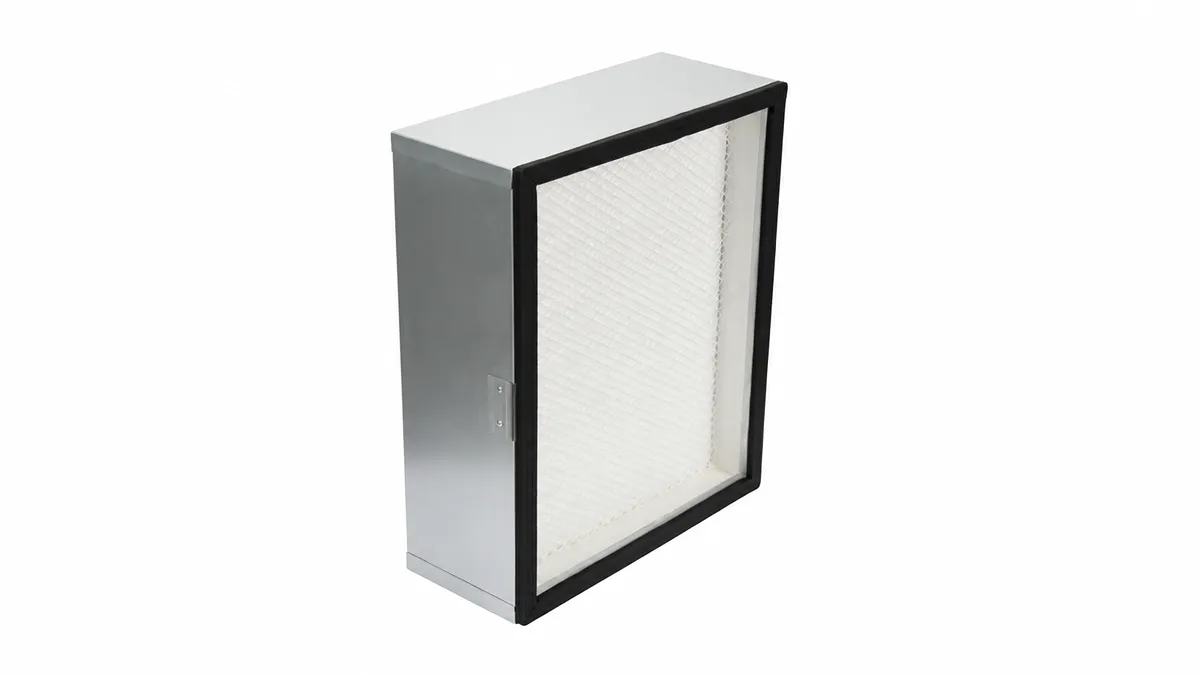
Modern HEPA and ULPA grades are not just names; they are classified by efficiency at the Most Penetrating Particle Size (MPPS), revealing their true worst-case performance.
Classification by Most Penetrating Particle Size (MPPS)
EM 1822 e ISO 29463 classify HEPA and ULPA filters by their efficiency at the Most Penetrating Particle Size (MPPS)—the particle size most likely to pass through the filter.
Testing at MPPS provides a more reliable measure of worst-case performance than testing only at a fixed particle size. Depending on the filter class and applicable standard, classification may consider both integral efficiency across the entire filter and local efficiency used to identify leaks.
HEPA Filter Grades: H13 and H14
Under EN 1822, HEPA filters are divided into two grades:
- H13: Minimum integral efficiency of 99.95% at MPPS
- H14: Minimum integral efficiency of 99.995% at MPPS
H13 and H14 filters are widely used in healthcare facilities, laboratories, pharmaceutical production, and controlled manufacturing environments.
ULPA Filter Grades: U15 to U17
ULPA filters allow substantially less particle penetration than HEPA filters. EM 1822 defines three ULPA grades:
- Sub15: Minimum integral efficiency of 99.9995% at MPPS
- U16: Minimum integral efficiency of 99.99995% at MPPS
- Sub-17: Minimum integral efficiency of 99.999995% at MPPS
These filters are commonly considered for highly particle-sensitive processes such as semiconductor fabrication, microelectronics, nanotecnologia, and precision optics.
EM 1822 and the Traditional U.S. Definition
The traditional U.S. definition identifies a HEPA filter as one that captures at least 99.97% de 0.3 µm particles. EM 1822 instead assigns H13–H14 and U15–U17 grades based on measured MPPS performance.
When comparing suppliers, buyers should therefore confirm the stated test standard, filter grade, efficiency at MPPS, and required integrity-testing documentation rather than rely on the HEPA or ULPA label alone.
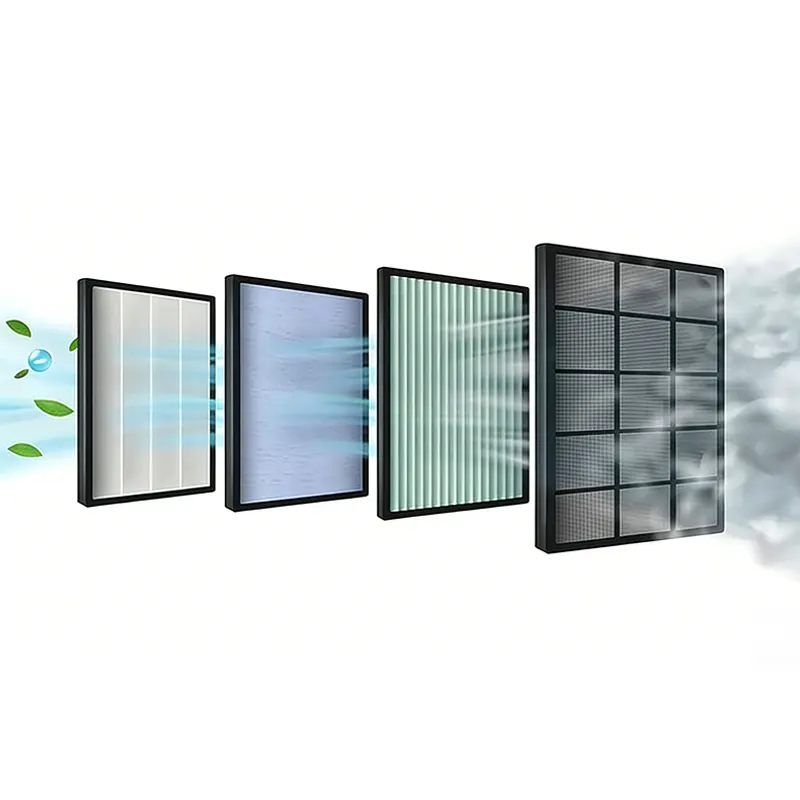
How Do Efficiency and Pressure Drop Compare?
ULPA filters capture more particles but create a higher pressure drop and use more energy. HEPA filters balance strong filtration with better airflow and lower operating costs.
Queda de pressão: The Trade-Off for Purer Air
Achieving higher efficiency comes at a cost to system performance. The denser media in ULPA filters creates significantly more resistance to airflow, also known as pressure drop.
- The increased resistance may reduce system airflow unless the fan and air-handling system are designed for the selected filter.
- Initial pressure drop should be compared at the same filter dimensions and rated airflow. Buyers should request manufacturer pressure-drop curves rather than compare filter classes using generic values.
- As a result, systems engineered for ULPA filters require more powerful fans and consume more energy to achieve the same airflow rates.
Operational Impact: Balancing Purity and System Performance
The selection process boils down to a fundamental trade-off: higher filtration efficiency almost always results in a higher pressure drop. Your application’s requirements will dictate which side of this balance is more critical.
- Choosing HEPA prioritizes higher airflow, which enables more air changes per hour (ACH) and reduces energy consumption.
- Opting for ULPA prioritizes lower particle penetration for highly sensitive processes, but the air-handling system must be able to accommodate the filter’s pressure drop while maintaining the required airflow and air-change rates.
Where Are HEPA and ULPA Filters Typically Used?
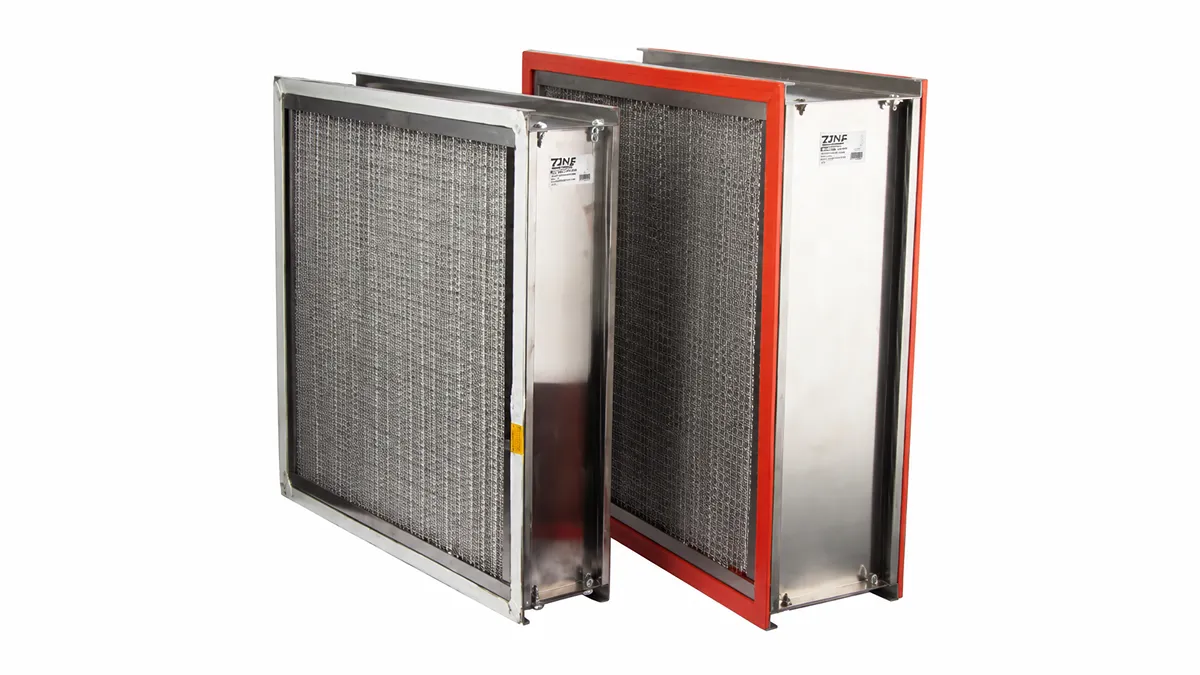
HEPA filters are used where particle control is critical, from healthcare and pharmaceutical manufacturing to microelectronics, industrial safety, and high-efficiency commercial or residential air purification.
Filter selection should be based on process-specific particle limits, required airflow, queda de pressão, system capacity, and applicable standards—not the ISO cleanroom class alone.
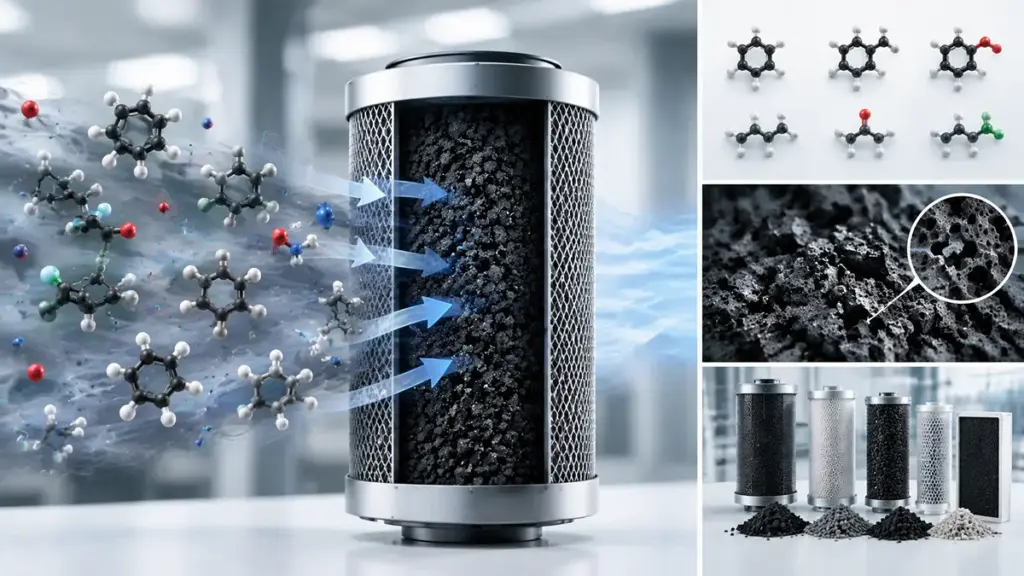
HEPA and ULPA filters are designed to remove airborne particles. Applications involving gases, odors, or volatile organic compounds require activated carbon or another suitable gas-phase filtration medium.
HEPA or ULPA: How to Specify the Right Filter
Specify filters by cleanroom class and performance standards, not just names. ULPA is more efficient, but higher pressure drop often makes HEPA the right choice for many applications.
Key Elements for a Filter Specification
A proper filter specification leaves no room for ambiguity. It must clearly state the required performance and validation methods. Your spec sheet should include:
- The governing standard and class. State the applicable standard and its corresponding classification, such as EN 1822 Class H14 or the appropriate ISO 29463 filter group.
- Minimum filtration efficiency. Define the required efficiency at the Most Penetrating Particle Size (MPPS), not just a general particle size.
- Integrity testing requirements. Specify whether individual efficiency testing, leak scanning, and a factory test report are required under the selected filter class and project standard.
- Application-specific standards. If the filter is for a regulated application, such as a biosafety cabinet, reference the relevant standard (por exemplo, NSF/ANSI 49) in your specification.
Perguntas frequentes
What is the main difference between HEPA and ULPA filters?
The main difference is filtration efficiency at MPPS. Under EN 1822, H13–H14 HEPA filters provide minimum integral efficiencies of 99.95%–99.995%, while U15–U17 ULPA filters range from 99.9995%–99.999995%. ULPA filters allow less particle penetration but generally create greater airflow resistance.
Does a ULPA filter reduce airflow more than a HEPA filter?
A ULPA filter generally creates greater airflow resistance than a comparable HEPA filter and may reduce airflow if fan capacity is insufficient. The actual effect depends on filter dimensions, media area, construction, and rated airflow, so system capacity should be checked before installation.
Which industries commonly use ULPA filtration?
ULPA filters are commonly used in semiconductor fabrication, microelectronics, nanotecnologia, precision optics, and advanced research environments. They may also be selected for pharmaceutical and aerospace processes that require lower particle penetration than HEPA filtration can provide.
Is ULPA necessary for an ISO Class 5 sala limpa?
Not necessarily. Classe ISO 5 defines airborne particle limits but does not prescribe a specific filter grade. Many ISO Class 5 cleanrooms use H13 or H14 HEPA filters. ULPA may be considered when the process requires lower particle penetration, provided the system can accommodate its airflow and pressure-drop requirements.
Can an existing HEPA system be upgraded to ULPA?
Possibly, but a direct replacement is not always suitable. Confirm that the system can accommodate the ULPA filter’s dimensions, seal type, rated airflow, and pressure drop. If fan capacity is insufficient, the upgrade may require fan adjustments, additional filter area, or other system modifications.
How should lifecycle costs for HEPA and ULPA filters be compared?
Compare total ownership cost, including filter price, queda de pressão, fan energy, pre-filtration, replacement labor, integrity testing, disposal, and downtime. Service life should be estimated from operating conditions and the specified final pressure drop—not from the HEPA or ULPA classification alone.
Considerações Finais
Choosing between HEPA and ULPA requires more than comparing filter names or efficiency ratings. Evaluate each option against your required airflow, queda de pressão, filtration standard, and system capacity to ensure reliable performance without unnecessary operating costs.
Request our specification catalog to compare pressure drop curves, filter grades, and available configurations, ou contact our team to discuss your OEM and project requirements.