콘텐츠로 건너뛰기

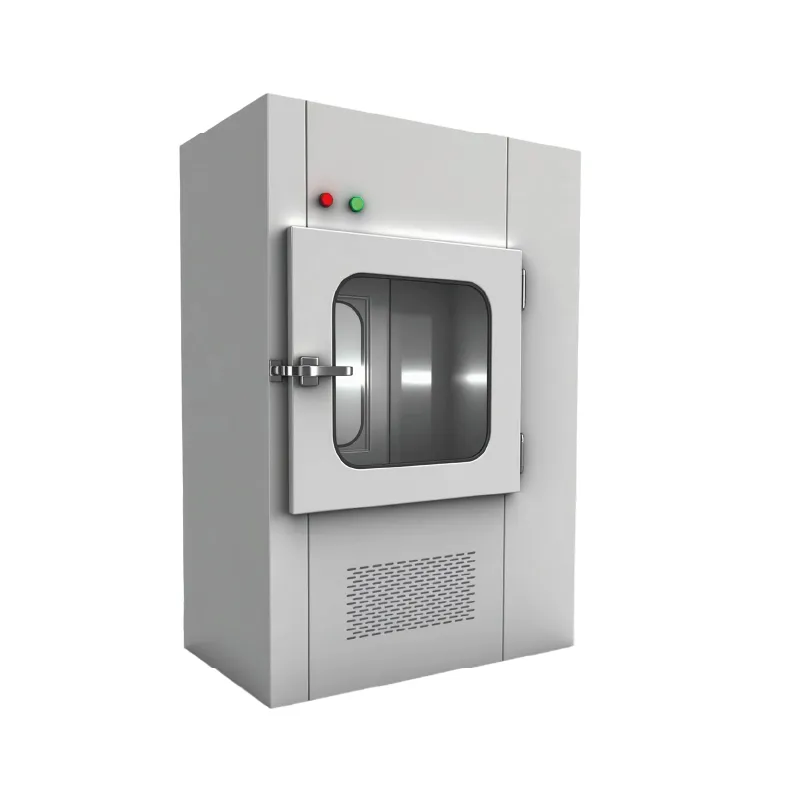
People shed particles constantly, which makes the person walking into a cleanroom its largest contamination source. 안 air shower HEPA filter system attacks that source at the door, scrubbing surface dust off gowning before it reaches the production floor.
This guide covers where filters sit inside these machines, which constructions fit the small and turbulent cabinet, and how nozzle velocity, fan pressure, and filter size must be chosen together. It closes with a selection checklist for buyers comparing air shower quotations.
Why Air Showers Use HEPA Filters
The cleanroom’s biggest contamination source walks in through the door twice a shift.
An air shower blows high velocity filtered air over personnel or materials at a cleanroom entrance, knocking loose surface dust before it crosses the threshold. It protects the cleanroom classification by treating the largest contamination source of all, the people walking in. Gowning controls what a person carries into the vestibule, and the air shower controls what survives the journey to the door. Human activity is a primary indoor particle source even in mainstream indoor air research, as the EPA introduction to indoor air quality notes. A cleanroom simply puts that fact under a microscope.
What Machines We Are Talking About
What are air showers? Air showers are enclosed vestibules installed between a changing area and a cleanroom, fitted with arrays of air nozzles and their own fan and filter set. The doors interlock so both cannot open at once, and a cycle of fifteen to thirty seconds cleans the occupant before the inner door releases. Units range from single person cabinets to tunnels that process a whole shift in sequence.
Field practice backs the principle up. Facilities that added showers at critical entrances routinely report lower particle counts at the first monitoring point inside. Garment studies show high velocity air removing a large share of loose surface dust in seconds. The shower does not replace gowning discipline, it catches what discipline misses.
Equipment and Material Showers
The same machine cleans carts, containers, and trolleys at goods entrances, usually with wider doors and lower nozzle speeds to protect packaging. Filtration duties are identical, because the dust on a cart threatens the cleanroom exactly as dust on a gown does. Buyers who specify both types together keep spare filters interchangeable.
Where HEPA Filters Are Installed in Air Showers

An air shower is a closed loop, and the filters sit at the loop’s cleanest point.
Air leaves the work space through a floor or rear grille and passes a washable prefilter first. It then moves through the HEPA filter and returns to the nozzle plenum under positive pressure from the blower. The HEPA filter therefore sits between the fan and the nozzles, so every jet that touches a gown is filtered air.
Prefilter First, HEPA Second
The prefilter takes the coarse load that the recirculated dust carries and protects the HEPA stage from blinding. A cleanable panel or bag prefilter is standard, and its maintenance interval decides how long the HEPA filter behind it lives. Skipping prefilter service is the fastest way to shorten an expensive HEPA change cycle.
Nozzle Plenum Arrangement
Nozzles are arranged on side walls and ceilings so the jets cross over the occupant from multiple angles. The plenum behind them must be large enough to distribute air evenly, or the nozzles nearest the fan run hot while distant ones go weak. Filter face area is sized so the air arrives at the plenum without turbulence, which keeps every jet at its design velocity.
Common HEPA Filter Types for Air Showers
The small cabinet forces compact filter designs that trade media area for fit.
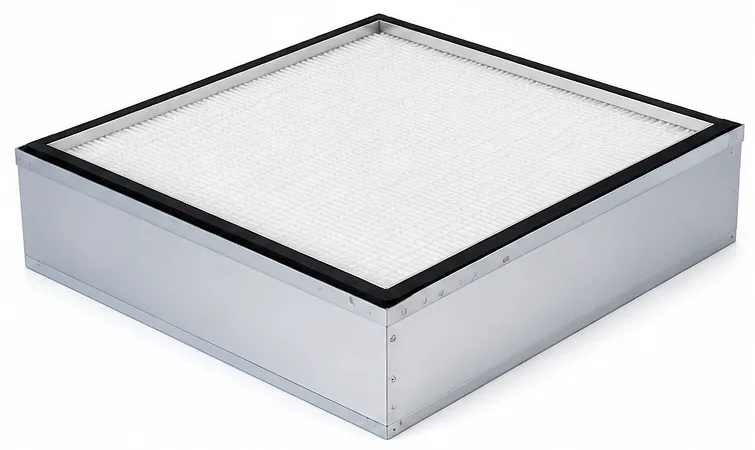
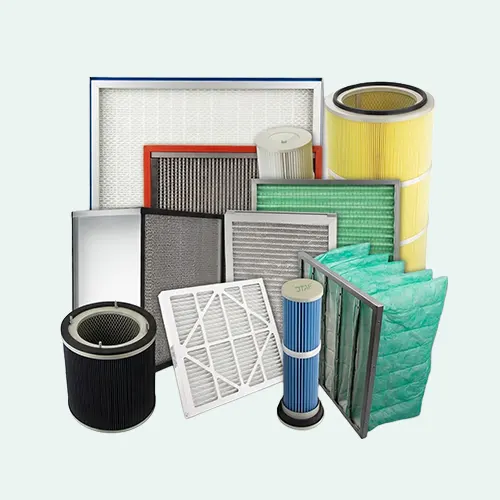
Air showers squeeze a full filtration loop into a cabinet, so the filter formats differ from room ceilings. Panel type pleated HEPA filters are the default because they fit shallow plenums, and deeper mini-pleat packs appear where the cabinet height allows them.
Panel and Mini-Pleat Formats
A standard panel filter keeps the cabinet shallow and the purchase price low, which suits small single person units. Mini-pleat packs offer more media in the same face size, which lowers resistance and stretches service intervals. Buyers comparing quotations should compare media area at the same face size, because two filters with identical dimensions can hold very different amounts of media.
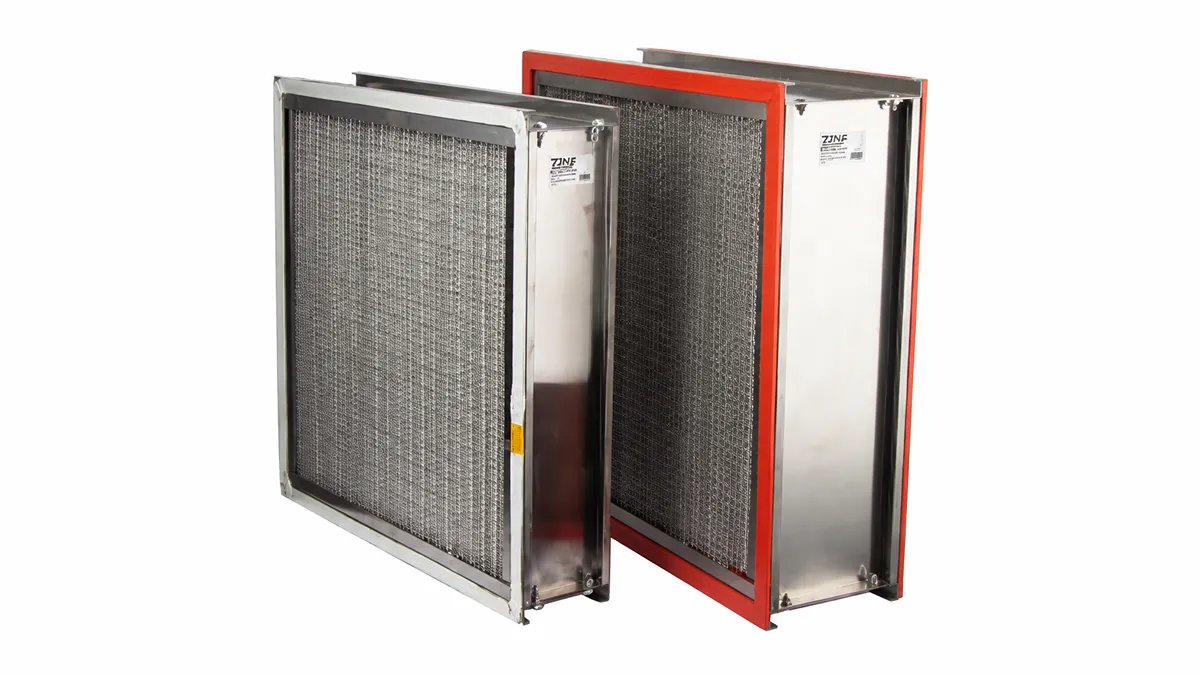
Cabinet material also shapes the filter choice indirectly, because painted steel units dominate budget installations while stainless units serve pharmaceutical and food plants that wash their equipment down. Filters for wash-down machines need frames and gaskets rated for that environment. Confirming the two together avoids a stainless cabinet with a filter that cannot survive its cleaning schedule.
Prefilters and Optional Stages
Washable G4 style panels are the common first stage, and some units add a second fine stage before the HEPA where dust loads are heavy. V-Bank compact filters appear in larger tunnels where face area matters, and our guide to V-Bank filters explains that construction. Whatever the format, the HEPA grade itself stays H13 or H14, because the nozzles spray the air directly onto gowning.
How HEPA Filter Size Affects Air Shower Performance
In a cabinet this small, every square centimeter of media area shows up in noise, velocity, and service life.
The cabinet defines the filter face size, and the fan curve defines what happens behind it. A small filter pushed to high face velocity loads quickly, gets loud, and forces the buyer into frequent change-outs. A deeper filter in the same face size lowers velocity, 저항, and noise together.
Face Velocity and Media Area
Designers keep filter face velocity moderate so the media works at low stress, which is another way of saying that bigger filters last longer in the same machine. Where a cabinet cannot accept a deeper filter, buyers should expect shorter change intervals and price the consumables accordingly. Quotations that look identical at purchase can differ sharply at year three.
What an ISO Specification Changes
An ISO shower is an air shower specified for a cleanroom of a given ISO class, with nozzle count, velocity, and filtration matched to that class requirement. The phrase appears in cleanroom equipment quotations rather than in the ISO standards themselves. Tighter classes push specification toward more media and more nozzles, because the room downstream tolerates less of whatever the shower misses.
Airflow and Pressure Drop Requirements
The jets need 20 meters per second, and the fan needs a filter that lets it keep them.
How does an air shower work? Air is drawn through a prefilter and a HEPA filter, pressurized by a fan, and fired through rotating nozzles at 20 m/s or more onto the person inside. The loosened particles fall to the floor grille, recirculate through the filters, and the loop repeats until the cycle timer ends.
Nozzle Velocity and Blow-Off Physics
Effective dust removal needs high jet velocity at the surface, not high total airflow, which is why a machine moving a few thousand cubic meters per hour can still clean effectively. The filter must deliver that volume at low enough resistance for the fan to hold pressure at the plenum. Resistance that creeps up as the filter loads shows up first as weak distant nozzles.
Pressure Drop Across the Filter Life
A loaded HEPA filter strangles nozzle velocity long before it threatens cleanliness, because the loop cannot push rated pressure through a blind media. Monitoring differential pressure across the filter predicts nozzle performance, and the same physics is covered for room systems in our article on HEPA 필터 압력 강하. The answer depends on the class, and typical guidance runs from roughly 20 air changes per hour for ISO 8 space into the hundreds for ISO 5 zones. An air shower is a self contained loop, so it adds no air changes to the cleanroom, it only cleans what crosses the doorway.
Standardize the Cabinet, Standardize the Filter
How to Select HEPA Filters for Air Shower Units
Selecting the filter is the last step of selecting the machine, and it starts from the quotation sheet.
What are the specifications of an air shower? The core specifications are internal dimensions, nozzle count and velocity, cycle time, fan power, and the filtration stages, usually a G4 style prefilter followed by an H13 or H14 HEPA filter. 재료, most often painted steel or stainless steel, completes the specification. Comparing those lines across quotations exposes the differences that a brochure photo hides.
- Confirm filter grade H13 or H14 with a scan test report per filter.
- Compare media area at the same face size, not only frame dimensions.
- Check prefilter stage and its availability as a spare part.
- Verify fan static pressure margin against the loaded filter resistance.
- Match stainless grade and finish to your cleaning chemicals.
Spare Parts and Service Loop
A shower is a consumables machine, and the filter set is the consumable that decides its running cost. Buyers who standardize one cabinet model across every entrance in a plant get one filter part number, one service procedure, and predictable pricing. Purchasers running mixed fleets should at least standardize within each entrance class, so the spare on the shelf always fits the machine at the door.
Common Selection Mistakes
The recurring errors are choosing on cabinet price alone, ignoring prefilter quality, and forgetting fan margin against a loaded filter. Each one surfaces within the first year as weak nozzles, short HEPA life, or a machine that cannot hold cycle time. Asking for the filter datasheet and the fan curve closes all three gaps before the purchase order.
FAQ About Air Shower HEPA Filters
What is an air shower used for?
An air shower blows high velocity filtered air over personnel or materials at a cleanroom entrance, knocking loose surface dust before it crosses the threshold. It protects the cleanroom classification by treating the largest contamination source of all, the people walking in.
What are air showers?
Air showers are enclosed vestibules installed between a changing area and a cleanroom, fitted with arrays of air nozzles and their own fan and filter set. The doors interlock so both cannot open at once, and a cycle of fifteen to thirty seconds cleans the occupant before the inner door releases.
What is an ISO shower?
An ISO shower is an air shower specified for a cleanroom of a given ISO class, with nozzle count, velocity, and filtration matched to that class requirement. The phrase appears in cleanroom equipment quotations rather than in the ISO standards themselves.
How does an air shower work?
Air is drawn through a prefilter and a HEPA filter, pressurized by a fan, and fired through rotating nozzles at 20 m/s or more onto the person inside. The loosened particles fall to the floor grille, recirculate through the filters, and the loop repeats until the cycle timer ends.
What are the specifications of an air shower?
The core specifications are internal dimensions, nozzle count and velocity, cycle time, fan power, and the filtration stages, usually a G4 style prefilter followed by an H13 or H14 HEPA filter. 재료, most often painted steel or stainless steel, completes the specification.
How many air changes per hour for an ISO clean room?
The answer depends on the class, and typical guidance runs from roughly 20 air changes per hour for ISO 8 space into the hundreds for ISO 5 zones. An air shower is a self contained loop, so it adds no air changes to the cleanroom, it only cleans what crosses the doorway.
결론
Air showers earn their place at a cleanroom door because they clean the contamination source that gowning cannot fully control. The HEPA filter inside is what turns a blast of air into filtered air, and its size, 저항, and prefilter protection decide the machine’s real performance.
Select the machine and its filter as one package: grade and scan report first, media area and fan margin second, consumable pricing third. A shower specified that way runs quietly for years and delivers the same fifteen second cycle on day one thousand as it did on day one.