What Is a V-Bank Filter?
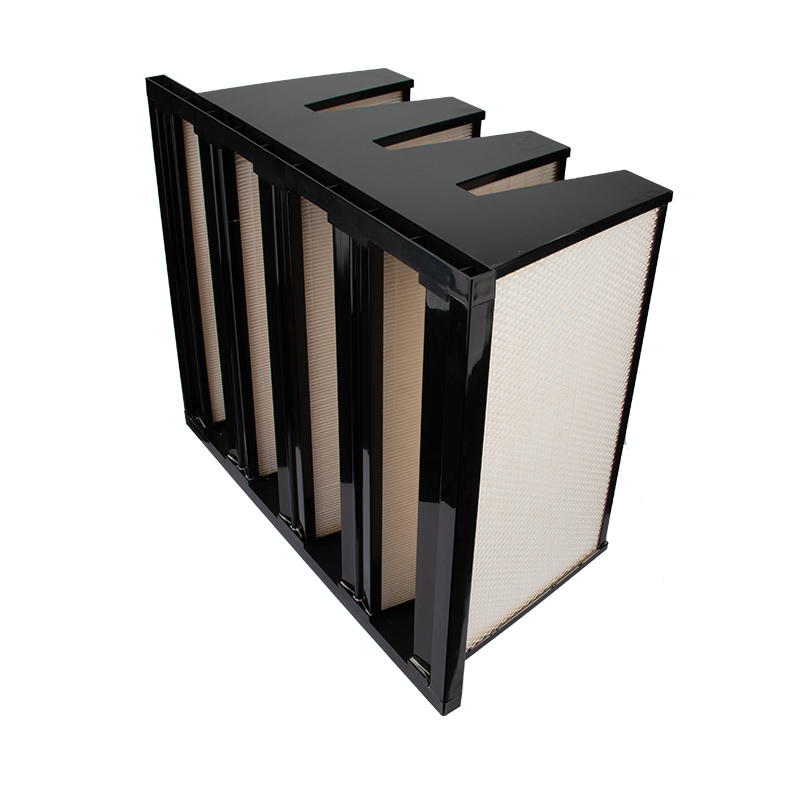
A V-bank filter is an air filter designed with multiple V-shaped filter media sections arranged inside a single frame. This design provides a large filtration area within a relatively compact space, making it suitable for HVAC systems and air handling units (AHU) that require high airflow and efficient particle removal.
Unlike a conventional flat-panel filter, a V-bank air filter uses several angled media packs to accommodate more filter material. Depending on its design and filtration efficiency, it can be used in commercial buildings, industrial ventilation systems, and other applications where consistent air quality is important.
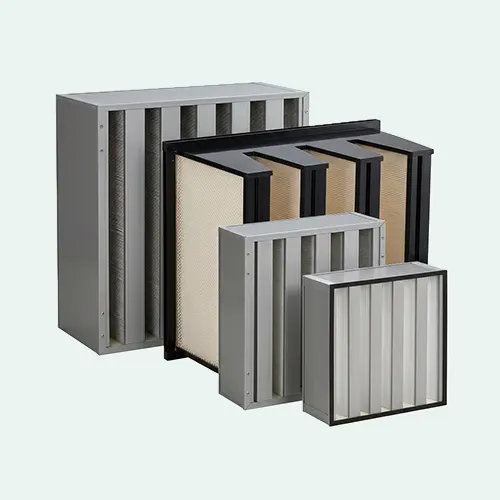
V-bank filters are available in different sizes, filtration grades, and media configurations. Choosing the right model depends on the required airflow, particle removal efficiency, available installation space, and system pressure-drop limits.
Types of V-Bank Air Filters
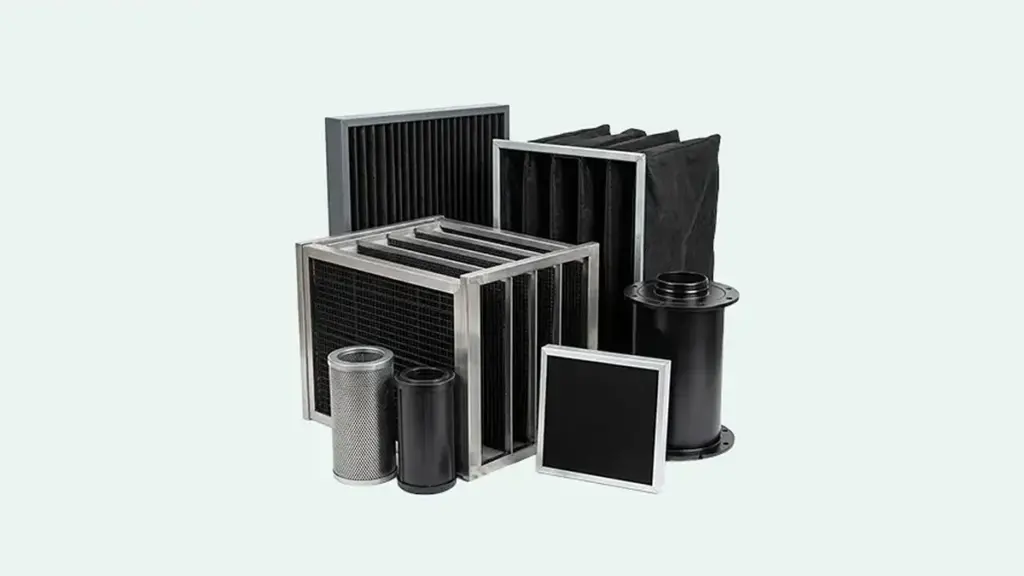
V-bank filters are available in several configurations. The appropriate type depends on the filtration requirements and operating conditions of the HVAC system.
Mini-Pleat V-Bank Filters
Mini-pleat V-bank filters use closely spaced pleated filter media arranged in multiple V-shaped sections. This construction provides a large media area without requiring an excessively large filter frame.
Depending on the media and design, these filters can support high airflow and efficient particle filtration. They are often considered for air handling systems where space, 기류, and filtration performance must be balanced.
For systems requiring compact, high-efficiency filtration, explore DTAF’s mini-pleat V-bank filters.
F7 V-Bank Filters for HVAC Systems
F7 V-bank filters are associated with medium-to-fine filtration applications under the relevant EN 779 classification. When evaluating an F7 filter, it is important to check the applicable test standard and the manufacturer’s current performance data.
These filters may be suitable for HVAC systems that require a balance between particle filtration, 기류, and operating resistance. Actual performance depends on the filter construction, rated airflow, and system conditions.
For specifications, 치수, and available configurations, see DTAF’s F7 V-bank air filters.
Activated Carbon V-Bank Filters
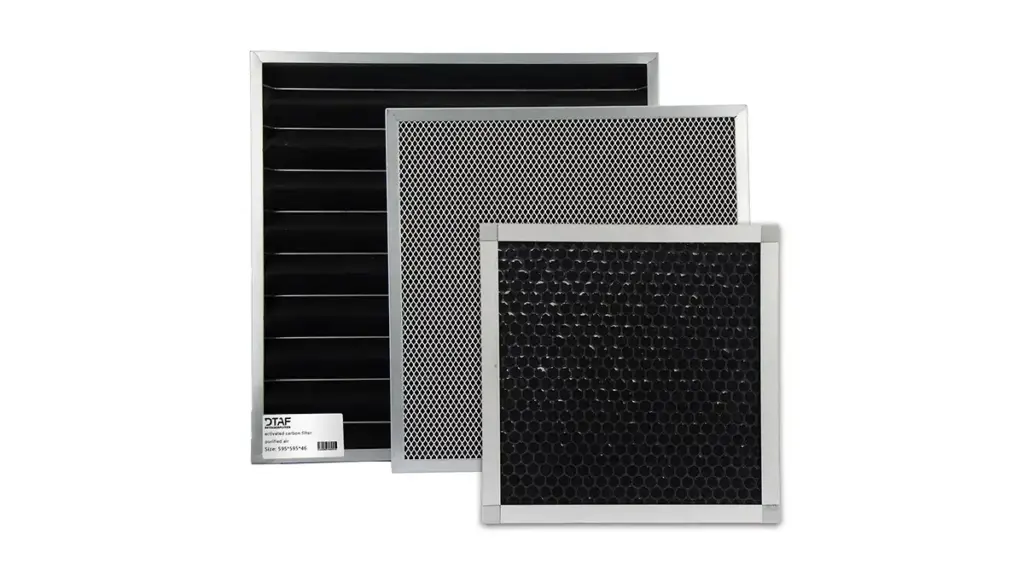
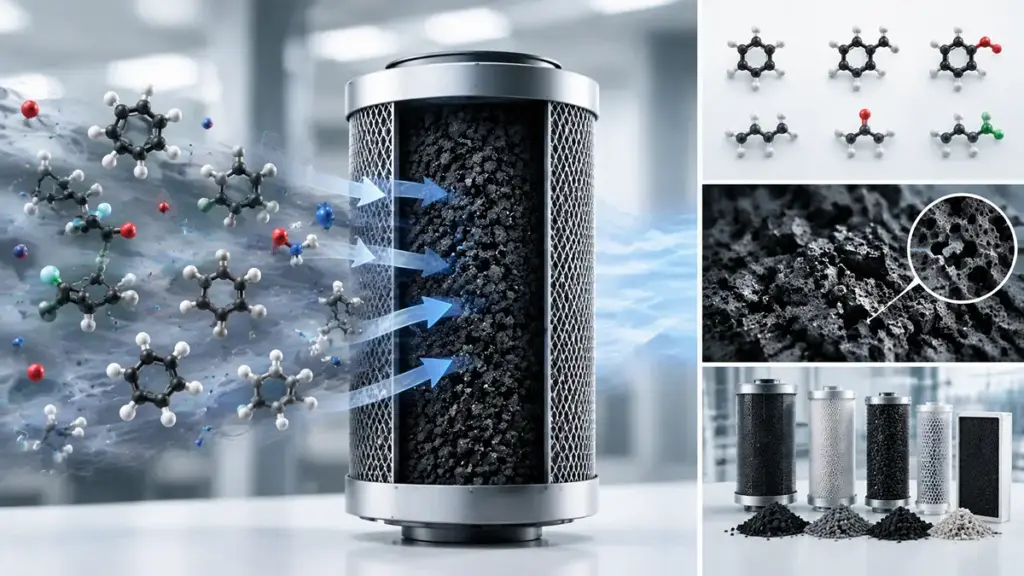
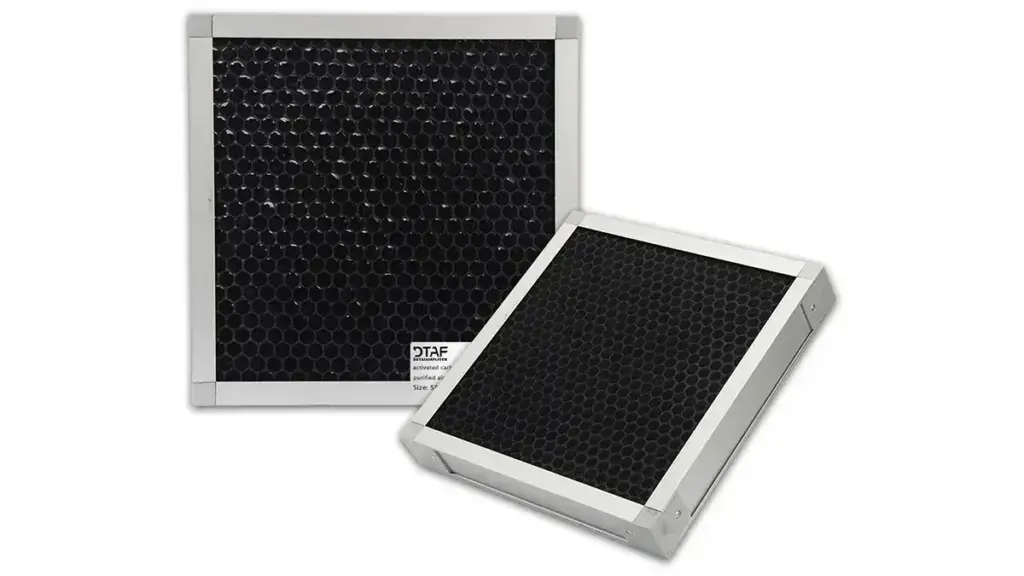
Activated carbon V-bank filters are designed to address certain gaseous contaminants and odors through adsorption. They differ from conventional particulate filters, which primarily capture airborne particles.
Carbon filter performance depends on the type and quantity of carbon, the target contaminant, contact time, 습기, and operating conditions. In some systems, carbon filtration is combined with particulate filtration to address different air quality requirements.
If gas-phase contaminant control is required, explore DTAF’s activated carbon air filters, where applicable.

V-Bank Filter Specifications and Available Sizes
Before selecting a V-bank filter, check its dimensions, 여과 효율, rated airflow, initial pressure drop, and frame material. These parameters help determine whether a filter is suitable for the existing air handling system.
The nominal size alone is not enough. Actual dimensions, sealing arrangements, and mounting requirements should also be confirmed to ensure a proper fit.
The table below can be used to compare DTAF’s available models once the corresponding technical data has been confirmed.
| Model | Filter Class (안에 1822) | Dimension (mm) | Rated Air Flow (m³/h) | 초기 저항 (아빠) |
|---|---|---|---|---|
| HV-E11 High Airflow Filter Box | E11 | 610*305*292 | 2000 | 200 |
| HV-E11 High Airflow Filter Box | E11 | 610*610*292 | 4000 | 200 |
| HV-H13 High Airflow Filter Box | H13 | 610*305*292 | 1700 | 300 |
| HV-H13 High Airflow Filter Box | H13 | 610*610*292 | 3400 | 240 |
| HV-H13U High Airflow Filter Box | H13 | 610*305*292 | 2000 | 320 |
| HV-H13U High Airflow Filter Box | H13 | 610*610*292 | 4000 | 250 |
| HV-H14 High Airflow Filter Box | H14 | 610*305*292 | 1700 | 330 |
| HV-H14 High Airflow Filter Box | H14 | 610*610*292 | 3400 | 250 |
| Frame material | Galvanized steel; Stainless steel; 플라스틱 |
| 중간 | Micro glassfiber |
| Gasket | EPDM; Endless PU foam |
| Max. working temperature | 80℃、120℃、250℃ |
| Max. working Rel. Humidity | 90% |
For accurate selection, always refer to the technical datasheet for the specific model and operating airflow.
V-Bank Filters for AHU and HVAC Systems
V-bank filters are commonly considered for commercial and industrial HVAC systems, particularly where high airflow and efficient filtration are required within a limited installation space.
In an AHU, the filter may be installed at a designated filtration stage to help remove airborne particles before air is supplied to occupied spaces or downstream equipment. The exact position depends on the system design and the required level of air cleanliness.
When selecting a V-bank filter for an AHU or HVAC system, consider the available filter-bank dimensions, required airflow, target filtration efficiency, initial and final pressure drop, and fan capacity. A filter that meets the efficiency requirement but creates excessive resistance may increase energy consumption or affect system airflow.
V-Bank Filter vs. Bag Filter: What’s the Difference?
V-bank filters and bag filters serve different design requirements. Although both can be used in HVAC filtration, their structures and installation needs differ.
| Comparison | V-Bank Filter | Bag Filter |
|---|---|---|
| Structure | Multiple V-shaped media sections | Multiple filter bags or pockets |
| Media arrangement | Pleated media in angled sections | Extended media bags |
| Space considerations | Compact configurations are available | Requires space for bag depth |
| Typical applications | High-airflow HVAC and AHU systems | Pre-filtration and intermediate filtration |
| Key selection factors | 기류, 압력 강하, 능률, and frame size | 기류, bag depth, 능률, and installation space |
Neither design is automatically better in every application. The right choice depends on the required filtration performance, system layout, available space, and operating cost.
How to Choose the Right V-Bank Filter
Selecting a V-bank filter involves more than matching the filter dimensions. Before ordering, confirm the following:
- Filtration efficiency: Identify the required efficiency and applicable testing standard.
- 기류: Confirm the design airflow and the filter’s rated operating conditions.
- Pressure drop: Check the initial pressure drop and the recommended final resistance to help assess energy consumption and replacement timing.
- Dimensions and frame: Verify the actual dimensions, frame material, sealing, and installation method.
- Operating conditions: Consider temperature, 습기, dust loading, and any special contaminant-control requirements.
For replacement projects, compare the existing filter’s specifications with the proposed model rather than relying on appearance or nominal size alone.
When purchasing in bulk or specifying filters for a new project, request the relevant technical datasheet and confirm compatibility before placing the order. You can also contact DTAF to discuss your application, required dimensions, and filtration requirements.
자주 묻는 질문
What is a V-bank filter used for?
A V-bank filter is used in HVAC and air handling systems where efficient particle filtration and high airflow are required. The suitable application depends on its filtration grade and design.
How often should a V-bank filter be replaced?
Replacement intervals depend on dust loading, operating hours, 기류, and the system’s pressure-drop limits. Follow the manufacturer’s recommendations and monitor differential pressure rather than relying on a fixed interval alone.
How do I choose the correct V-bank filter size?
Check the actual width, height, depth, frame configuration, and sealing requirements. Confirm the required airflow and filtration efficiency against the technical datasheet before ordering.
For help identifying a suitable model, contact DTAF with your required dimensions, 기류, filtration grade, and application details.