콘텐츠로 건너뛰기

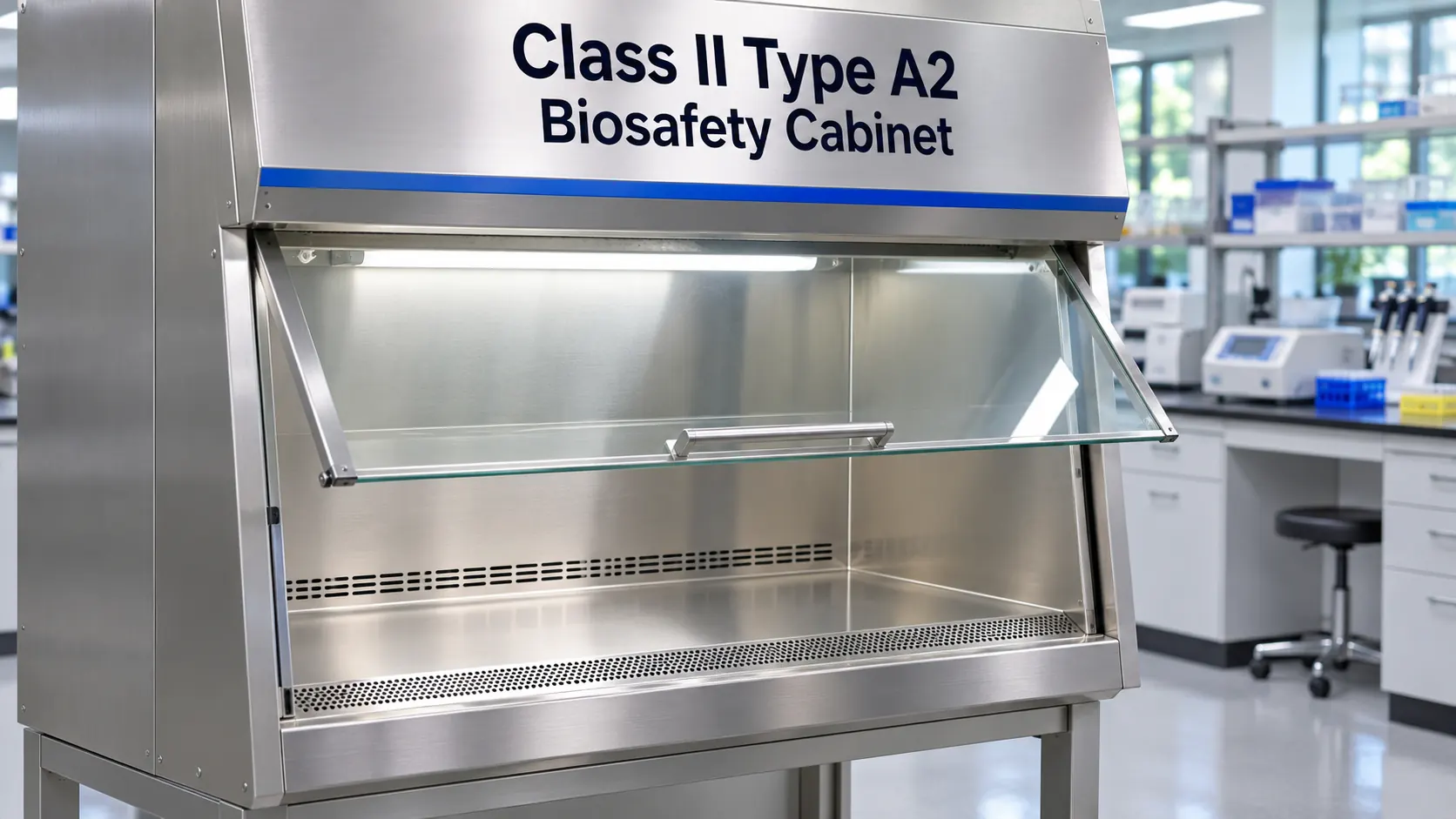
A Class II biosafety cabinet protects three parties at once: the operator breathing the room air, the culture exposed on the work surface, and the laboratory downstream of the exhaust. 그만큼 biosafety cabinet HEPA filter arrangement achieves this with a deliberate split of duties between the supply side and the exhaust side of the machine.
Understanding which filter does which job explains almost every cabinet question a laboratory asks, from airflow checks to certification and replacement. This guide walks through the two filters separately, then compares them, then closes with the specifications and testing practice that keep a cabinet certified.
How HEPA Filtration Works in Class II Biosafety Cabinets
One cabinet, two filters, and three directions of protection held in balance.
Every Class II biosafety cabinet carries at least one HEPA filter, and most designs carry two, one on the supply side and one on the exhaust. The type A2 cabinet recirculates most of the air internally and passes it through both filters on each cycle. Air is drawn in across the open sash, pulled down through the supply filter, and split again between recirculation and exhaust.
The Standards Behind Class II
European cabinets are built and tested against EN 12469, while North American practice follows NSF and ANSI documents, and both define the inflow, downflow, and leak limits the filters must support. The two schemes agree on the core numbers, which is why one filter class serves both markets. Buyers should still match the replacement filter to the cabinet model, because the frame and resistance are model specific.
Three Airflows Held in Balance
The cabinet manages three streams simultaneously: the laminar downflow that protects the product, the front inflow that protects the operator, and the exhaust that protects the environment. Fans, dampers, and filters are tuned so that no single stream starves the others. Certification exists precisely to confirm that this balance still holds after a year of service.
The filters create three protections at once: clean air over the work surface for the product, an air curtain at the opening for the operator, and filtered exhaust for the laboratory. Without both filters the cabinet is just a box with a fan. Reading any cabinet datasheet through that three-protection lens tells you immediately whether a design is complete.
Laminar Behavior Inside the Cabinet
예, the downflow in a Class II cabinet is laminar, moving as parallel vertical streams that sweep particles away from the work surface. The same laminary behavior forms the air curtain across the front opening, which is why arms should enter and leave slowly. Rapid movements fold the curtain and pull unfiltered room air toward the sample, which no filter downstream can undo.
Supply HEPA Filters: Role and Airflow Direction
The supply filter exists to protect the work, not the worker.
The supply HEPA filter is the last surface the product-side air touches. Room air is drawn into the cabinet across the open sash and passes through this filter first. It then descends as clean laminar flow over the work surface, so cultures and samples sit in filtered air even though the room around the cabinet is not sterile. Its job is product protection.
Position and Airflow Direction
The supply filter sits below the cabinet top, with air moving downward through the media into the plenum that feeds the work surface. Media area is generous relative to the airflow, which keeps face velocity low and the downflow uniform. Because the flow must stay parallel, filter replacement must restore the same resistance class as the original, or the downflow profile drifts.
What It Does Not Do
The supply filter never sees contaminated exhaust, because the two paths are separated before filtration. It protects samples from the room, not people from the samples, and confusing the two duties leads to wrong expectations during incidents. Certification labels the two filters clearly on the cabinet precisely so that service never mixes them up.
Exhaust HEPA Filters: Role and Containment Function
The exhaust filter is the boundary between the hazard inside and the building outside.
The exhaust HEPA filter captures aerosols generated on the work surface before the air leaves the cabinet. In an A2 design, the exhausted share passes through the room ceiling or a canopy connection, while the rest continues to circulate internally. Either way, the exhaust filter is what makes the cabinet safe to operate in an occupied laboratory.
Containment Duty and BSL Coverage
Biosafety level work with airborne hazards starts relying on HEPA filtration from BSL-2 upward, and BSL-3 facilities depend on it for cabinet exhaust. BSL-1 work with no airborne hazard does not require a biosafety cabinet at all. At higher levels the exhaust filter becomes a containment component with leak testing and, in some designs, bag-in bag-out service access.
Hard Duct or Room Discharge
Whether exhaust can return to the room depends on cabinet type and agent risk, and that decision shapes laboratory ductwork. Where agents demand it, the cabinet is hard ducted, and the exhaust filter then works against duct pressure rather than room conditions. The filter specification follows that plumbing decision, which is why cabinet and building design must be coordinated early.
Supply vs. Exhaust HEPA Filters: Key Differences
Same media, opposite directions, and two different reasons to care.

Both filters use the same glass microfiber media class, but everything around the media differs. The table below collects the practical contrasts that certification teams and purchasers actually act on.
| Aspect | Supply HEPA Filter | Exhaust HEPA Filter |
|---|---|---|
| Primary duty | Product protection on the work surface | Operator and environment protection |
| Airflow direction | Downward into the work plenum | Out of the cabinet to room or duct |
| Loading source | Room dust drawn across the sash | Aerosols generated in the cabinet |
| Failure consequence | Contaminated samples and failed work | Exposure risk in the laboratory |
| Service access | From the front work area | From the rear or via bag-out |
The A2 and B2 Contrast
An A2 cabinet recirculates most air inside the cabinet and may discharge a small share back into the room, while a B2 cabinet sends all air through a dedicated duct and hard-ducted exhaust. That difference decides whether the exhaust filter can be changed from inside the room and how much ductwork the laboratory needs. A Class II type A2 cabinet maintains a laminar downflow, a set minimum inflow velocity at the sash, and roughly 70% internal recirculation through HEPA filters. It suits low to moderate risk agents and can exhaust to the room or through a canopy connection.
Choosing between the types is a building decision as much as a laboratory one, and the filter implications follow from it. Buyers comparing cabinet options can map the same media class across both types, which is one reason standard filter sizes keep service contracts simple. For the media choices behind these filters, our article on fiberglass versus PTFE HEPA media explains where each material fits.
Filter Supply for Cabinets and Clean Benches
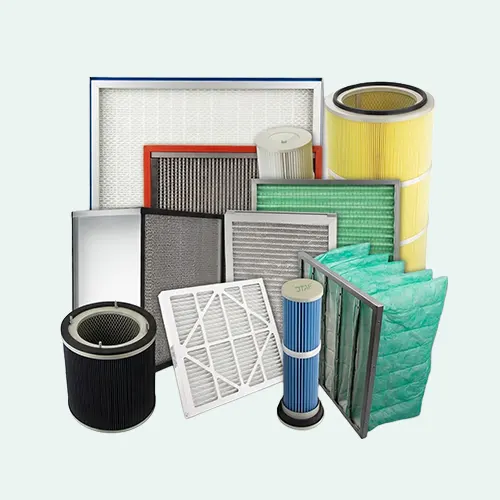
HEPA Filter Specifications for Class II Cabinets
Cabinet filters are small, testable, and specified per cabinet model rather than per room.
Cabinet manufacturers define filter size, 등급, and sealing for each model, and replacements must match that definition exactly. Grade requirements sit at H14 class performance for the work surface, with resistance chosen so the cabinet fan holds certified velocities across the media life. For the grading background, 우리의 HEPA and ULPA guide explains the full class ladder.
Velocity, 저항, and Fan Margin
Cabinet blowers are sized with a small margin, so a replacement filter with higher resistance than the original drags downflow and inflow velocities below certification limits. Filters are therefore bought against the model specification rather than on price alone. Laboratories keep one approved part number per cabinet to remove that risk.
Sealing and Frame Details
Gasket seals compressed by clamping bars are standard on cabinet filters, and some models use gel channels on the exhaust side. Frame depth decides media area in a compact cabinet, so the original equipment dimensions are reproduced exactly. Filter testing practice for this class of product follows the IEST-RP-CC001 recommended practice, which laboratories reference in their certification contracts.
HEPA Filter Replacement and Integrity Testing
Filter replacement and post-change certification are one procedure, not two separate events.
Laboratories typically plan cabinet filter replacement every three to five years, with certification on an annual or more frequent cycle. Load, 영업시간, and any leak found during certification shorten that interval, and certification always follows a change. The sequence matters, because a new filter is not trusted until the scan proves it.
Safe Change Practice
Filters on B cabinets used for hazardous work are changed with the same containment thinking as any contaminated part, including surface decontamination and sealed disposal bags. A cabinets serving lower risk work still use gloves, sealed bags, and a planned route for the spent filter. The cabinet manual defines the access sequence, and skipping steps shows up at the next scan.
Records That Keep the Cabinet Auditable
Certification reports, filter labels, and change-out entries live in one cabinet file in a well run laboratory. When an auditor or a safety officer asks when the exhaust filter was last proven tight, the answer arrives in minutes instead of days. That file is also the fastest way to spot a cabinet whose filters age faster than its siblings, which usually points to a workflow problem rather than a product fault.
Certification After Replacement
The certification technician verifies inflow velocity, downflow velocity, leak testing of both filters, and sash alarm function after every change. A filter that passes the scan but shifts the velocity balance fails the certification, and the cabinet stays out of service until both are right. Keeping velocity records across years reveals drift early and turns replacement into planned maintenance.
FAQ About Biosafety Cabinet HEPA Filters
What is the purpose of HEPA filters in biosafety cabinets?
The filters create three protections at once: clean air over the work surface for the product, an air curtain at the opening for the operator, and filtered exhaust for the laboratory. Without both filters the cabinet is just a box with a fan.
Does a biosafety cabinet have a HEPA filter?
Every Class II biosafety cabinet carries at least one HEPA filter, and most designs carry two, one on the supply side and one on the exhaust. The type A2 cabinet recirculates most of the air internally and passes it through both filters on each cycle.
Do biosafety cabinets have laminar flow?
예, the downflow in a Class II cabinet is laminar, moving as parallel vertical streams that sweep particles away from the work surface. The same laminary behavior forms the air curtain across the front opening, which is why arms should enter and leave slowly.
Which BSL requires HEPA filters?
Biosafety level work with airborne hazards starts relying on HEPA filtration from BSL-2 upward, and BSL-3 facilities depend on it for cabinet exhaust. BSL-1 work with no airborne hazard does not require a biosafety cabinet at all.
What are the key differences between A2 and B2 biosafety cabinets?
An A2 cabinet recirculates most air inside the cabinet and may discharge a small share back into the room, while a B2 cabinet sends all air through a dedicated duct and hard-ducted exhaust. That difference decides whether the exhaust filter can be changed from inside the room and how much ductwork the laboratory needs.
How often are HEPA filters changed?
Laboratories typically plan cabinet filter replacement every three to five years, with certification on an annual or more frequent cycle. Load, 영업시간, and any leak found during certification shorten that interval, and certification always follows a change.
What is a class 2 type A2 biosafety cabinet?
A Class II type A2 cabinet maintains a laminar downflow, a set minimum inflow velocity at the sash, and roughly 70% internal recirculation through HEPA filters. It suits low to moderate risk agents and can exhaust to the room or through a canopy connection.
결론
Class II biosafety cabinets work because supply and exhaust filtration are treated as two jobs that share one airflow system. The supply filter guards the product, the exhaust filter guards the people and the building, and certification holds both to the velocities and leak limits that make the cabinet trustworthy.
Laboratories that buy replacements against the cabinet model, keep one approved part number, and certify after every change get years of quiet, reliable containment from a small pair of filters.