FFUとは?
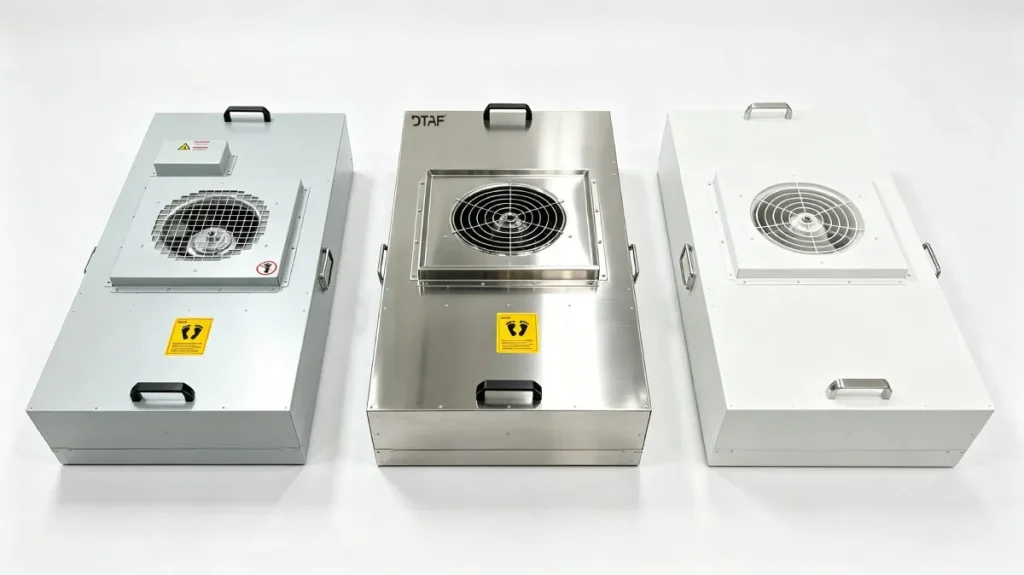
FFUはファンフィルターユニットの略です. A fan filter unit is a self-contained air-handling and filtration device that combines a fan, motor, high-efficiency filter, housing, and control system in one compact unit. If you are searching for what is a fan filter unit, it can be simply understood as a unit that draws air from the surrounding environment, filters it through a HEPA or ULPA filter, and supplies clean, filtered air to a controlled space.
The fan draws air into the unit and pushes it through a HEPA or ULPA filter, removing airborne particles before the filtered air is supplied to the cleanroom. Depending on the system design, FFUs can also provide adjustable airflow and individual control, making them a flexible solution for maintaining consistent air cleanliness and airflow conditions.
How Does an FFU Work?
The basic airflow path is:
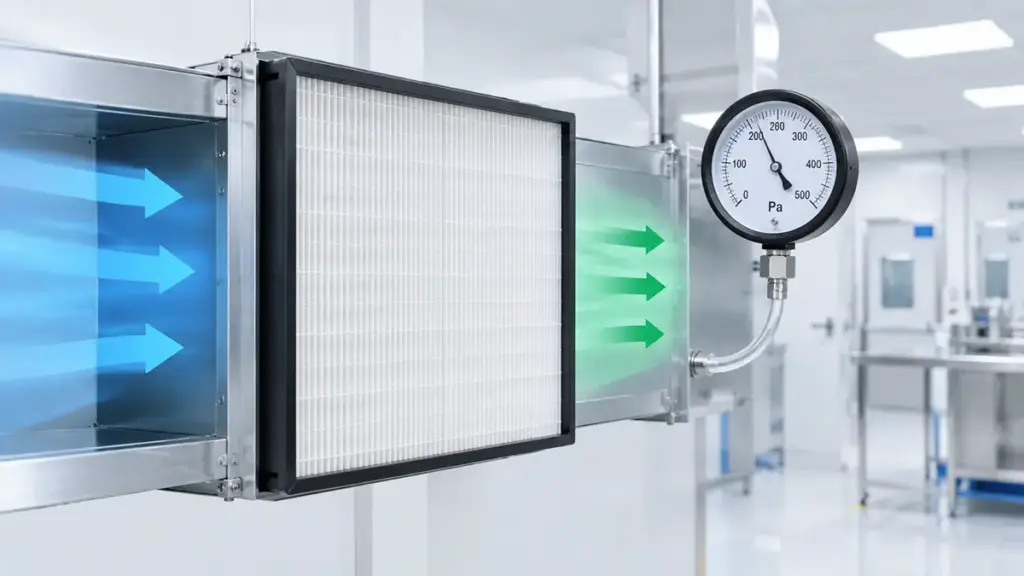
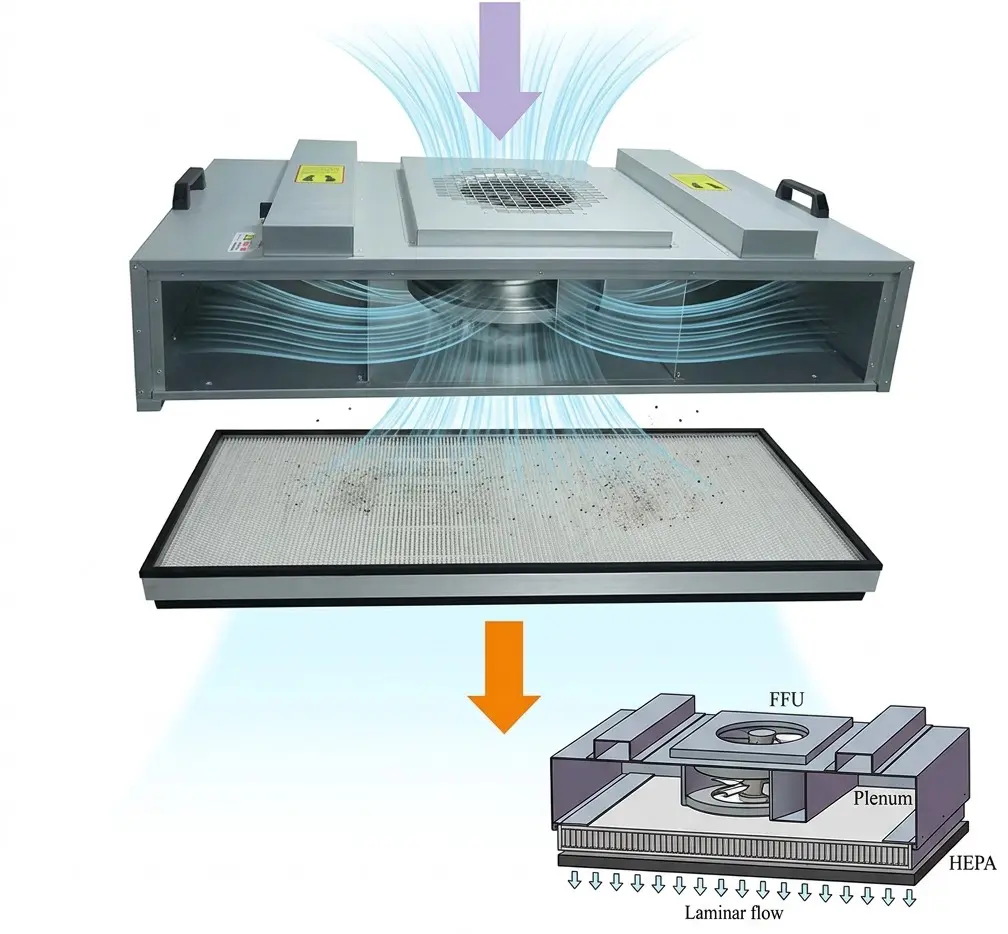
Air Intake → Fan → HEPA/ULPA Filter → Clean, Filtered Air → Cleanroom
An FFU works by drawing air into the unit, moving it through a high-efficiency filter, and supplying clean, filtered air into the controlled environment. The fan, filter, and airflow path work together to maintain the required level of air cleanliness and airflow.
Step 1: Air Enters the FFU
Air from the ceiling plenum, room, or return-air system enters the FFU through the air inlet. Depending on the system design, a pre-filter may be used to capture larger particles before the air reaches the main filter.
Step 2: The Fan Moves the Air
The integrated fan and motor draw air through the unit and provide the pressure needed to overcome the resistance of the filter and other components. Fan speed can typically be adjusted to control the airflow according to the requirements of the cleanroom.
Step 3: Air Passes Through the Filter
The air then passes through a high-efficiency HEPA or ULPA filter, where airborne particles and contaminants are captured. The choice of filter depends on the required level of air cleanliness and the application.
Step 4: Clean Air Is Supplied to the Cleanroom
After filtration, the clean air is discharged from the FFU into the controlled environment. Depending on the cleanroom design, the FFU may provide unidirectional, laminar, or mixed airflow.
This process allows an FFU to combine air movement and high-efficiency filtration in one compact unit, while providing controlled airflow for cleanroom applications.
What Are the Main Components of an FFU?
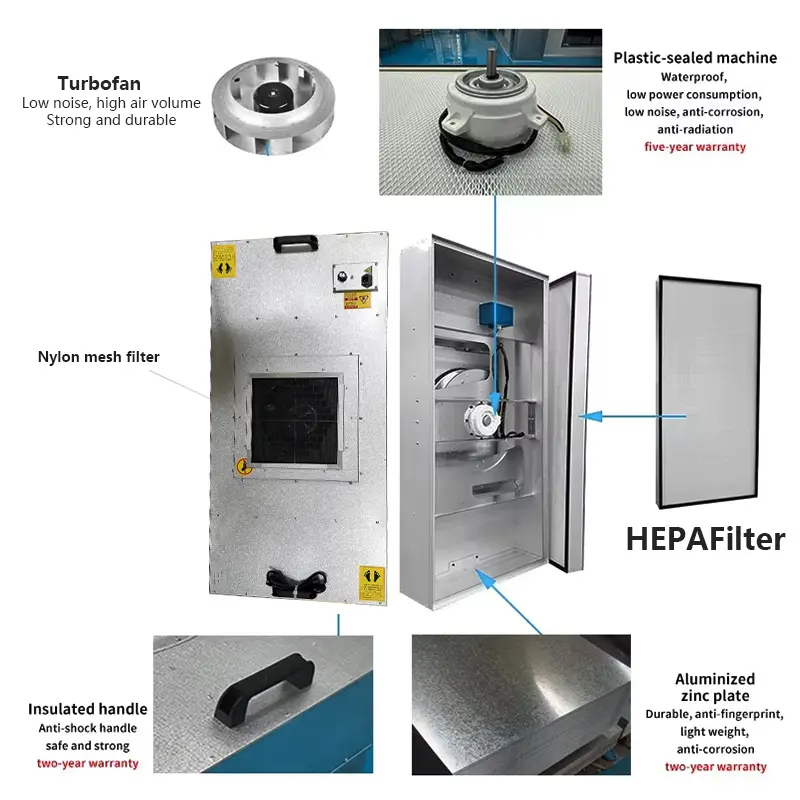
Fan and Motor
The fan provides the airflow required to move air through the filter. Motor efficiency, fan speed, 気流, static pressure, and noise are important factors when evaluating FFU performance.
Modern FFUs may use energy-efficient EC motors and variable-speed control to help optimize airflow and energy consumption.
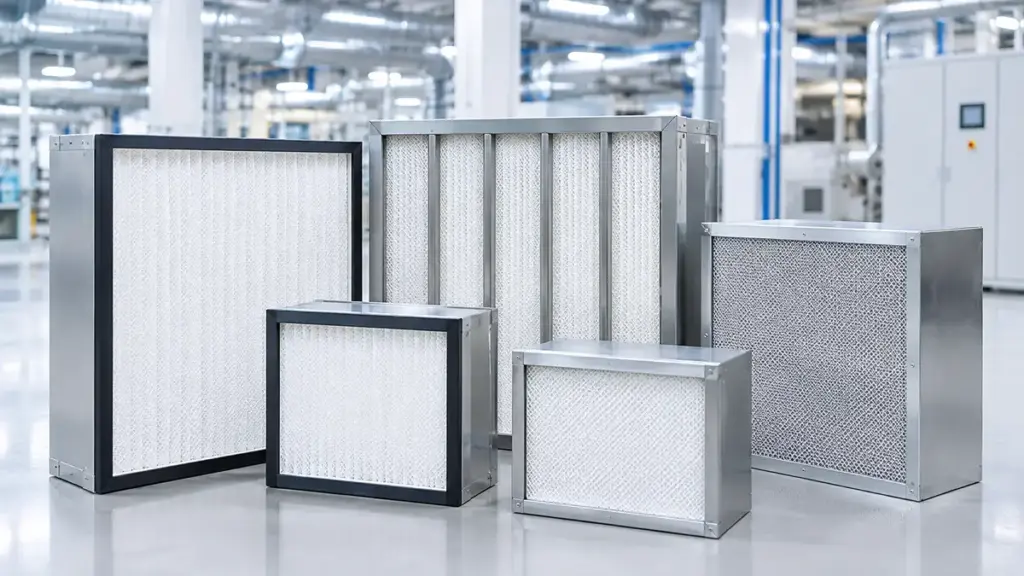
HEPA or ULPA Filter
The filter is responsible for removing airborne particles from the air stream.
An FFU may be configured with a HEPA or ULPA filter depending on the required level of air cleanliness and the application.
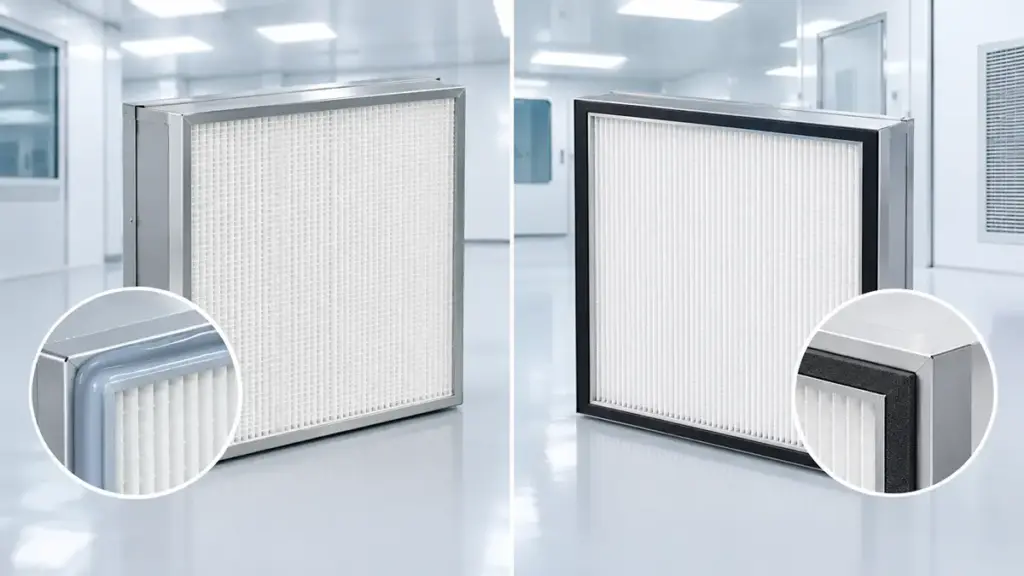
Housing
The housing supports and protects the internal components. It also needs to provide proper sealing and compatibility with the cleanroom ceiling or installation system.
Control System
The control system regulates fan speed and airflow. Depending on the FFU design, control options may include manual control, 0–10 V, Modbus, PLC, or BMS integration.
Fan Filter Unit Specifications
Fan filter unit specifications typically include:
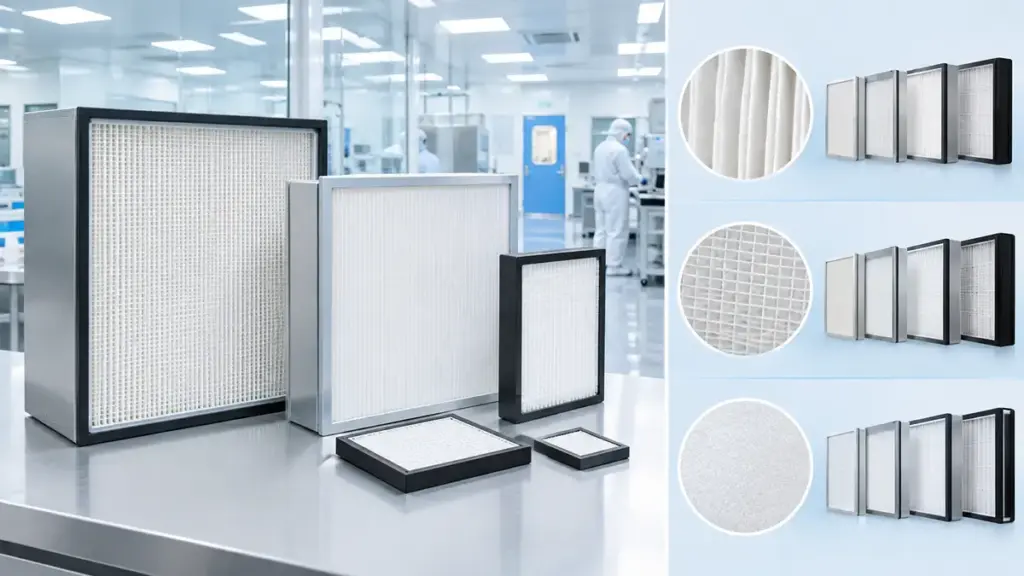
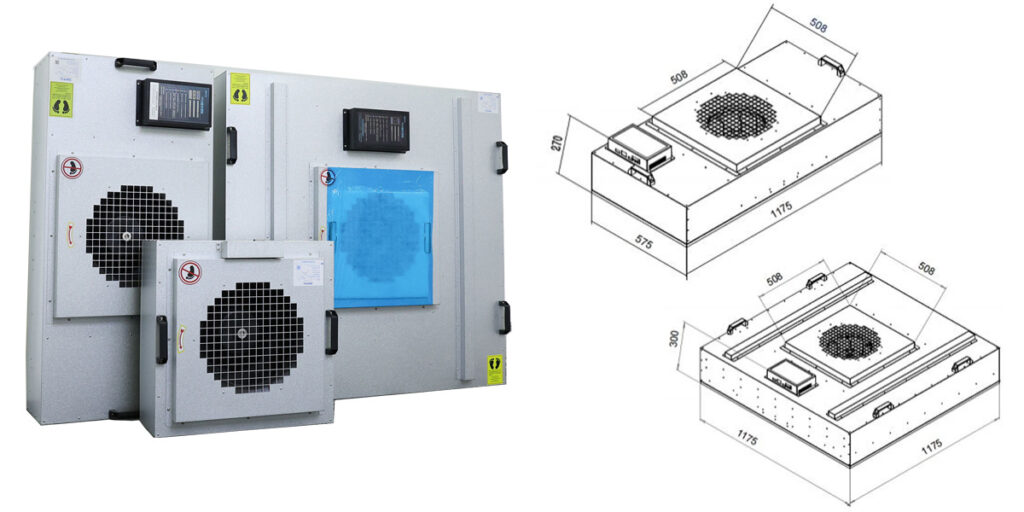
- Unit size / 寸法
- 気流
- Filter efficiency
- Fan and motor
- Power consumption
- Noise level
- Control system
The required specifications may vary depending on the cleanroom application and project requirements.
FFU Price: How Much Does a Fan Filter Unit Cost?
FFU price depends on several factors, including unit size, 気流, filter type and efficiency, motor, housing material, control system, and customization requirements. Different fan filter units may have different prices depending on their specifications and project requirements.
For a full breakdown of these factors and typical price ranges, see our guide to Fan Filter Units Pricing →.
Where Are FFUs Used?
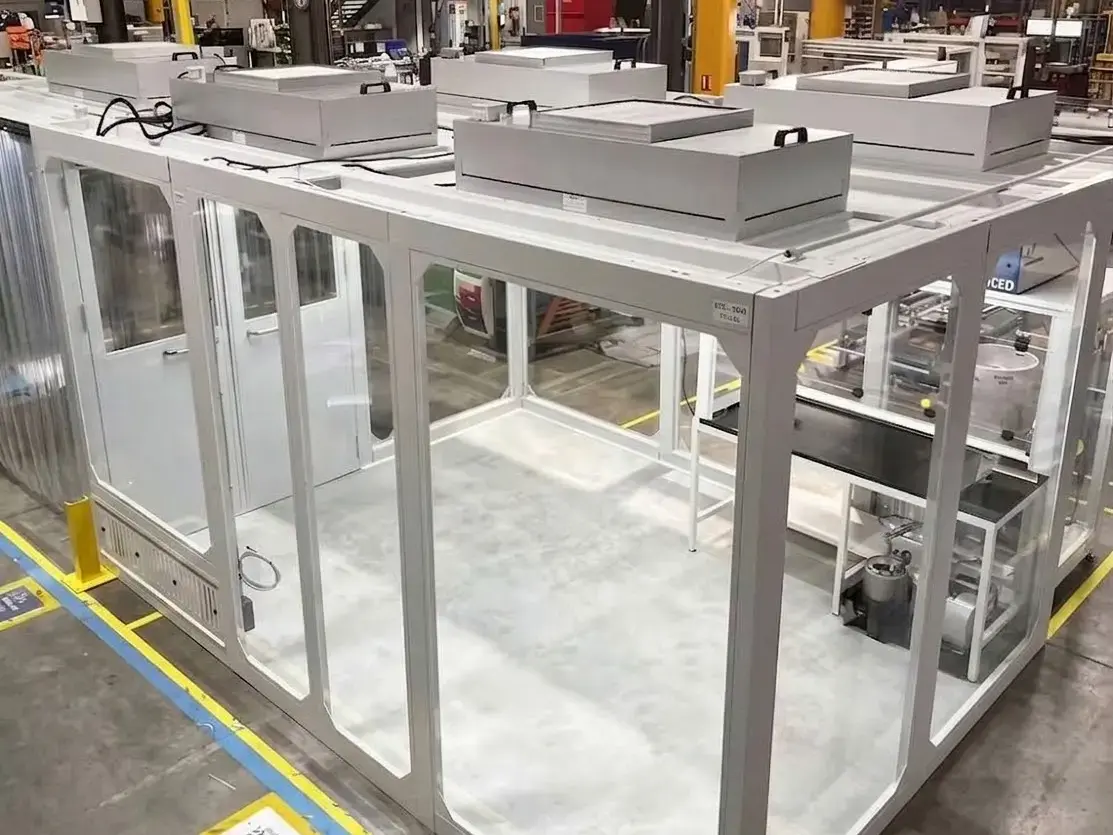
FFUs are commonly used wherever controlled air cleanliness is required.
Typical applications include:
- Semiconductor manufacturing
- Pharmaceutical manufacturing
- Electronics production
- Biotechnology
- Laboratories
- Medical and healthcare facilities
- Precision manufacturing
- Other controlled environments
FFU vs AHU: What Is the Difference?
| Feature | FFU (ファンフィルターユニット) | AHU (Air Handling Unit) |
|---|---|---|
| Primary function | Localized air filtration and airflow | Centralized air handling and air distribution |
| Filtration | Typically uses HEPA or ULPA filters | May include pre-filters, fine filters, and other filtration stages |
| Airflow control | Fan-driven, often with individual speed control | Centralized airflow control |
| Cooling & heating | Generally not designed for cooling or heating | Can provide cooling and heating |
| Humidity control | Generally not provided | Can provide humidity control |
| Installation | Commonly installed in cleanroom ceilings or modular grids | Usually installed as a centralized HVAC unit |
| System scale | Modular and scalable | Centralized system serving larger areas |
| Typical role | Provides clean, filtered air directly to the cleanroom | Conditions and distributes air to the cleanroom |
| Flexibility | Individual units can often be adjusted or controlled | Changes typically affect the overall air-handling system |
How FFU and AHU Work Together
A typical airflow path may be:
AHU → Supply Air → Ceiling Plenum → FFU → HEPA/ULPA Filter → Cleanroom
This configuration allows the central HVAC system to manage temperature, humidity, ventilation, and overall air distribution, while FFUs help maintain the required cleanliness and airflow conditions within the cleanroom.
FFU Housing Material Comparison
| 基準 | Galvanized / Powder-Coated Steel | ステンレス鋼 (SS304 / SS316L) | Aluminum Alloy |
|---|---|---|---|
| Cost | Low | High (316L higher than 304) | Medium to high |
| Weight | Medium | Heavy | Light (about half of stainless steel) |
| Corrosion Resistance | Moderate; prone to rust once coating is damaged | Excellent; 316L resists strong acids, alkalis, and VHP | 良い; improved by anodizing; not resistant to strong acids/alkalis |
| Surface Cleanliness | Moderate; coating may shed particles | Excellent; smooth, non-porous, does not harbor bacteria | 良い; smooth surface |
| Structural Strength / Rigidity | 良い | Very good | Moderate; large units need special design to prevent deformation |
| Ease of Cleaning | Moderate | Excellent; wipeable and disinfectable | 良い |
| Chemical Disinfectant Resistance | Limited | Excellent | Limited |
| Applicable Cleanroom Class | ISO 6–8 | ISO 1–5 / GMP | ISO 4–7 |
| 代表的な用途 | Electronics manufacturing, optics workshops, general industrial cleanrooms | Biopharmaceuticals, GMP, semiconductor, food processing | EFU, mini-environments, OHT routes, retrofit projects with limited ceiling load |
| Installation Convenience | Moderate | Low (load-bearing considerations required) | High (lightweight and easy to install) |
| Maintenance / Replacement | Low cost | High cost | Medium cost |
| Rust-Prone | はい (after coating damage) | いいえ | いいえ |
Selection Guide:
- Cost-effective, general environment → Galvanized / powder-coated steel
- High cleanliness, corrosion resistance, GMP requirements → Stainless steel (316L for the most demanding environments)
- Lightweight, limited ceiling load, EFU → Aluminum alloy
Frequently Asked Questions About FFUs
FFU stands for ファンフィルターユニット, a device that combines a fan and high-efficiency filtration system to provide controlled filtered airflow.
FFUs are primarily used to supply clean, controlled air in cleanrooms and other environments where airborne particle contamination needs to be controlled.
はい. FFUs can be designed with ULPA filters when the application requires higher-efficiency particle filtration.
Many FFUs are designed to use HEPA filters, although the exact filter configuration depends on the application and FFU design.
How to Choose the Right FFU Manufacturer?
When evaluating an FFU supplier, consider:
- Manufacturing capability: Does the supplier operate its own factory and cleanroom assembly facilities?
- Quality control: Are airflow, ろ過効率, 圧力降下, ノイズ, and other key parameters tested before shipment?
- Customization: Can the manufacturer provide different sizes, フィルターグレード, モーター, controls, and OEM/ODM options?
- Production capacity: Can the supplier maintain consistent quality and delivery times for both standard and large-volume orders?
- Technical support: Can the supplier help with FFU selection, airflow requirements, installation, and replacement?
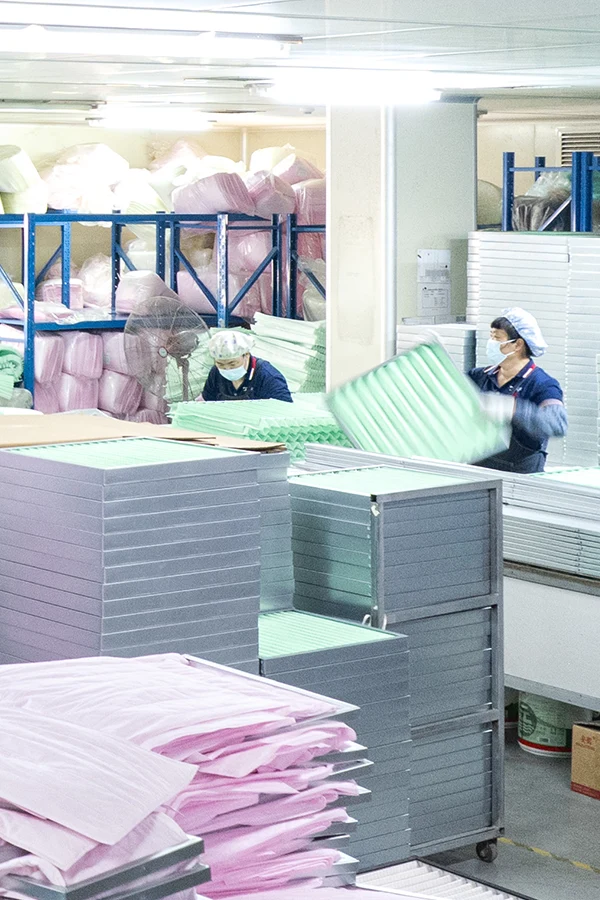
For projects that require reliable cleanroom air filtration, working directly with an experienced FFU manufacturer can provide better control over product quality, customization, and long-term supply.
Looking for a reliable FFU manufacturer?
DTAF provides factory-direct FFU solutions with cleanroom manufacturing, strict quality control, OEM/ODM capabilities, and global supply support.