コンテンツにスキップ

A sterile vial cannot be inspected for the particles that contaminated it, so pharmaceutical regulation moves the protection upstream of the product instead. の GMP cleanroom HEPA filter is the point where that protection becomes physical, and regulators audit it accordingly.
This guide walks through where filters belong in a graded cleanroom, what the air system expects of them, and how integrity testing turns a filter into documented evidence. It is written for engineering and quality teams who specify filters for GMP zones and must defend that specification in an inspection.
The Role of HEPA Filters in GMP Cleanrooms
In a GMP facility the filter is not a component, it is part of the batch record.
In pharmaceutical production a HEPA filter is the validated final barrier that keeps viable and non-viable particles out of the product. Regulators expect it to be specified, tested, and documented like any other critical piece of the process. That framing changes everyday decisions, because a filter change-out becomes a controlled event with an impact assessment attached.
Product Protection and Regulatory Expectations
EU GMP Annex 1 and the equivalent FDA guidance tie air classification directly to sterile operations, and the HEPA filter is the mechanism that achieves the class. Inspectors look for specification, installation qualification, and recurring integrity test records for every filter in the sterile chain. A filter without documented performance is treated as an unvalidated boundary, whatever its datasheet says.
How Filters Fail in Practice
Filters in GMP service rarely fail by falling apart, they fail by leaking at the frame or loading past the planned resistance. Both failures are invisible from the room, which is exactly why the verification program leans on pressure gauges and periodic integrity scans. Facilities that treat gauge readings as batch data catch failing filters while the room is still compliant.
Non-Viable and Viable Particle Control
The filter handles non-viable particles directly, and viable contamination follows because microbes ride on larger particles. Cleanroom monitoring then confirms the result with particle counts and microbial settle plates in the same zones. Both data streams trace back to the same ceiling, which is why filter quality and monitoring results are read together during investigations.
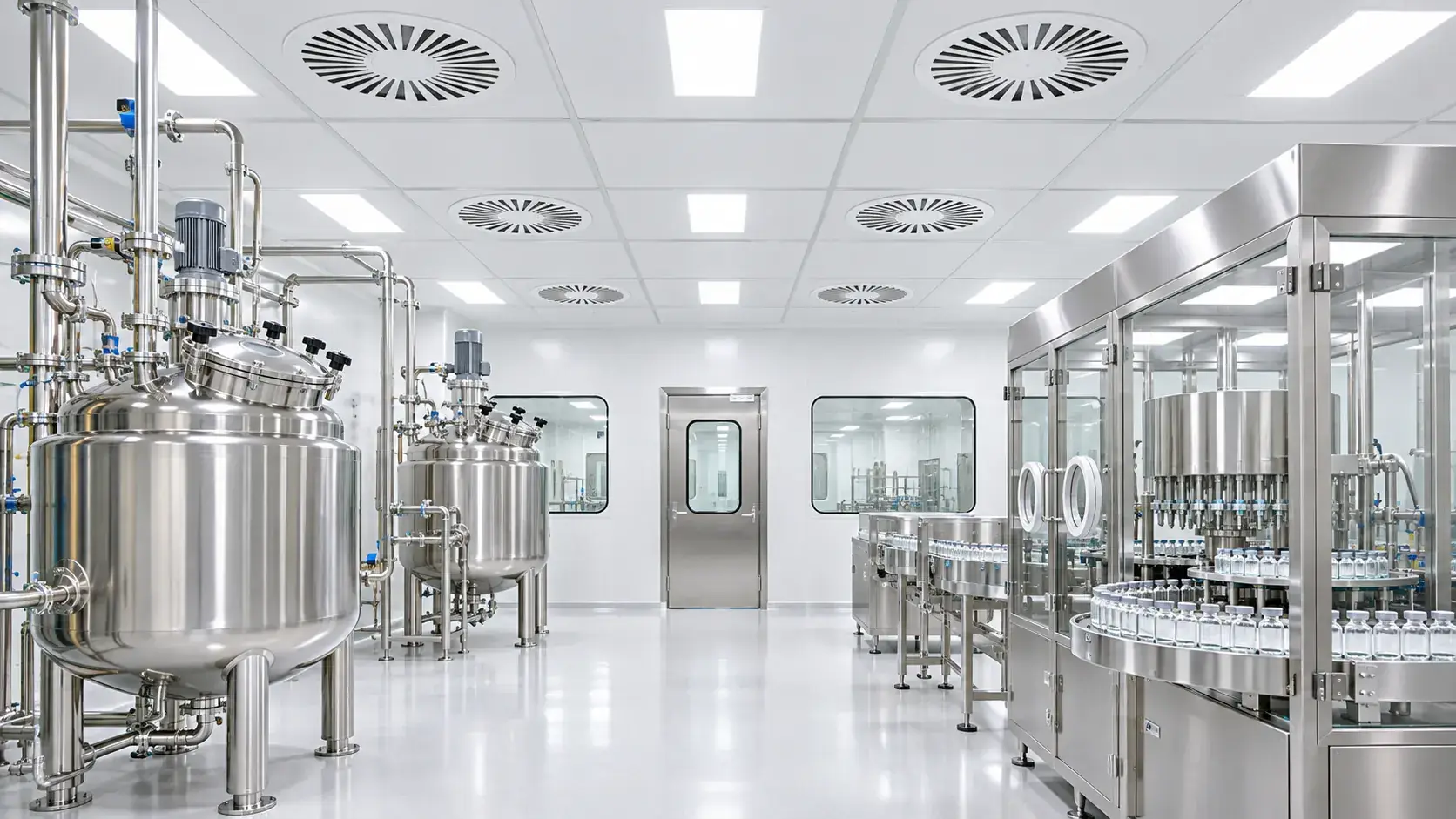
HEPA Filter Placement Across GMP Cleanroom Grades

Filter grade follows the grade of the room, and the highest grades sit where product is exposed.
Where are HEPA filters installed? They sit at the terminal end of the air supply, either in the ceiling diffuser of the cleanroom or in a housing directly beside the room. Placement always puts the last filter as close to the point of use as the design allows.
Grades A and B: The Aseptic Core
Grade A is the aseptic processing zone itself, filled through high coverage terminal filters or restricted access barriers, and Grade B is the background room that supports it. Both zones demand H14 class filtration with in-place testing, because product is directly exposed here. Filter change-outs in these areas are planned shutdowns with full documentation.
Grades C and D: Support and Preparation
Grade C rooms prepare components and equipment before sterilization, and Grade D handles initial cleaning and low risk steps. H13 or H14 filters still serve these rooms, but with relaxed change frequency and room level monitoring instead of continuous counting. The stepwise downgrade from Grade A to D exists precisely so the expensive performance is bought only where exposure demands it.
Barrier Technologies Change the Filter Layout
Restricted access barrier systems and isolators concentrate Grade A conditions inside a smaller envelope, so their filters are smaller and tested as part of the barrier rather than the ceiling. The background room then runs at Grade B with conventional terminal filters. Either architecture keeps the same rule: the last filter before product exposure carries the highest grade and the tightest test schedule.
Pressure Cascades Between Zones
Each zone runs positive to its neighbor by a defined pressure step, so air always flows from cleaner to dirtier space. Terminal filters make that cascade stable, because their resistance defines how the system balances. Door alarms, gauges, and air velocity checks all assume the filters are performing to specification.
Terminal HEPA Filters in Pharmaceutical Air Supply Systems
The pharmaceutical air system is built backwards from the terminal filter to the intake louvre.
Terminal HEPA filters close the supply path for every graded room, but they work as the last stage of a chain. Make-up air units clean outdoor air, recirculation systems move the bulk volume, and the final filter at the ceiling sets the cleanliness the product actually sees.
Staging in AHUs and Recirculation
Air handlers ahead of the terminal stage carry panel prefilters and bag type second stages, and the pocket filter selection guide in our blog covers how those mid stages are sized. Their job is to strip the load that would blind a ceiling filter in months. Well staged AHUs are the reason terminal filters in pharma suites last for years instead of one season.
Exhaust Side Filtration
Exhaust air from potent compound or containment areas passes through its own HEPA stage, often in bag-in bag-out housings, before it leaves the building. The supply and exhaust sides are documented separately in the quality system, and each side carries its own test schedule. A site that qualifies both directions is protected against cross contamination in either direction.
Terminal Options: Diffusers, Housings, and Plenums
Small rooms often use HEPA filter diffusers that combine filter and grille in one ceiling unit. Larger Grade A zones route air through terminal housings or supply plenums with larger media, lower velocity, and room-side test access. The choice sets how testing is performed, so it belongs in the design phase rather than the procurement phase.
One Filter Standard for the Whole Graded Suite
HEPA Filter Specifications for GMP Applications
GMP specifications are written for the audit file as much as for the air.
What does HEPA grade filter mean? The grade is the filter efficiency class under EN 1822 またはISO 29463, tested at the most penetrating particle size. H13 marks 99.95% at that worst case size, and each step up multiplies the capture requirement roughly by ten. The classification logic is the same one explained in our guide to で 1822 versus ISO 29463.
| 仕様 | GMP Practice | Typical Value |
|---|---|---|
| Grade for A/B zones | Sterile exposure protection | H14 at 99.995% MPPS |
| Grade for C/D zones | Support and preparation areas | H13 or H14 by design |
| 初期抵抗 | Planned fan and energy budget | 100 に 140 パ |
| シーリング | Testable leak-tight mounting | Gel or liquid trough |
| ドキュメント | Per filter traceability | Individual scan report |
Material and Construction Requirements
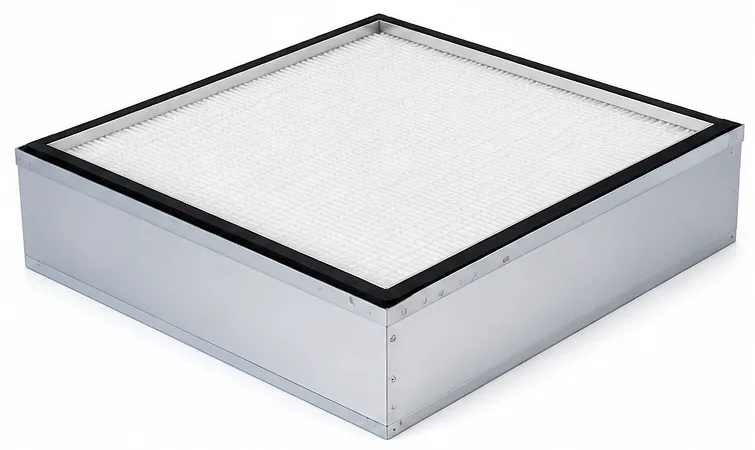
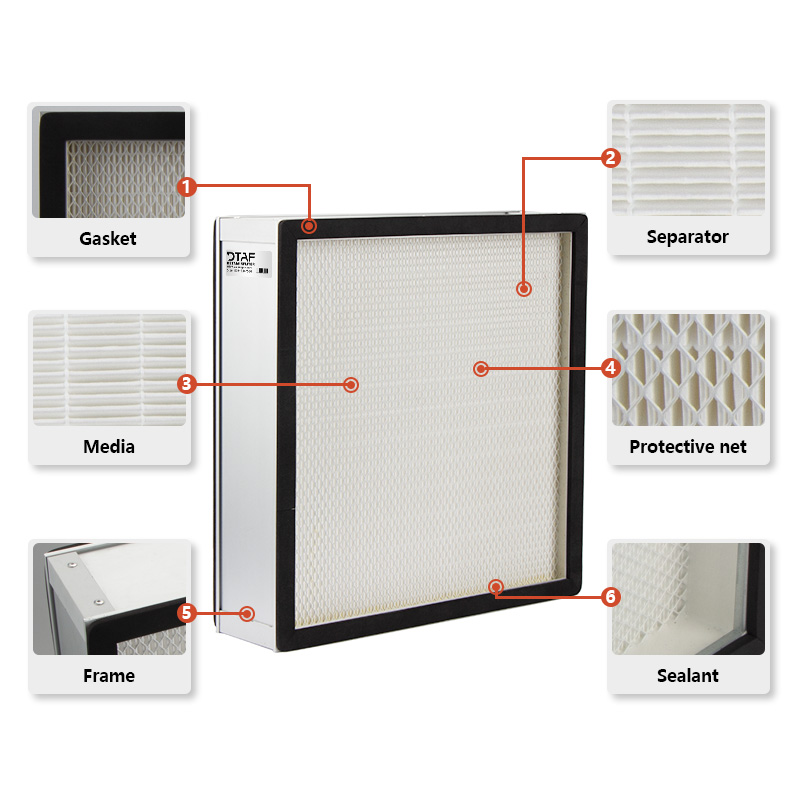
Filters for sterile areas use media and sealants that will not shed or outgas into the room, and frames are aluminum or stainless for repeated wipe disinfection. For most GMP work H14 at 99.995% MPPS is the working answer, because it delivers aseptic grade cleanliness without the resistance penalty of ULPA. Grades should be assigned by zone, with the highest grades reserved for the air that touches sterile product. GMP expects performance matched to exposure rather than one grade everywhere.
Construction quality shows up in the details inspectors touch: flat gasket faces, labeled airflow arrows, and test ports that match the site photometer. A manufacturer that runs a scan table on every filter, like our mini-pleat HEPA line, ships each unit with the report the quality system needs. The reference for HEPA capture figures in tender language is the US EPA definition, which most international documents echo.
HEPA Filter Integrity Testing in GMP Facilities
Integrity testing is how a GMP facility proves the invisible boundary exists today.
An integrity test proves that the filter and its mounting seal have no leak that would let unfiltered air bypass the media. Regulators treat the test as evidence that the aseptic boundary actually exists on the day of production, not only on the datasheet. That is why the test schedule, method, and acceptance limit appear in the site quality plan.
In-Place Testing with PAO or DOP
How do you test a HEPA filter? The standard method injects PAO or DOP aerosol upstream of the filter and scans the downstream face with a photometer probe on a slight overlap grid. A penetration above the accepted limit, usually 0.01% for Grade A work, marks the filter or seal for repair or replacement. The same scan verifies a freshly installed filter before the room is released to production.
Photometers, aerosol generators, and the reference probes used for the scan require calibration themselves, and calibration certificates are among the first documents an auditor asks for. Many sites run the test with qualified service contractors and keep the reports in the same file as the filter labels. Whoever performs the work, the acceptance limit and scan grid belong in the procedure, not in the memory of the technician.
Frequency, Records, and Change-Out Decisions
GMP facilities replace HEPA filters on defined intervals, commonly three to five years, or earlier when resistance rises or an integrity test fails. The schedule is written into the quality system, so every change-out is planned and recorded rather than reactive. Test records, change-out records, and deviation investigations form one chain, and the filter labels with test data are what keep that chain traceable.
FAQ About GMP Cleanroom HEPA Filters
What is a HEPA filter in the pharmaceutical industry?
In pharmaceutical production a HEPA filter is the validated final barrier that keeps viable and non-viable particles out of the product. Regulators expect it to be specified, tested, and documented like any other critical piece of the process.
Where are HEPA filters installed?
They sit at the terminal end of the air supply, either in the ceiling diffuser of the cleanroom or in a housing directly beside the room. Placement always puts the last filter as close to the point of use as the design allows.
What is the purpose of performing a filter integrity test?
An integrity test proves that the filter and its mounting seal have no leak that would let unfiltered air bypass the media. Regulators treat the test as evidence that the aseptic boundary actually exists on the day of production, not only on the datasheet.
How do you test a HEPA filter?
The standard method injects PAO or DOP aerosol upstream of the filter and scans the downstream face with a photometer probe on a slight overlap grid. A penetration above the accepted limit, usually 0.01% for Grade A work, marks the filter or seal for repair or replacement.
How often should cleanroom HEPA filters be changed?
GMP facilities replace HEPA filters on defined intervals, commonly three to five years, or earlier when resistance rises or an integrity test fails. The schedule is written into the quality system, so every change-out is planned and recorded rather than reactive.
Which grade HEPA filter is best?
For most GMP work H14 at 99.995% MPPS is the working answer, because it delivers aseptic grade cleanliness without the resistance penalty of ULPA. Grades should be assigned by zone, with the highest grades reserved for the air that touches sterile product.
What does HEPA grade filter mean?
The grade is the filter efficiency class under EN 1822 またはISO 29463, tested at the most penetrating particle size. H13 marks 99.95% at that worst case size, and each step up multiplies the capture requirement roughly by ten.
結論
GMP cleanroom filtration succeeds when placement, 仕様, and testing are treated as one design decision. Filters sit as close to the product as the system allows, and grades follow the A to D zoning. Every filter carries an individual test record that an inspector can follow without translation.
Facilities that standardize filter formats and buy from manufacturers with per-filter scan documentation spend less time proving compliance and more time producing. That is the quiet advantage a well specified HEPA program gives a pharmaceutical site.