For cosmetic companies, building a compliant R&D laboratory cleanroom is essential for ensuring formula stability and product safety. Unlike large-scale production filling rooms, R&D labs often handle multiple small-batch formulations, which places more precise demands oncross-contamination control Etemperature/humidity stability.
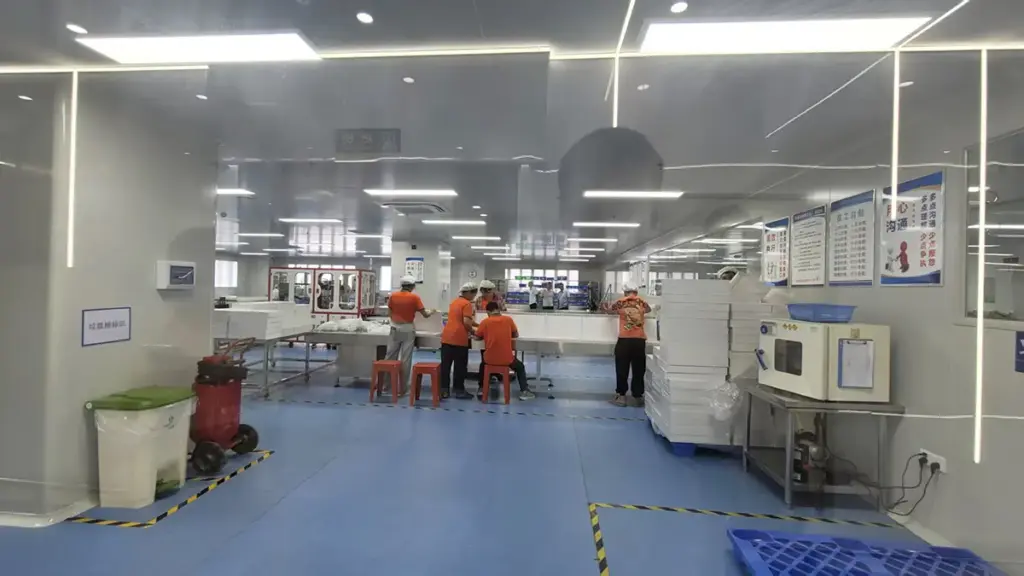
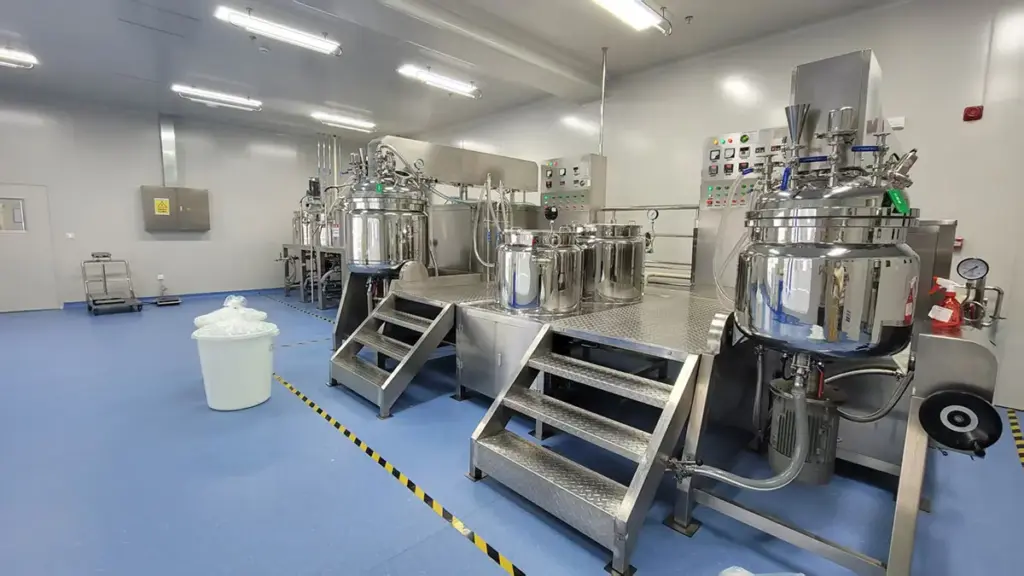
We recently completed the design and construction of a million-class cleanroom for a biotechnology company. The project is used for cosmetic formula development and pilot testing, with a total area of a few hundred square meters. The key challenges were directed airflow and pressure differential control.
What Does “Million-Class” Mean in Cleanroom Standards?
In industry practice, “million-class” typically corresponds to ISO 8 cleanliness (at rest, ≥0.5μm particle concentration ≤3,520,000 particles/m³). Although this is lower than Class 100 or Class 10,000, it is sufficient for R&D labs that only perform emulsification, compounding, and simple filling.
Tuttavia, meeting the particle count alone is not enough. According to cosmetic GMP guidelines, even lower-cleanliness areas must maintain apressure gradient so that air flows from cleaner zones to less clean zones, preventing unfiltered outside air from entering.
In this case, we set the core operation rooms (weighing and compounding) atrelative positive pressure, with a differential of 10Pa to 15Pa. This ensures cleanliness while avoiding excessive pressure that makes doors hard to open and wastes energy.
Airflow Organization and Filtration System Configuration
R&D labs may generate dust (from powder weighing) or volatile solvents, so “whole-room purification” alone is often insufficient. The core strategy for this project was: general ventilation + local exhaust.
The HVAC system used primary and medium filters for pretreatment, withHEPA filters at the supply air terminals to ensure ISO 8 particle levels. To control odors and cross-contamination during R&D, we installed independentlocal exhaust systems at fume hoods and weighing booths, rather than relying on return air to dilute pollutants. This point is critical in cosmetic GMP facility planning, because using return air for dust removal will seriously affect HVAC system lifespan and overall air quality.
Daily Monitoring Points for an R&D Laboratory Cleanroom
A completed cleanroom is not maintenance-free. For R&D labs, flexibility Ecompliance are equally important. We recommend focusing on the following easy-to-operate indicators, which also correspond to high-traffic search terms:
- Airborne particles and settle plates: Although R&D is not the same as production, regular settle plate testing (typically exposing a φ90mm plate for 30 minutes) is a direct way to verify environmental control.
- Air changes per hour: A million-class room usually requires 12 A 15 air changes per hour, enough to dilute micro-particles generated by personnel and equipment.
- Temperature and humidity records: Cosmetic ingredients are sensitive to temperature and humidity. We recommend maintaining the lab at 18-28°C and 45-65% RH to ensure reproducible R&D data.
Core Filtration Products Used in This Project
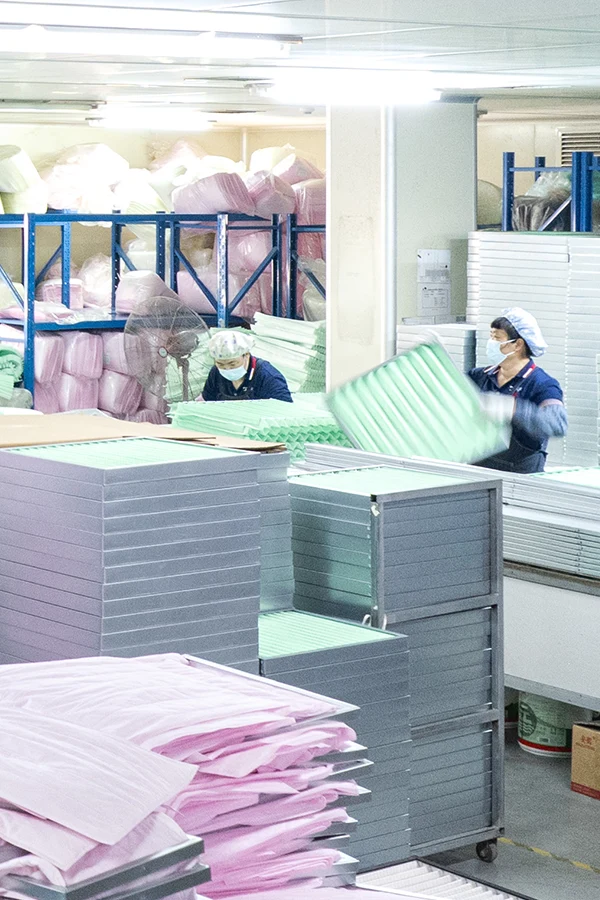
For a million-class cosmetic R&D laboratory, the filtration system is not just about the terminal HEPA filter. A complete configuration usually includes pre-filters, medium-efficiency filters, activated carbon filters, and high-efficiency filters. Each plays a different role in protecting the HVAC system and maintaining indoor air quality.