Passer au contenu
Choosing between H13 and H14 HEPA filters is not just about a small difference in efficiency ratings. The higher filtration performance of H14 can provide better contamination control, but it also comes with higher pressure drop and greater system requirements.
This guide compares H13 and H14 filters based on EN 1822 normes, efficiency, pressure drop, and typical applications. For a broader understanding of HEPA filtration grades, classifications, and applications, see our complete guide to HEPA and ULPA filters.
What Do H13 and H14 Mean Under EN 1822?
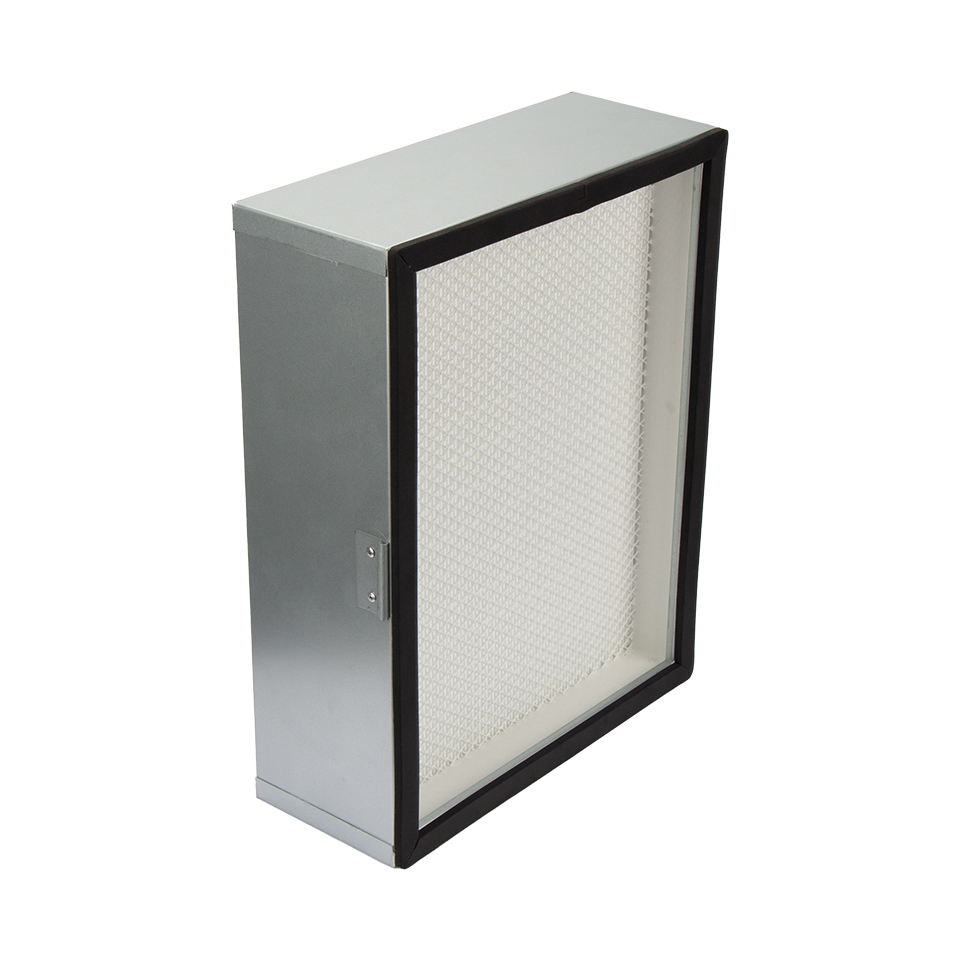
When selecting a HEPA filter, H13 and H14 classifications indicate different levels of filtration performance under the EN 1822 standard. Although both provide high-efficiency particle removal, the difference in penetration rate, leak control, and certification requirements makes them suitable for different risk levels and applications.
Core Performance Metrics: Integral and Local Efficiency
The EN 1822 standard classifies HEPA filters based on their performance at the Most Penetrating Particle Size (MPPS), which represents the particle size that is most difficult for a filter to capture.
An H13 filter must achieve a minimum integral efficiency of 99.95% at MPPS, allowing a maximum penetration of 0.05%. An H14 filter requires a higher efficiency level of at least 99.995%, reducing maximum penetration to 0.005%.
The difference in penetration is significant despite the small percentage gap. H14 filters allow approximately ten times fewer MPPS-sized particles to pass through compared with H13 filters, providing a higher safety margin for environments where contamination control is critical.
EN 1822 also evaluates local leak performance through scanning tests across the filter surface. H13 filters allow a maximum local penetration of 0.25%, while H14 filters have a stricter limit of 0.025%. This tighter leak requirement helps ensure more consistent filtration performance across the entire filter area.
Application Differences Between H13 and H14
The choice between H13 and H14 depends mainly on the required level of contamination control and the consequences of particle contamination.
H13 filters are widely used in applications that require reliable high-efficiency filtration but do not require the highest available protection level. Common applications include general cleanrooms, hospital HVAC systems, pharmaceutical production areas, and commercial air purification systems.
H14 filters are typically selected for more critical environments where even small amounts of contamination can affect product quality, safety, or regulatory compliance. These applications include sterile pharmaceutical manufacturing, Classe ISO 5 cleanrooms, semiconductor production, and high-containment laboratory environments.
Certification and System Considerations
Beyond filtration efficiency, H13 and H14 filters differ in testing and system requirements. H14 filters are commonly supplied with individual performance test certificates based on standards such as EN 1822 and OIN 29463, providing unit-level verification for applications that require strict traceability.
The higher efficiency of H14 filters also comes with increased airflow resistance. Compared with H13 filters, H14 models typically create a higher pressure drop, which may require additional fan capacity and increase energy consumption. Therefore, filter selection should consider not only contamination requirements but also HVAC system design and operating costs.
Get Certified HEPA Filters with Flexible Order Quantities
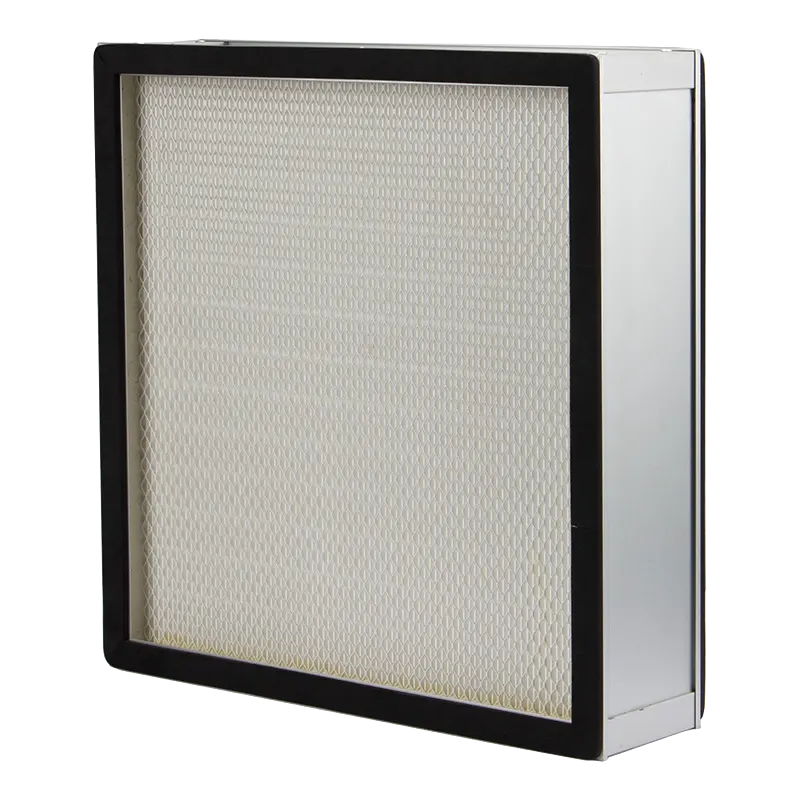
How Does Pressure Drop Compare?
An H14 filter consistently has a higher pressure drop than an H13. This requires more fan power and energy, a direct trade-off for its superior filtration efficiency.
Initial Pressure Drop Ranges
H14 filters consistently show a higher initial air resistance than H13 filters operating at the same airflow. At a standard cleanroom face velocity of 0.45 m/s, a new H13 filter will typically have an initial pressure drop of 200–250 Pascals (Pennsylvanie). Under the exact same conditions, a new H14 filter’s resistance is higher, usually falling in the 250–350 Pa range. In practice, this means an H14 filter adds about 50–100 Pa of resistance to the system from day one.
Relationship Between Efficiency and Air Resistance
The higher pressure drop in H14 filters is a direct result of their greater filtration efficiency (99.995% vs. 99.95% for H13). To capture that extra fraction of particles, the filter media inside an H14 is necessarily denser and has a tighter structure. This denser material naturally creates more resistance for air trying to pass through it, which we measure as a higher pressure drop.
Impact on System Design and Energy Use
HVAC systems must be designed with more powerful fans to overcome the extra 50–100 Pa of resistance that H14 filters introduce. This increased workload directly leads to higher energy consumption. The additional pressure drop increases fan power requirements and may raise operating costs, especially in systems running continuously. Simply swapping an H13 for an H14 in a system not designed for it can cause a drop in total airflow, compromising critical air change rates and room pressurization.
Pressure Drop Over the Filter Lifecycle
Many HVAC systems define replacement based on a maximum allowable pressure drop specified by the system design. Because an H14 filter starts its life with a higher initial resistance, it reaches this replacement point much faster than an H13 filter would under the same dust-loading conditions. This shorter operational lifespan impacts maintenance schedules and can increase the total cost of ownership due to more frequent filter changes.
Where Is H13 Commonly Used?
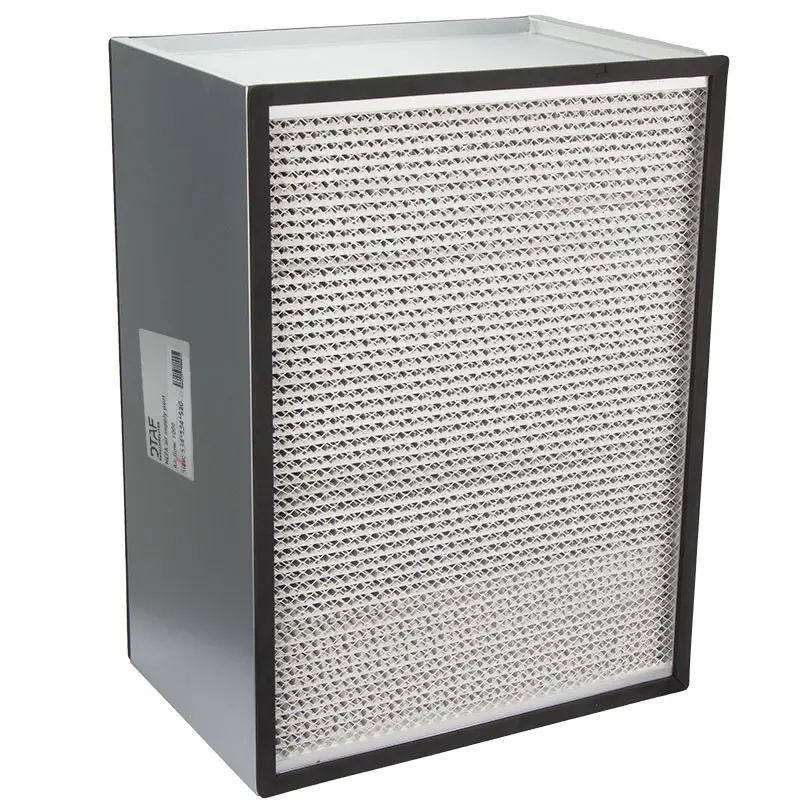
H13 filters are the workhorse for high-efficiency filtration where extreme purity is not mandatory, balancing strong performance with manageable cost and system requirements.
Healthcare and Medical Facilities
H13 filters are widely used in healthcare HVAC applications where high-efficiency particulate control is required. It acts as the final barrier in HVAC systems to control airborne microbes and protect vulnerable individuals from infection.
- Operating Rooms and ICUs: Used as the final filter in HVAC systems for hospital operating rooms, Intensive Care Units (ICUs), and isolation wards.
- General Patient Areas: Specified for general patient rooms and clinics to protect occupants from airborne pathogens.
- Outpatient and Dental: Integrated into filtration units for dental offices and outpatient procedure rooms to limit the spread of aerosols.
Industrial Cleanrooms and Precision Manufacturing
H13 filters are essential for protecting sensitive industrial processes from particulate contamination. They serve as the terminal filter in many cleanrooms and are used to meet Good Manufacturing Practice (BPF) air quality standards without the higher cost and pressure drop of H14 filters.
- Electronics and Optics: Deployed as the terminal filter in ISO Class 7-8 cleanrooms for producing electronics, semiconductors, and optical components.
- Pharmaceutical Production: Used in non-aseptic areas to meet air quality standards for manufacturing.
High-Performance Commercial and Residential Buildings
H13 filtration is frequently used to elevate indoor air quality (IAQ) in premium commercial and residential settings. It provides a significant upgrade over standard filters for managing allergens, smoke, and airborne pathogens.
- Air Purifiers: Integrated into premium portable air purifiers, especially for managing allergies or wildfire smoke in homes.
- HVAC Upgrades: Used as an upgrade in HVAC systems for high-end offices, hotels, and data centers to improve IAQ.
- Public Venues: Deployed in facilities like casinos, gyms, and airports to help reduce pathogen transmission.
- Controlled-Environment Agriculture: Specified in vertical farms to prevent spore and pollen contamination of crops.
Where Is H14 the Better Choice?
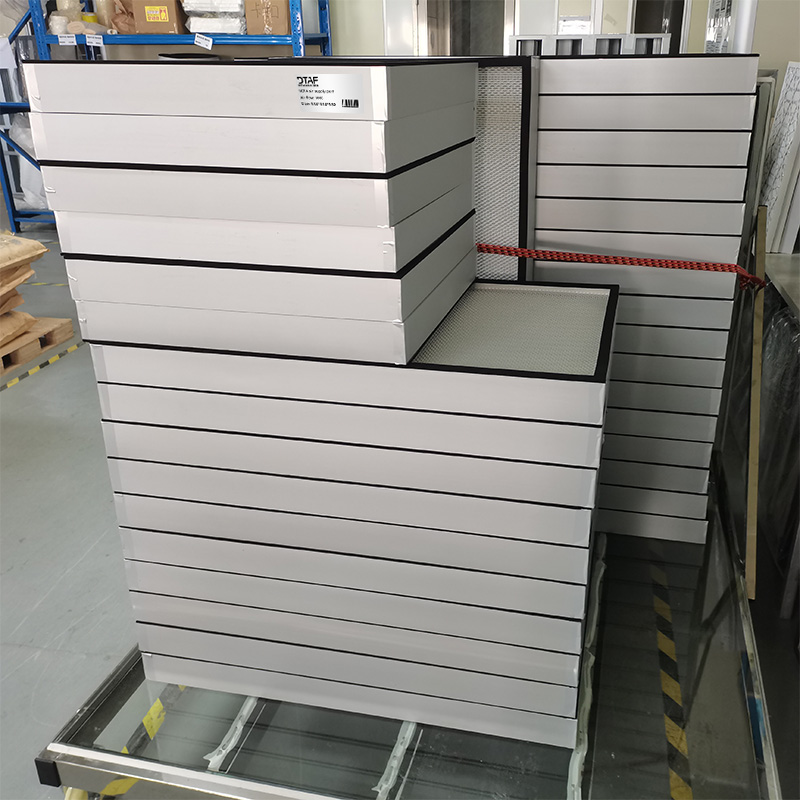
An H14 HEPA filter is the superior choice in critical environments where contamination risk is unacceptable and the system is designed to handle its higher cost and resistance.
While an H13 filter offers excellent performance for many applications, the decision to upgrade to H14 is driven by risk, regulation, and system capability. H14 becomes the necessary choice in specific high-stakes environments where the consequences of even minimal particle penetration are severe.
Critical Medical and Healthcare Facilities
In healthcare, the primary driver for H14 is patient safety and infection control. Its use is concentrated in areas where the air itself must be part of the sterile field or where patients are extremely vulnerable.
- Operating rooms, surgical suites, and isolation rooms where airborne infection control is paramount.
- Applications where a safety margin beyond standard HEPA is needed to minimize the risk of hospital-acquired infections.
- H14 is often specified as “medical-grade” for these high-stakes environments where patient vulnerability is greatest.
Regulated Industrial and Scientific Cleanrooms
For advanced manufacturing and research, H14 is specified when product yield, process integrity, or safety depends on eliminating the smallest particles. The decision is often a financial one, where the cost of a single contamination event dwarfs the filter’s price.
- Advanced semiconductor fabrication where nanoscale particle contamination can cause costly product defects.
- High-biosafety laboratories (par ex., BSL-3, BSL-4) and research facilities handling hazardous biological agents.
- Processes where the cost of a single contamination event, like a batch loss or recall, far exceeds the filter’s incremental cost.
Applications Requiring Guaranteed Filter Integrity
The H14 classification isn’t just about higher efficiency; it’s about verified performance. This assurance is crucial in applications where there is zero tolerance for filter defects or unexpected leakage.
- H14 filters require mandatory individual factory leak testing, ensuring no defects or bypass within the media.
- This guaranteed integrity is critical in settings where even minor filter leakage is unacceptable.
- The 10x reduction in particle penetration compared to H13 provides an essential buffer against process excursions or contamination spikes.
- This aligns with risk management strategies focused on making contamination probability as low as reasonably achievable (ALARA).
How Do Media, Size, and Face Velocity Change Performance?
Filter Media and Pleat Design
H14 filters achieve higher efficiency by using denser filter media, which improves particle capture but also increases airflow resistance. To reduce the impact of higher pressure drop, H14 filters often use deeper pleats or increased media area to maintain airflow performance.
Replacing an H13 filter with an H14 of the same size and design may increase fan load because the denser media requires more pressure to maintain the same airflow.
Filter Size and Media Area
Increasing filter surface area is an effective way to reduce pressure drop. Deeper filters or designs such as V-bank configurations provide more media area within the same installation space, allowing air to pass through the filter at a lower velocity and reducing resistance.
For high-airflow systems, selecting a larger filter size can help maintain energy efficiency while achieving higher filtration performance.
Face Velocity and System Performance
Higher face velocity increases pressure drop and can affect filtration efficiency. At typical cleanroom conditions of 0.45 m/s, an H14 filter generally has a higher initial pressure drop than a comparable H13 filter.
Operating beyond the recommended velocity can increase energy consumption, accelerate filter loading, and reduce the expected service life. Therefore, filter selection should balance efficiency requirements with media design, available space, and HVAC system capacity.
For specialized environments with elevated operating temperatures, filter construction and material selection become additional factors to consider. High temperature HEPA filters are designed for applications where standard HEPA filters cannot withstand thermal conditions.
H13 or H14: A Practical Selection Checklist
Choosing between H13 and H14 isn’t just about efficiency. It’s a calculated decision based on regulation, application risk, HVAC system limits, and total cost.
| Selection Step | Key Considerations |
|---|---|
Step 1: Define Cleanliness and Regulatory Requirements |
|
Step 2: Assess Application Risk and Contamination Impact |
|
Step 3: Evaluate HVAC System Compatibility |
|
Step 4: Compare Total Cost of Ownership (TCO) |
|
Foire aux questions
What is the difference between H13 and H14 HEPA filters?
The primary difference is filtration efficiency. An H13 filter captures at least 99.95% of particles at the Most Penetrating Particle Size (MPPS), while an H14 captures at least 99.995%. In practical terms, an H14 filter retains approximately 10 times more particles than an H13. This higher efficiency comes with a trade-off: H14 filters typically have a higher pressure drop, which can increase fan energy consumption.
Is an H14 filter better than H13 for every application?
No, H14 is not universally better. While it offers higher particle retention, it also causes a higher pressure drop, demands more energy, and increases system complexity. For many non-sterile cleanroom zones or general HVAC applications, an H13 filter provides a more balanced and energy-efficient solution that still meets performance requirements.
Which applications typically require H14 filters?
H14 filters are specified for high-risk environments where maximum particle control is critical. Common applications include pharmaceutical GMP Grade A and B aseptic processing zones, sterile hospital operating theaters, critical care isolation rooms, and high-purity semiconductor manufacturing cleanrooms (par ex., Classe ISO 5).
What test documentation should I compare for H13 and H14 filters?
You should request test reports compliant with EN 1822 or ISO 29463. For H14 filters, require an individual, serial-numbered test certificate detailing its efficiency at the Most Penetrating Particle Size (MPPS) and its local scan penetration results. For critical applications, you should also see documentation of on-site integrity testing (like a DOP/PAO scan) to confirm there are no leaks in the installation.
Final Thoughts
Selecting between H13 and H14 depends on application requirements, contamination risk, and HVAC system capability. H13 provides reliable high-efficiency filtration for many controlled environments, while H14 is preferred where stricter particle control and higher assurance are required.
For assistance selecting the right HEPA filter specification, contact our engineering team for application-based recommendations.