Choosing between an AC and an EC fan filter unit (FFU) affects more than the initial equipment price. Motor technology can influence energy consumption, airflow adjustment, control integration, and long-term operating costs. But is an EC FFU always the better choice?
The answer depends on your cleanroom’s operating hours, required airflow, electricity rate, and control requirements. This guide compares AC and EC FFUs to help you choose the right solution for your project.
What Is the Difference Between AC and EC FFUs?
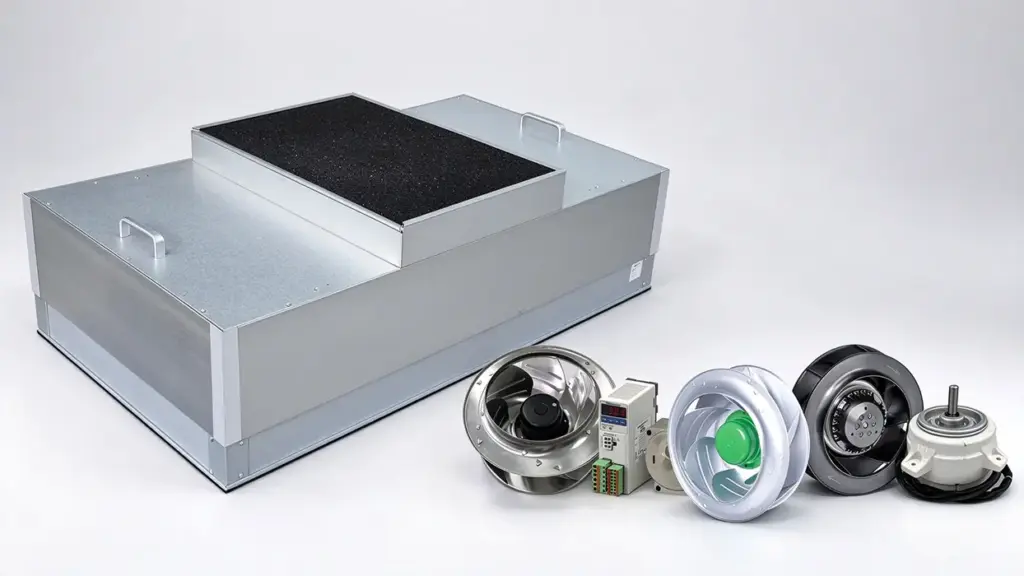
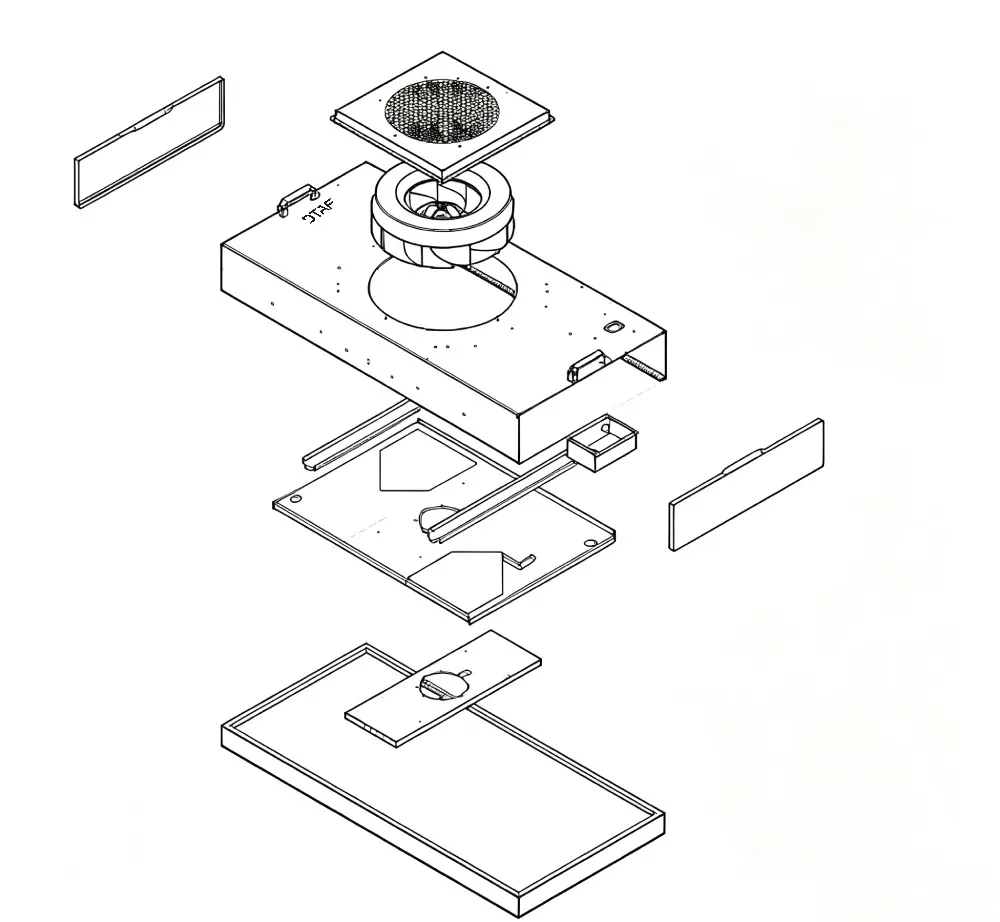
An FFU combines a fan, motor, and HEPA filter, to deliver filtered air into a cleanroom. The main difference between AC and EC FFUs is the motor technology and how it controls fan speed.
What Is an AC FFU?
An AC FFU uses an alternating-current motor. Depending on the design, its speed may be fixed or adjusted through multiple speed settings or an external controller. AC FFUs are widely used in cleanroom projects where initial equipment cost and straightforward operation are important.
What Is an EC FFU?
An EC FFU uses an electronically commutated motor with integrated electronic control. Many EC models support stepless speed adjustment and can be integrated with centralized control systems, depending on the controller and communication options. These features can help facilities adjust airflow to actual requirements instead of operating every unit at one fixed speed.
You can also learn more: What Is an FFU →AC vs. EC FFU: Key Differences at a Glance
The table below summarizes typical differences. Actual performance depends on the motor, fan design, controller, and operating point.
| Comparison Factor | AC FFU | EC FFU |
|---|---|---|
| Initial cost | Often lower | Often higher |
| Energy consumption | Depends on motor and operating conditions | Often advantageous at suitable operating points, especially with speed adjustment |
| Speed control | Fixed or stepped control on many models | Usually supports more flexible, stepless control |
| Control integration | Depends on the system configuration | Often offers more electronic control options |
| Operating cost | May be higher during long operating hours | May be lower when energy savings offset the higher purchase price |
| Suitable applications | Budget-sensitive projects with relatively simple control needs | Long operating hours or applications requiring flexible airflow control |
Neither motor type is automatically the best option for every cleanroom. Compare units at the same required airflow and external static pressure rather than relying only on motor labels or rated power.
AC vs. EC FFU: Energy Consumption and Operating Costs
Energy consumption is an important consideration because cleanroom FFUs may operate for long periods, sometimes around the clock. However, the actual difference depends on the power drawn by each complete unit under the required operating conditions.
To estimate annual electricity costs, use this formula:
Annual energy cost = Input power (kW) × Operating hours per year × Electricity rate
For example, assume an AC FFU consumes 180 W and a comparable EC FFU consumes 130 W at the same required operating point. If each unit runs 8,760 hours per year, the difference is:
Power difference: 180 W − 130 W = 50 W
Annual energy difference: 0.05 kW × 8,760 hours = 438 kWh per FFU
At an illustrative electricity rate of $0.12/kWh, the annual saving is $52.56 per FFU.
For 100 FFUs, that would equal $5,256 in estimated annual electricity savings.
This is an illustrative calculation, not a guaranteed saving. Use verified product data and your local electricity rate when evaluating a real project. Compare total FFU input power at the same airflow and static pressure, and consider whether the units will run at full or reduced speed.
Is an EC FFU Worth the Extra Cost?
An EC FFU may cost more initially, so the key question is whether the additional investment can be recovered through lower operating costs. Before comparing the total investment, it is also important to understand the factors that influence FFU pricing, including motor configuration, airflow requirements, filter specifications, and control options. Read our guide to FFU pricing and the factors that affect cost to learn more.
A simple payback calculation is:
Payback period = Additional initial investment ÷ Annual operating cost savings
For example, if choosing EC FFUs adds $20,000 to the initial project cost and the estimated annual electricity saving is $5,256, the simple payback period is approximately 3.8 years.
This example excludes maintenance differences, changes in electricity prices, financing costs, and other project-specific factors. The actual payback period may be shorter or longer.
EC FFUs are worth evaluating when units operate for many hours, electricity costs are significant, or airflow needs to change according to room conditions. For smaller projects or applications with limited operating hours, the lower initial cost of AC FFUs may be more attractive.
Matching FFU Motor Platforms to Module Sizes
Selecting an FFU motor involves more than choosing between AC and EC technology. The fan platform must also fit the ceiling module, required airflow, available installation height, and filter resistance.
The following table illustrates how different FFU module sizes may be paired with motor and fan configurations. These are representative selection examples, not universal specifications; the actual configuration depends on the manufacturer and project requirements.
| FFU Module Size | Example Motor/Fan Configuration | Key Selection Considerations |
|---|---|---|
| 1175 × 575 mm | DC 310 external-rotor fan platform | Suitable for evaluating medium-width ceiling modules. Confirm airflow, installation depth, and noise at the required duty point. |
| 1175 × 1175 mm | DC 400 external-rotor fan platform | A candidate for larger ceiling modules and higher airflow requirements. Verify performance at the specified filter pressure drop. |
| 1175 × 875 mm | DC 400 external-rotor platform with group-control options | Worth evaluating for larger FFU arrays where airflow balancing and centralized control are important. |
| 615 × 615 mm | Internal-rotor motor with an aluminum impeller | A compact-grid option. Check the available ceiling space, filter dimensions, and required airflow before selecting the fan. |
When Should You Choose an AC FFU or an EC FFU?
When an AC FFU May Be Better
Consider an AC FFU when:
The initial equipment budget is a major constraint.
The required airflow is relatively stable.
Advanced speed control or centralized monitoring is unnecessary.
The supplier can meet the project’s airflow, filtration, and noise requirements at a competitive price.
When an EC FFU Is Worth Considering
Consider an EC FFU when:
The cleanroom operates for extended hours or continuously.
Energy consumption is an important part of the operating budget.
Airflow needs to be adjusted for different operating conditions.
Centralized control or integration with a building management system (BMS) is required.

Other Factors to Consider When Selecting an FFU
Motor type is only one part of FFU selection. Before placing an order, check the following:
Airflow and static pressure: Confirm that the unit meets the required airflow against the resistance of the installed filter and system.
Filter performance: Select the appropriate HEPA or ULPA filter grade based on the cleanliness requirements.
Noise level: Compare sound data under equivalent operating conditions.
Control compatibility: Confirm available speed-control methods, communication protocols, and group-control functions.
Maintenance and service: Check filter replacement access, spare-part availability, warranty, and technical support.
A suitable FFU should meet the cleanroom’s performance requirements while balancing purchase cost, energy use, and maintenance needs.
Foire aux questions
Are EC FFUs More Energy-Efficient Than AC FFUs?
EC FFUs often provide better energy performance, particularly when speed can be adjusted to match actual airflow demand. However, the result depends on the complete unit and its operating point. Compare measured input power under equivalent conditions.
Can EC FFUs Reduce Cleanroom Operating Costs?
They can, especially in facilities with long operating hours or many FFUs. Calculate the expected savings using actual power data, annual operating hours, and local electricity rates before making a decision.
How Do I Choose Between AC and EC FFUs?
Start with the required airflow, static pressure, filtration level, and control needs. Then compare initial cost and estimated lifetime operating cost. A supplier should be able to provide performance data and help you evaluate the options for your application.
Conclusion: Choose the Right FFU for Your Cleanroom
AC FFUs can be a practical choice when initial cost and simple operation are priorities. EC FFUs are worth considering when flexible speed control and long-term energy performance matter. The best choice is the one that meets your cleanroom requirements at an acceptable total cost of ownership.
At DTAF, we recommend evaluating FFUs based on your airflow requirements, filter specifications, operating schedule, and control system. Contact our team to discuss a suitable FFU solution for your cleanroom project.