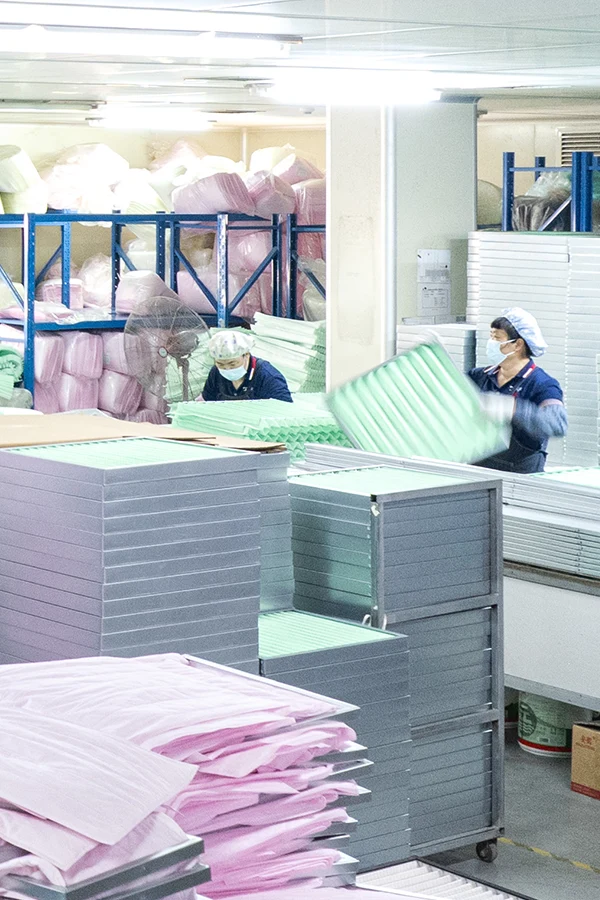
In HVAC, FFU는 팬 필터 장치를 나타냅니다.. It is a compact air filtration device that combines a fan, 모터, and high-efficiency air filter in one unit. FFUs are commonly used in cleanrooms and other controlled environments where airborne particle levels need to be carefully managed.
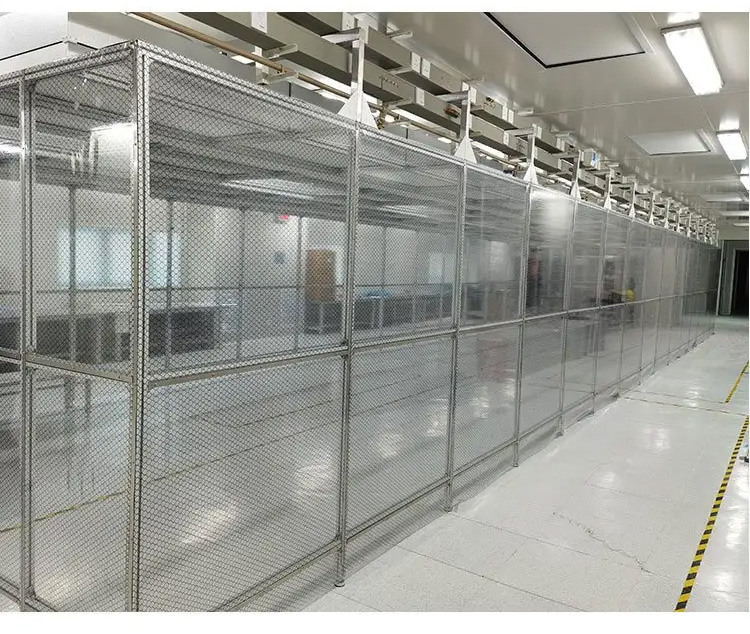
Unlike a conventional air handling unit, an FFU is designed primarily to move air through a filter and supply filtered air to a specific area. Multiple FFUs can be installed in a ceiling grid to provide distributed air filtration across a cleanroom.
What Is an FFU System and How Does It Work?
An FFU system typically consists of multiple fan filter units installed in a cleanroom ceiling or another designated location. 시스템 설계에 따라, the units may draw air from a ceiling plenum, a return-air path, or another designed air supply.
Each FFU uses its fan to move air through a high-efficiency filter, usually a HEPA or ULPA filter. The filtered air is then delivered into the cleanroom to help control airborne particles.
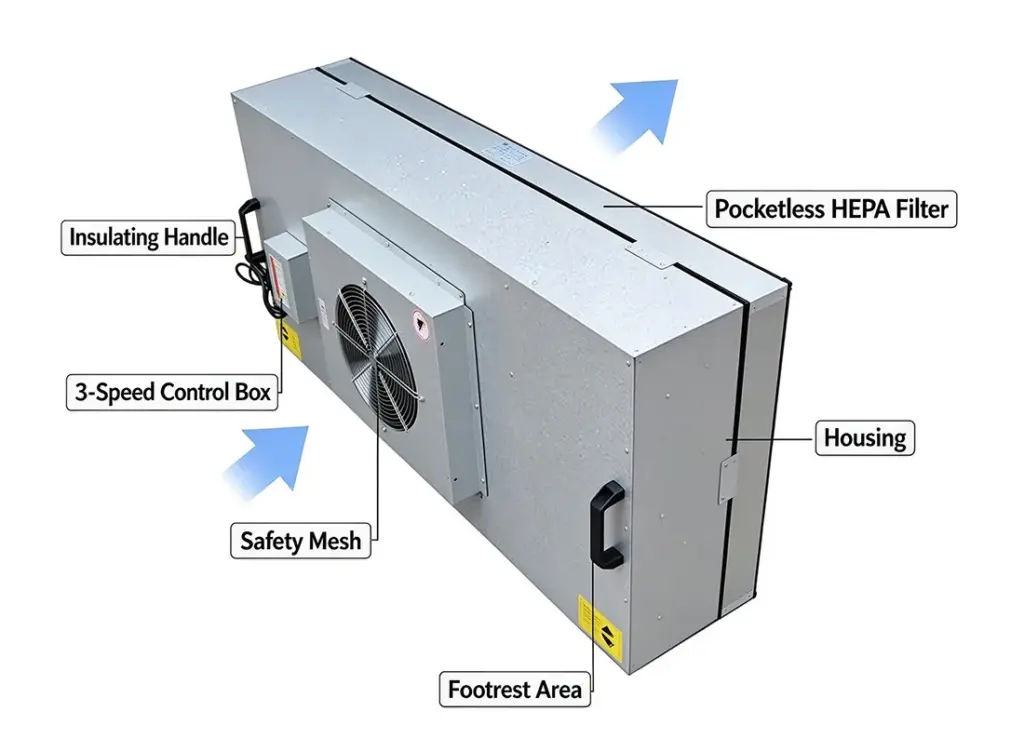
A typical configuration may follow this airflow path:
AHU → Ceiling Plenum → FFU → Filtered Air → Cleanroom
This is a common arrangement rather than a fixed requirement. Actual airflow paths depend on the cleanroom layout and HVAC design.
An FFU system also offers flexibility. Units can be arranged across different ceiling areas, and their fan speeds may be adjusted according to airflow requirements and the available control system.
For a more detailed explanation of individual units, see our complete guide to fan filter units.
What Is the Difference Between an FFU and an AHU?
FFUs and AHUs both play important roles in cleanroom HVAC systems, but they perform different functions.
An AHU (공기조화기) is generally a centralized piece of equipment that conditions and distributes air. Depending on its configuration, it may include filtration, cooling, 난방, humidity control, and ventilation functions.
An FFU focuses on moving air through a high-efficiency filter and supplying filtered air to a particular area. In many cleanroom projects, FFUs work alongside a central air handling system rather than replacing it.
| Comparison | FFU (팬 필터 장치) | AHU (공기조화기) |
|---|---|---|
| Main function | Local air filtration and supply | Central air handling and conditioning |
| Typical filtration | Often HEPA or ULPA | Depends on system requirements |
| Temperature control | Usually not its primary function | May provide heating and cooling |
| 습도 조절 | Usually handled by other equipment | May include humidity control |
| 설치 | Often integrated into a cleanroom ceiling | Usually installed in a dedicated equipment area |
| System role | Supplies filtered air to controlled areas | Conditions and distributes air throughout the system |
The two units are not necessarily alternatives. An AHU can provide conditioned air to a cleanroom, while FFUs supply additional filtered air at the point of use.
For a broader comparison of FFU design, components, 및 응용 프로그램, refer to our FFU complete guide.
Where Are FFU Systems Used?
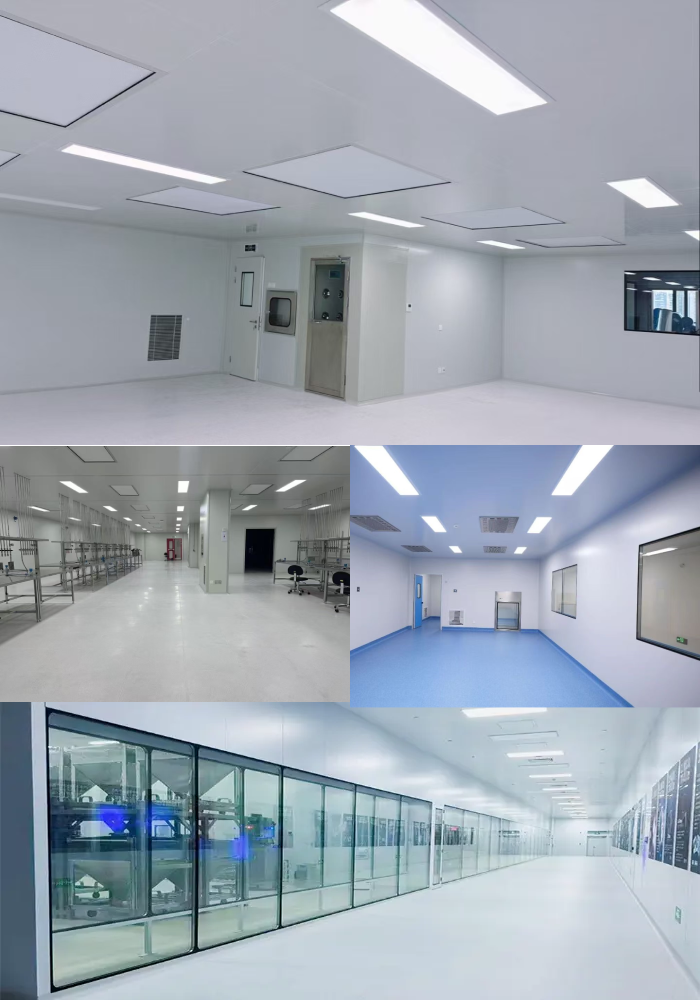
FFU systems are commonly used in environments where airborne particle control is important, including :
- 반도체 제조: Helps maintain controlled conditions for sensitive production processes.
- Pharmaceutical facilities: Supports cleanroom air filtration requirements.
- 전자제품 제조: Helps reduce airborne particle contamination during assembly.
- 실험실: Provides filtered airflow in suitable controlled environments.
The required filter efficiency, airflow pattern, and air-change rate depend on the application, room classification, and project specifications. An FFU alone does not guarantee that a cleanroom will meet a particular cleanliness standard; the complete system must be properly designed and validated.
What Should You Consider When Selecting an FFU?
Choosing an FFU involves more than selecting a filter size. 기류, external static pressure, 필터 효율, ceiling dimensions, noise levels, motor type, and control requirements should all be considered.
Motor selection is particularly important when comparing operating costs and control options. Read our guide to AC vs. EC FFU to understand the differences between these motor technologies.
Budget is another consideration. The price of an FFU varies with its dimensions, filter specifications, motor configuration, and control features. For more information, see our fan filter unit price guide.
Before requesting a quotation, it is helpful to prepare the required dimensions, 기류, filter grade, and installation details.
Below are some basic technical parameters that you can refer to.
| Model | DTBAC-FFU-A01 | DTBAC-FFU-A02 | DTBAC-FFU-A03 | DTBAC-FFU-A04 | |
|---|---|---|---|---|---|
| Module Size (mm) | 575 × 575 × 330 | 575 × 1175 × 330 | 875 × 1175 × 370 | 1175 × 1175 × 370 | |
| Plenum Material | A3 cold-rolled sheet sprayed / Galvalume sheet / Stainless steel | ||||
| Air Volume (m³/h) | 500 | 1000 | 1500 | 2000 | |
| Average Air Velocity (m/s) | 0.3–0.5 | ||||
| External Static Pressure (아빠) | 96 (10 mmAq) | ||||
| Power (W) | 100–200 | ||||
| Fan Type / Control | AC Fan / DC Fan / Group Control Available | ||||
| Noise dB (1m below HEPA filter) | 55 | ||||
| HEPA Filter Parameters | 치수 (mm) | 570 × 570 × 69 | 570 × 1170 × 69 | 610 × 1220 × 69 | 1170 × 1170 × 69 |
| 능률 | 99.99% @ 0.3 μm (Chemical filter optional) | ||||
| 액자 | High-grade Aluminum | ||||
| Initial Pressure Drop | 110 Pa @ 0.45 m/s | ||||
| Features | Low resistance, long service life | ||||
| Fan Parameters | Power Supply (V/Hz) | 220 / 50 | |||
| Type | Aluminum centrifugal fan / turbo fan | ||||
| Vibration Coefficient (mm/s) | 0.2–0.5 | ||||
자주 묻는 질문
What does FFU stand for in HVAC?
FFU는 팬 필터 장치를 나타냅니다.. It combines a fan and a high-efficiency filter to supply filtered air, particularly in cleanroom applications.
Is an FFU part of an HVAC system?
예. An FFU can form part of a cleanroom HVAC system, working alongside air handling and other ventilation equipment to meet airflow and filtration requirements.
Can an FFU replace an AHU?
Not usually. An FFU primarily provides filtered airflow, while an AHU may also handle ventilation, cooling, 난방, and humidity control. The appropriate arrangement depends on the overall system design.