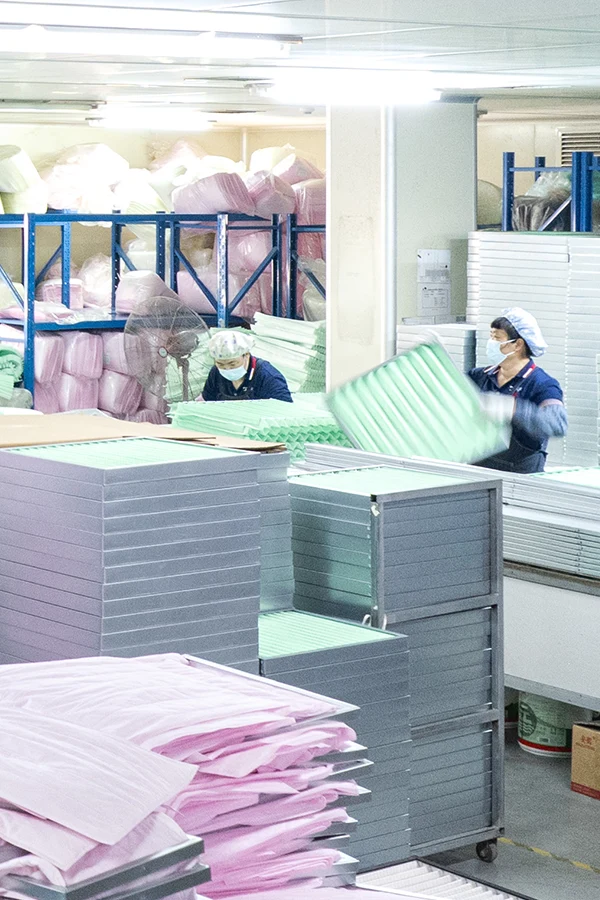
Selecting the wrong custom activated carbon filter manufacturer puts your project at risk. A unit that fails to control the target contaminant, or a design with an unacceptable pressure drop, leads to premature breakthrough, costly system rework, and performance liability.
This guide benchmarks supplier capabilities against engineering and quality requirements you can verify. You will learn how to compare bids on removal efficiency and pressure-drop behavior, and what quality evidence to demand. It also shows how to write an RFQ that returns a sized proposal instead of a guess.
When Does a Project Need a Custom Activated Carbon Filter?
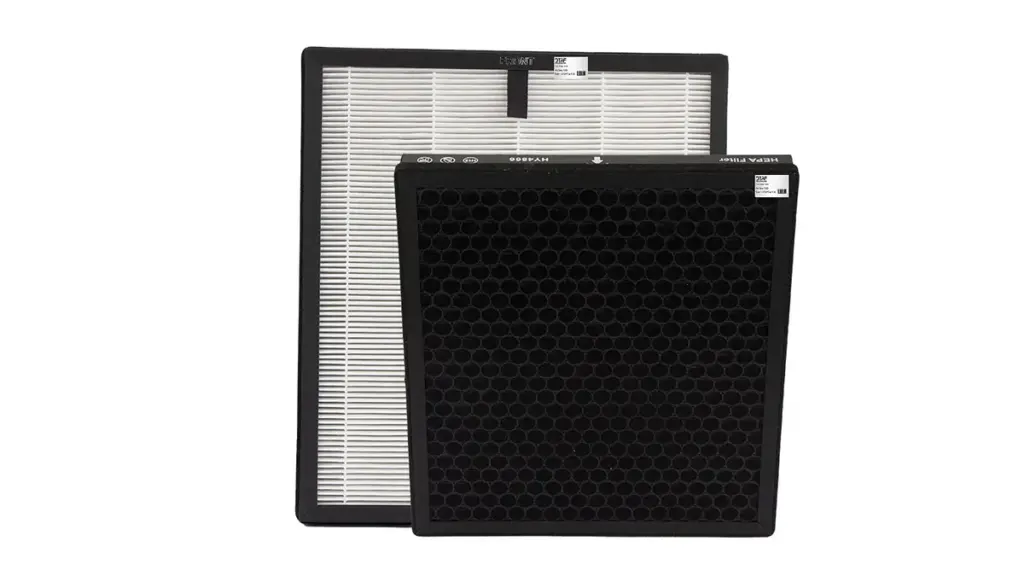
A custom activated carbon filter is necessary when standard units cannot handle the target contaminants, fit the physical constraints, or hold the required performance and maintenance targets.
Off-the-shelf activated carbon air filters solve many common odor and VOC problems. Projects with precise demands usually exceed them. Customization here is not cosmetic; it is a technical response to operating conditions and performance goals. Four triggers drive most custom requests.
Handling Specific or Difficult-to-Treat Gases
Standard carbon media targets a general mix of common airborne chemicals. When the airstream carries something unusual, or when selective removal matters, generic media fails early.
- The airstream holds a complex mix of VOCs, odors, and volatile chemicals that generic media does not address.
- One or a few target compounds must be removed selectively, which suits a tailored or impregnated media better than a general-purpose one.
- Persistent odors break through standard filters too quickly, a common failure in industrial exhaust and recirculating air systems.
Meeting Non-Standard Physical or Operational Constraints
Sometimes the problem is physics rather than chemistry. A standard filter fails when it cannot fit the space, or when its resistance curve clashes with the system design.
- The installation has a unique footprint or height limit, so housing geometry and carbon bed depth must change.
- The system has a strict pressure-drop ceiling that standard units cannot meet while passing the required airflow.
- Airflow is too low, intermittent, or too high for a standard unit, which shortens contact time and cuts adsorption.
Achieving Strict Removal Efficiency and Purity Targets
When “good enough” is not enough, only a designed filter can hold a guaranteed outlet target. Regulated facilities and sensitive downstream processes sit in this group.
- The project demands a guaranteed outlet air quality that is stricter than typical commercial standards.
- Standard filters allow breakthrough well before the planned service interval, which signals insufficient carbon capacity or contact time.
- Emissions rules mandate a removal efficiency that only a filter sized for the target pollutant and flow rate can meet.
Addressing Maintenance and Integration Needs
Service strategy also pushes projects toward a custom activated carbon filter manufacturer rather than a distributor of stock sizes. A filter aligned with your maintenance plan usually beats a disposable standard unit over a multi-year view.
- The filter must fit into a broader air treatment train or a process line with unique connections.
- The maintenance strategy calls for regenerable or refillable carbon rather than frequent disposable replacement.
- Variable contaminant loads make standard service intervals unpredictable, so the unit needs a documented change-out criterion.
Which Pollutant and Operating Data Should the Manufacturer Review?
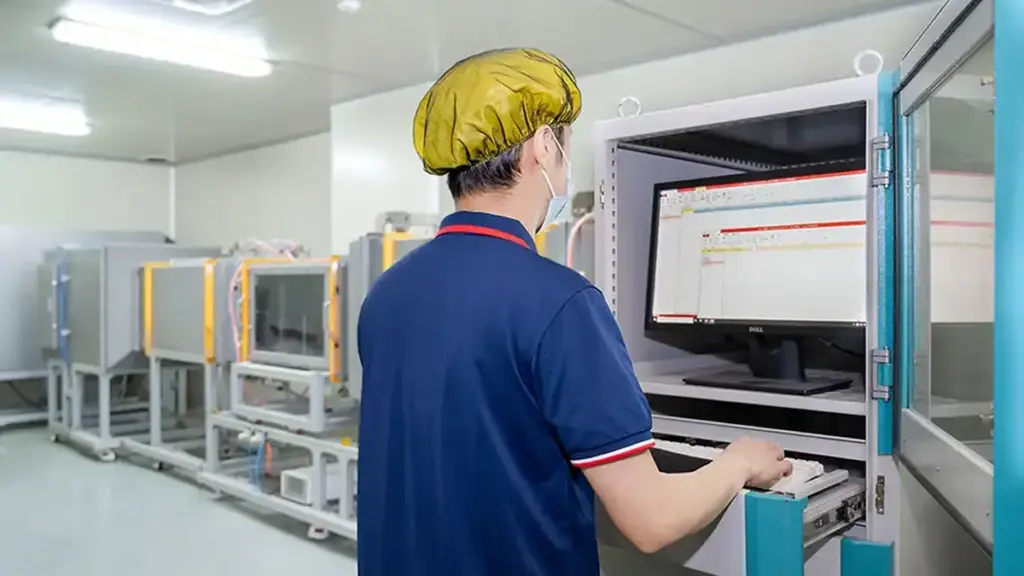
To design a filter that works, a manufacturer needs specific data on target gases, operating conditions, and performance targets. Generic adsorption claims are not enough.
Performance is pollutant-specific, so a generic specification is a recipe for failure. Every credible custom activated carbon filter manufacturer asks for the same data sets before sizing a bed. Send what you know, and ask the supplier to flag what you are missing.
Target Pollutants and Concentrations
- Name the specific volatile organic compounds (ЛОС) to remove, such as benzene, toluene, and xylene, plus total VOC where individual compounds are unknown.
- Add reactive gases such as ozone (O3), nitrogen dioxide (NO2), and sulfur dioxide (SO2), common in commercial intake air and industrial exhaust.
- Report formaldehyde (HCHO), ammonia, and odor compounds such as hydrogen sulfide, since these often need coated or impregnated media rather than plain carbon.
Critical Operating Conditions
- Send the airflow rate. It sets contact time between the gas stream and the carbon, and it drives the pressure drop.
- Give the full operating temperature range. Adsorption improves at lower temperature, so seasonal and process swings matter.
- Report inlet relative humidity. Water vapor competes with pollutants for adsorption sites, so capacity falls as humidity climbs.
- State the maximum acceptable pressure drop, so the design stays compatible with existing fans and air handling units.
Performance and Service Life Metrics
- Define average and peak inlet concentrations. The mass of carbon required follows from that load, not from a rule of thumb.
- Set the target outlet concentration or removal efficiency. That defines breakthrough and the change-out point for your application.
- Ask the supplier to model service life from actual load, airflow, and carbon mass instead of quoting a generic one-year estimate.
Data Priorities by Application
- Indoor air purification: low VOC and formaldehyde concentrations, airflow limits, and a pressure drop your HVAC system can accept.
- Industrial vapor control: high inlet concentrations, gas temperature, and the data needed to model regeneration if the carbon is reused.
- Spray booths and exhaust stacks: intermittent loads, dust and oil pretreatment, and a change-out trigger based on outlet gas detection.
Source Custom Activated Carbon Filters on Low-MOQ Trial Orders
How Should Carbon Media and Treatment Be Selected?
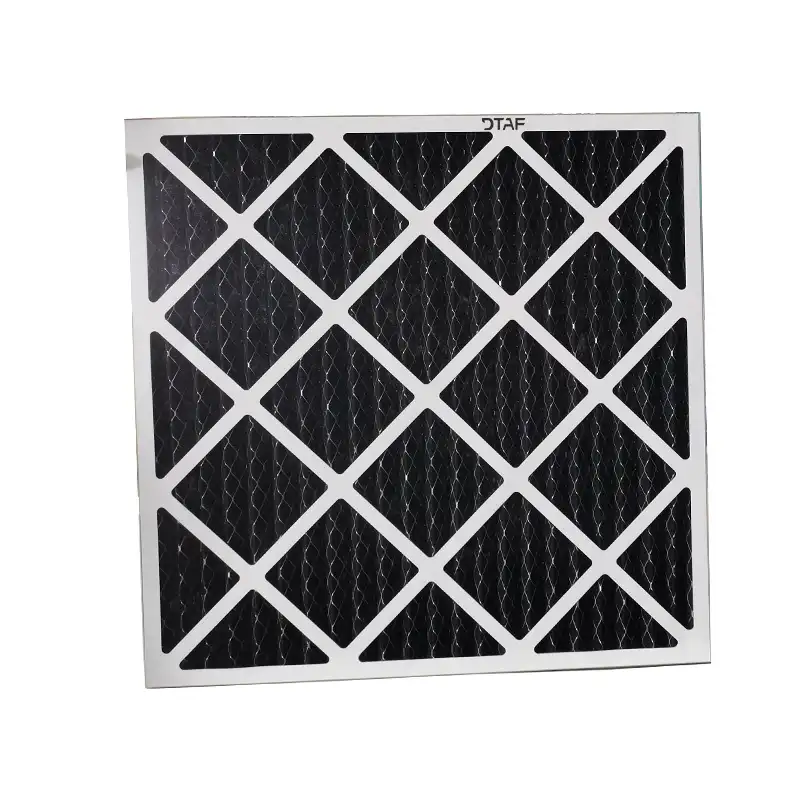
Carbon selection is a matching task between your contaminants, your airflow, and your non-negotiable performance targets. There is no single best media.
Match Pore Structure to the Molecule
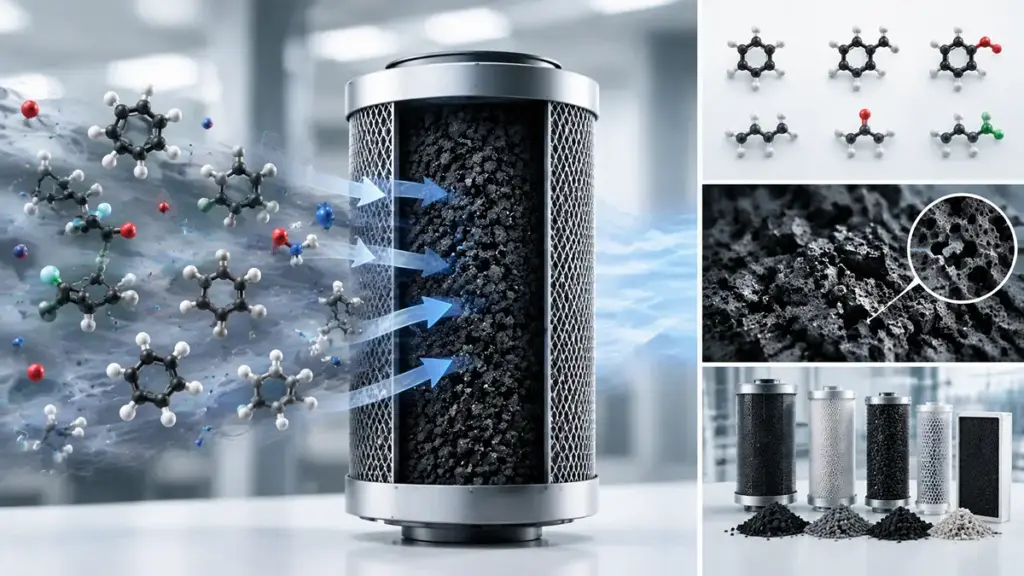
A capable custom activated carbon filter manufacturer starts with molecule size and chemistry, then picks the media family. A supplier who starts with bed depth is guessing.
- Coconut-based carbon suits small organic molecules such as VOCs, because its high micropore volume holds them tightly.
- Coal-based carbon covers a wider pore range and suits larger or mixed organic compounds.
- Impregnated media handle what physical adsorption cannot. Acid- and alkali-impregnated grades target acid gases and ammonia; potassium permanganate modified media target sulfides and stubborn odors.
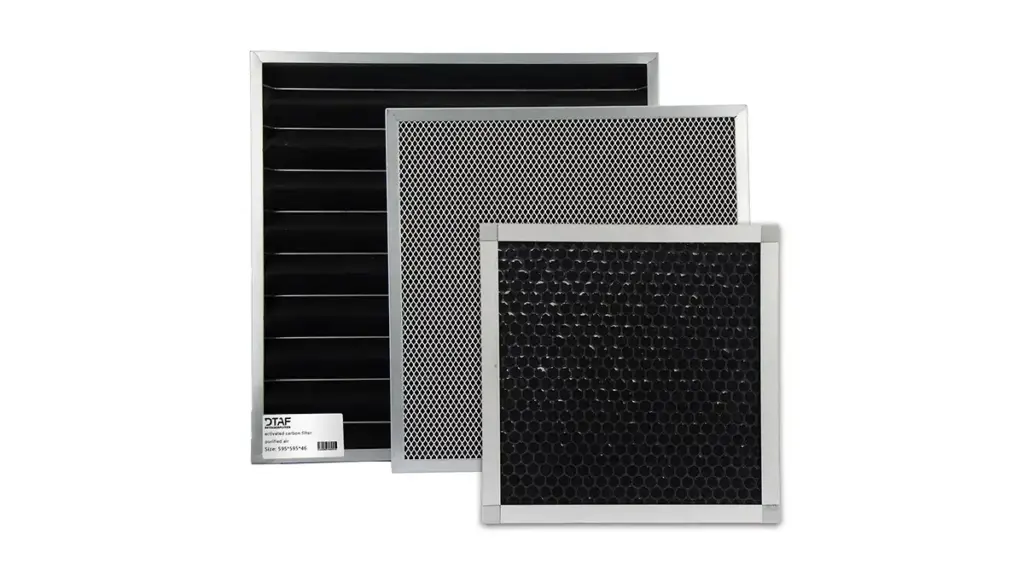
- Ask which of these the supplier stocks, and get the grade name in writing. DTAF lists carbon cotton, honeycomb granular carbon, acid-impregnated, alkali-impregnated, and potassium permanganate modified media in its activated carbon filter range.
Check the Media Specification, Not the Label
Once the media family is fixed, the technical data sheet tells you whether the grade is real or filler.
- Confirm the iodine number. Around 1,000 mg/g is a common baseline for high-activity carbon.
- Look for a surface area in the 900–1,200 m²/g range. More surface means more sites for adsorption.
- Specify low ash and moisture content. Both occupy volume without contributing to removal.
- Demand hardness and attrition data. Fines cause pressure-drop creep and media loss in the duct.
Match Media Form and Depth to the Airflow
How the system runs decides the physical form and depth of the carbon. Get this wrong and a good media still underperforms.
- Pick the format for the duty. Carbon cotton and foam screen media suit light odor loads; plate, bag, and honeycomb formats carry heavier industrial duty.
- Balance capacity against resistance. Deeper beds extend service life and raise pressure drop, so a 25 mm panel and a 100 mm panel are not interchangeable.
- Confirm the face velocity behind the supplier’s numbers. Ratings taken at another airflow do not transfer to your system.
Verify Selection with Supplier Data and Testing
Do not take a datasheet at face value. Documents first, then a test on any critical application.
- Request the full technical data sheet and cross-check iodine number, mesh size, and media weight against your specification.
- DTAF’s plate-type media is a 650 gsm nonwoven carrying 20×50 mesh CTC60 carbon. A comparable supplier should state equivalent figures rather than “high activity”.
- For high-stakes duty, run a bench or column test on samples. It is the only way to see a real breakthrough curve before you commit to production.
Which Filter Configurations and Frame Materials Are Available?
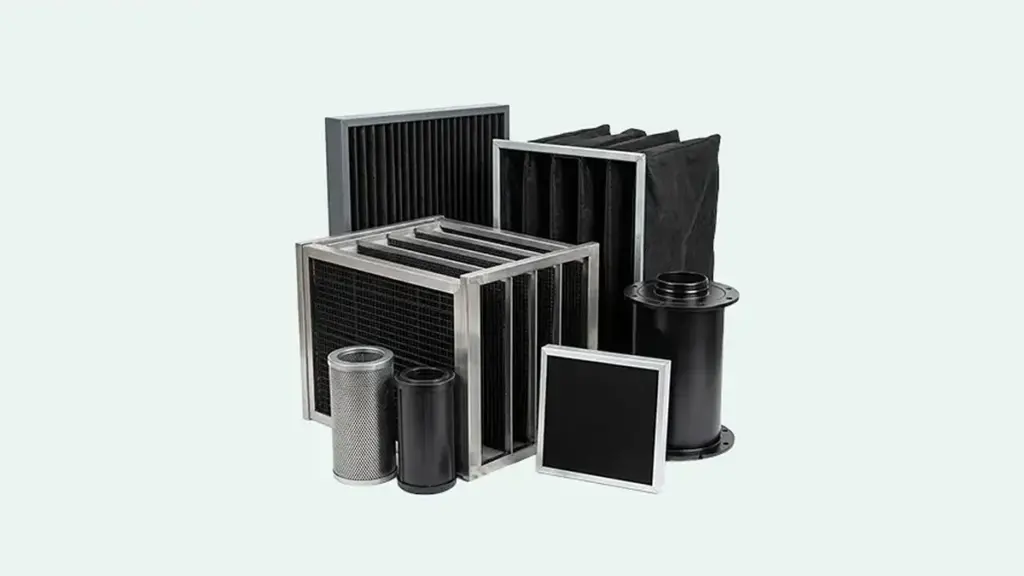
Carbon filters come in several shapes and frame materials, so a unit can be engineered to fit specific OEM equipment and operating environments.
Common Filter Configurations
The shape follows the equipment it goes into, balancing airflow, media area, and serviceability. Most custom builds start from one of these formats.
- Panel and pleated filters: the common formats in HVAC and air purification. Pleated media packs more surface into the same footprint.
- V-bank and drawer filters: V-bank designs maximize media area in high-volume commercial systems, while drawer units slide into housings for faster change-out.
- Картридж, cylinder, and bag formats: compact options for odor-control systems and equipment with tight space.
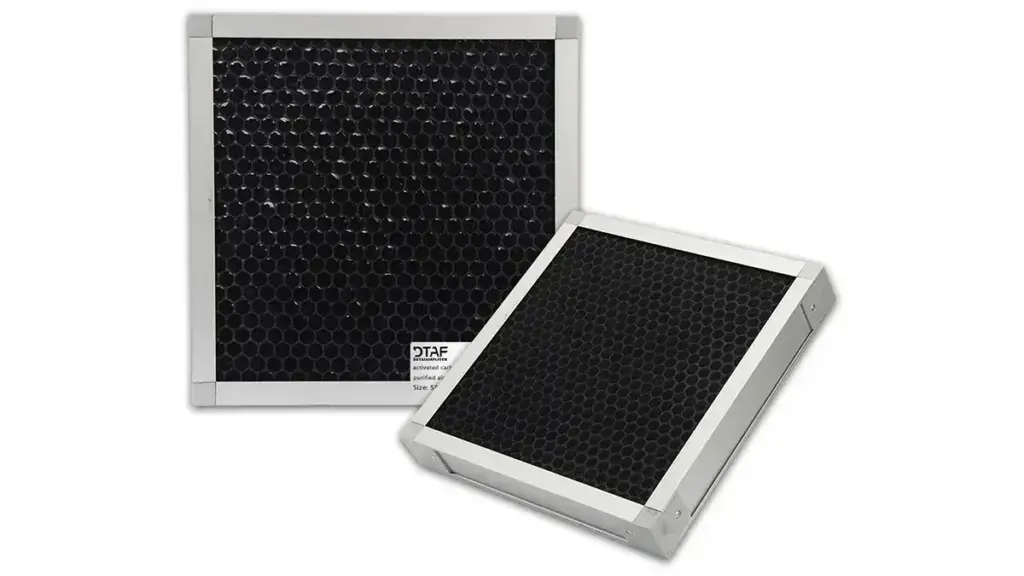
- Honeycomb blocks and molded shapes: carbon formed for OEM products, adsorption boxes, and spray booths, typically in 50 mm or 100 mm modules.
Standard Frame Materials
The frame holds the media bed under constant airflow. Choice of material is a trade between cost, weight, and resistance to moisture and chemicals.
- Galvanized steel: rigid and cost-effective, the default for most commercial and industrial duty.
- Aluminum and anodized aluminum: lighter than steel with good corrosion resistance, chosen where weight or appearance matters.
- Stainless steel: the option where the filter sees moisture, corrosive chemicals, or frequent wash-down.
- ABS and molded plastic: light and moldable, used for custom OEM assemblies and modular housings.
Размеры, Seals, and Interfaces
Beyond shape and frame, the fit and the seal decide whether the design performs. Carbon cannot compensate for air that bypasses it.
- Sizes such as 592×592, 575×575, 610×610, and 1175×575 mm match standard housings, and custom sizes close the gaps that cause bypass.
- Common panel thickness runs 25, 46, 50, 60, 70, and 100 mm. Bed depth is the main lever on service life.
- Seal options include closed-cell neoprene and EPDM gaskets, plus polyurethane foam seals, sized to the housing.
How Should Adsorption Performance and Pressure Drop Be Compared?
The best filter is not the one with the highest adsorption or the lowest resistance. It is the design that delivers the most capacity per unit of pressure drop.
Comparing custom carbon filters takes more than reading spec sheets. The US EPA guidance on air cleaners states plainly that gas-phase filters have no widely used performance rating system, and that CADR ratings cover particles only. A fair comparison is something you build, not something you read off a certificate. Ask every custom activated carbon filter manufacturer on your bid list to quote on the same basis. The mechanism behind those numbers is covered in how an activated carbon filter works.
Fix the Test Conditions First
Any meaningful comparison is an apples-to-apples test. One filter run at a high load and another at a low load tells you nothing.
- Run every candidate at the same airflow, temperature, and relative humidity.
- Use one contaminant type and one inlet concentration across all runs.
- Define service life by a single breakthrough criterion, such as the outlet level your project cannot exceed.
Separate Adsorption and Resistance Metrics
- Adsorption performance: breakthrough time, removal efficiency, and total adsorbed mass.
- Сопротивление: initial pressure drop on a clean filter and final pressure drop at end of life.
Read the Trade-Off Against Your System Limit
Design choices that improve adsorption, such as deeper beds or smaller carbon particles, also raise pressure drop. The same trade-off governs HEPA filter pressure drop, and the winner on one metric often loses on the other.
- High capacity is not an advantage if the resistance forces oversized fans or starves the airflow your process needs.
- Low resistance is not an advantage if the bed exhausts in weeks and the change-out labor costs more than the media.
- Ask for published resistance figures at your airflow. DTAF’s plate-type carbon filters list 50–90 Pa initial and 180–220 Pa recommended final resistance, with carbon cotton at the low end and honeycomb panels at the high end.
Set the End-of-Life Trigger
Pressure drop is a weak signal for carbon exhaustion, because the bed can be spent while resistance still looks normal.
- Agree on outlet gas detection as the change-out criterion, with pressure drop as a secondary check.
- Ask the supplier to state its saturation test method, and who ran it.
What Quality-Control and Traceability Evidence Matters?
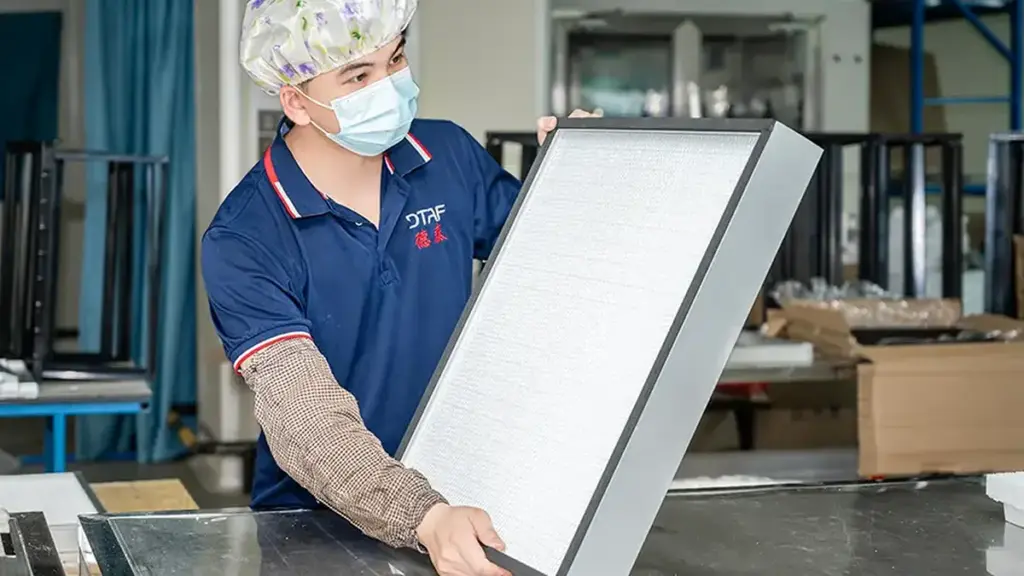
Credible proof combines a documented quality system, batch-level material traceability, in-process records, and third-party performance data tied to the filter you receive.
Auditing a custom activated carbon filter manufacturer means checking a performance promise. Documents and test data are the only way to verify it. A generic “QC passed” stamp proves nothing.
Quality Systems and Control Plans
- ИСО 9001 certification is the baseline signal that a process is controlled and repeatable rather than improvised.
- A written control plan should name the manufacturing parameters, the inspection points, and the QA sampling strategy.
- Formal procedures for incoming, in-process, and final inspection show control across the production flow.
Raw Material Traceability
- Batch records must link each finished filter to the specific carbon, frame, and gasket used to build it.
- Request a certificate of analysis (CoA) for the carbon, showing iodine value, ash content, and mesh size.
- Check whether the factory verified incoming media against spec, instead of accepting the media supplier’s paperwork.
Process and Product Records
- Process logs for parameters that drive performance: impregnation ratio, media weight per panel, and curing temperature.
- Evidence of checks for density uniformity and channeling, both of which redirect flow through the bed.
- Final inspection reports against an AQL (Acceptable Quality Limit) plan, split into critical and minor defects.
Performance Data and Independent Certification
- Application-specific test data beats generic claims: removal efficiency and breakthrough on your contaminant, or the closest published case.
- Independent laboratory reports carry more weight than in-house results. Ask which lab, which method, and which flow rate.
- A batch-specific certificate of quality shipped with the order, released by the quality department, closes the paper trail.
- Water duty is a different proof set. If a carbon bed treats potable water, NSF/ANSI certification is the relevant scheme, and an air-filter supplier without it is the wrong partner.
What Information Belongs in the RFQ?
Your RFQ should state the application, the operating conditions, the performance targets, and the commercial terms. Ambiguity invites guesswork and delay.
An RFQ for a custom carbon filter is not a form to fill out. It hands the manufacturer a defined engineering problem. Missing detail around the contaminant profile or operating conditions forces assumptions that produce oversized, underperforming, or overpriced designs.
The table below lists the information categories that let a supplier return a proposal instead of a question.
| RFQ Category | Key Information to Include |
|---|---|
| Core Project Details |
|
| Application and Operating Conditions |
|
| Performance and Media Targets |
|
| Commercial Terms |
|
| Quality and Submission Rules |
|
Separate must-have requirements from preferred options. That gives a supplier room to propose an alternative that improves cost or performance, and it keeps the comparison honest when three quotes arrive in three different shapes.
How Should Samples, Prototypes, and Production Batches Be Approved?
Approval works in three stages: sample, prototype, and production verification. Each stage ties back to written specifications and independent testing.
Sample Approval
The first stage confirms the design intent before tooling or full test budgets are committed.
- Compare physical samples against the written specification: dimensions, media type, carbon grade, and target performance.
- Confirm whether the sample is a stock item or a build to your drawing. The approval path and the risk differ.
- Test several samples, not one golden unit, and send a portion to an accredited laboratory for independent verification.
Prototype Approval
Prototypes answer a different question: does the design perform under your operating conditions?
- Check fit in the housing, seal integrity, and media retention, with no bypass path and no media leakage.
- Measure flow rate and pressure drop at your condition, and challenge the unit with the target contaminant at your inlet concentration.
- Characterize the carbon itself: iodine number, apparent density, and hardness confirm the correct grade reached your plant.
Production Batch Approval
A good prototype does not guarantee a good first article, let alone a good tenth shipment.
- Run lot-level release. Each production batch is sampled and tested before it clears for shipment.
- Require a CoA tied to the specific lot number with every delivery.
- Set numeric pass/fail limits for each acceptance test, and reject the lot that misses them.
Documents That Make the Process Defensible
- Keep one approval file per product: specification, test plan, laboratory reports, and every batch CoA.
- Make lot numbers trace back to production date, media batch, and quality records.
- Log every non-conformance with its corrective action, so the same defect does not ship twice.
Часто задаваемые вопросы
Can activated carbon filters be made in custom sizes?
Да. Custom sizing is a standard service for commercial, industrial, and OEM duty. Manufacturers build to your length, width, depth, and frame material across panel, pleated, bag, drawer, cartridge, and honeycomb formats. Standard housings are covered by sizes such as 592×592 mm, and custom dimensions close the gaps that cause air bypass.
What should buyers look for in an activated carbon filter manufacturer?
Prioritize a documented quality system such as ISO 9001, batch-level traceability from finished filter back to carbon lot, and application-specific performance data from an independent laboratory. Engineering support matters just as much: a capable supplier questions your contaminant list, airflow, and humidity before quoting a size.
Which types of activated carbon media are available?
Air-side options include coconut-based and coal-based granular carbon, extruded pelletized carbon, carbon-loaded cotton and foam screen media, and honeycomb blocks. Impregnated grades, acid, alkali, or potassium permanganate modified, cover gases that plain carbon cannot hold. The choice depends on the contaminant, the airflow, and your pressure-drop ceiling.
How is activated carbon filter performance tested?
A test rig challenges the filter with a defined contaminant at a controlled flow, temperature, and humidity, then tracks outlet concentration over time. That produces a breakthrough curve, removal efficiency, adsorbed mass, and the pressure drop at start and end of life. Ask which method the report followed, at what flow, and in which laboratory.
What data should I provide in an RFQ for a custom filter?
Name the pollutants and their concentrations, the airflow rate, and the operating temperature and relative humidity. Add your target removal efficiency, the maximum pressure drop your fans can carry, and any dimensional limits. Those inputs let a manufacturer pick the media and size the bed instead of guessing.
What traceability and packaging controls should a supplier provide?
Expect lot-level traceability that links each finished filter to its carbon batch and production record, plus a certificate of analysis with the shipment. Packaging should keep moisture out of the media and carry product name, batch number, and manufacturing date on the label.
Final Thoughts
Generic filters and quotes built on incomplete data cost less upfront and carry more risk. On critical commercial and industrial projects, the specification and verification standard in this guide is what protects your system from premature breakthrough, non-compliance, and unplanned downtime.
The next step is to put one custom activated carbon filter manufacturer through that process. Send a detailed RFQ, take a prototype, and run fit-and-function testing in your system before you commit to production. Talk to our engineering team about your application specs to start that process.