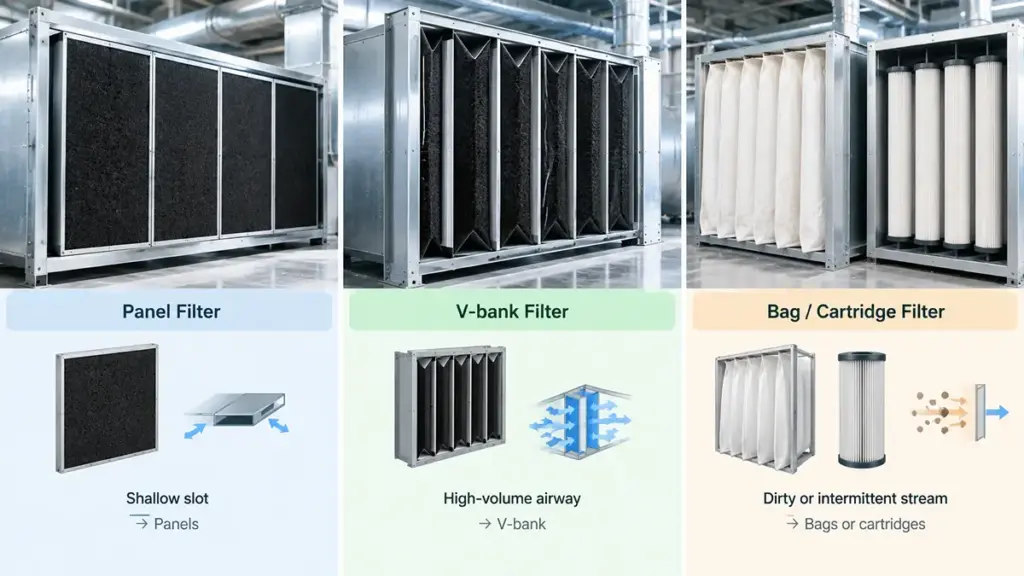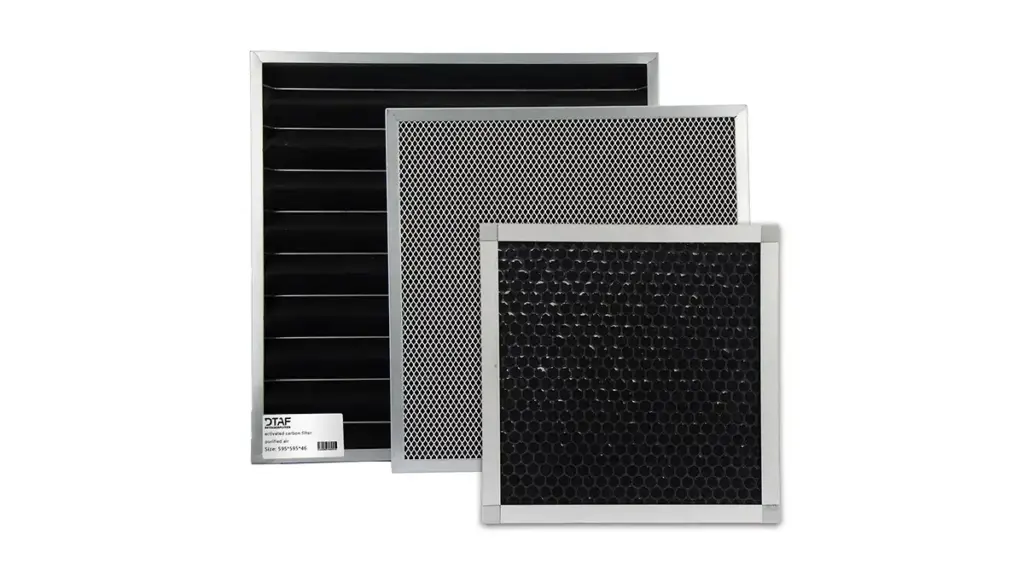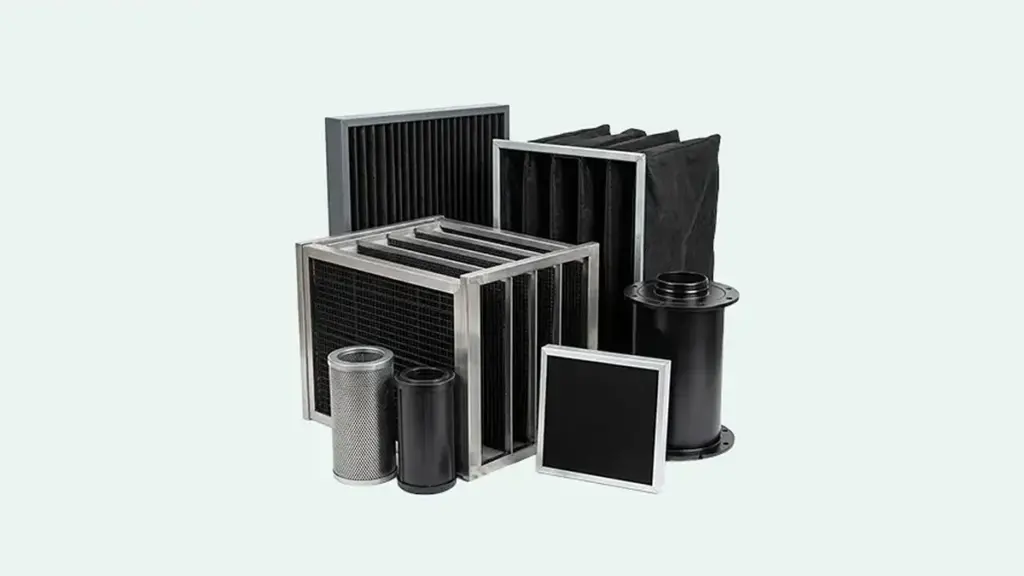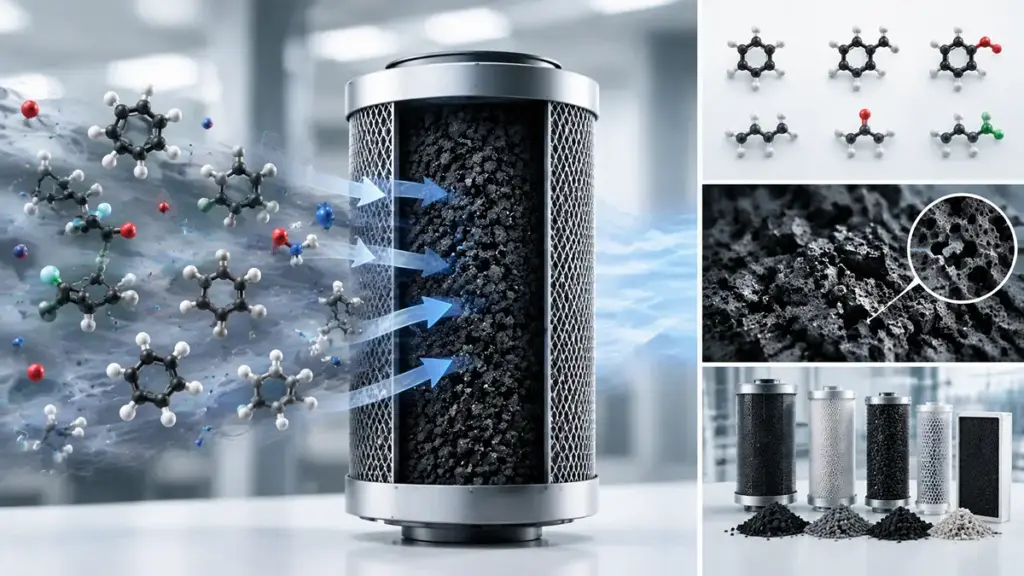
Activated carbon filters are widely used in air purification, Sistemas HVAC, industrial ventilation, odor control, and water treatment. Unlike filters that mainly capture particles, activated carbon is designed to remove certain gases, odors, and chemical contaminants through a process called adsorption.
But how does an activated carbon filter actually work? The answer lies in the highly porous structure of activated carbon and its ability to attract and hold certain molecules on its surface.
What Is an Activated Carbon Filter?
An activated carbon filter is a filtration system that uses activated carbon as the primary filter media. Activated carbon is a carbon-based material that has been specially processed to create millions of microscopic pores.
These pores give activated carbon a very large internal surface area. When contaminated air or water passes through the carbon media, certain molecules come into contact with the carbon surface and become trapped through adsorption.
Activated carbon can be made from different raw materials, including coconut shells, coal, and wood. The source material and activation process affect the pore structure and, consequently, which contaminants the carbon can effectively adsorb.
The iodine number is a commonly used indicator of the adsorption capacity of activated carbon. It measures how much iodine can be adsorbed by a given amount of carbon, typically expressed in mg/g.
| Type | Particle diameter (mm) | Iodine value (mg/g) | Specific surface area (m²/g) | Strength (%) | Moisture (%) | Ash (%) |
|---|---|---|---|---|---|---|
| SHW-TL | 1/5/2/3/4/8/10 | ≥400-1100 | ≥400-1000 | ≥96 | <5 | ≤12 |
How Does an Activated Carbon Filter Work?
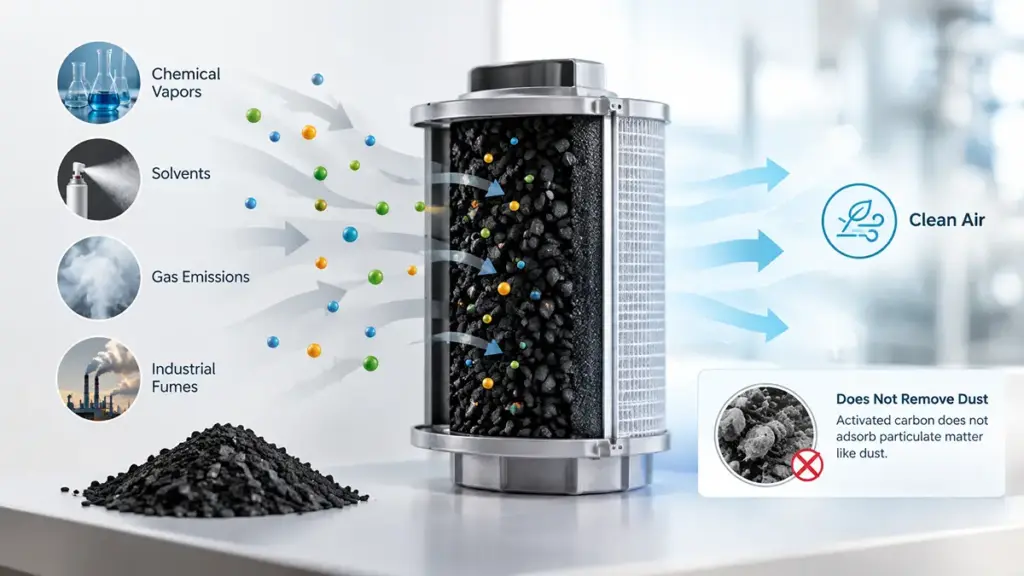
The working principle of an activated carbon filter can be explained in four basic steps.
1. Contaminated Air or Water Enters the Filter
Air or water containing unwanted contaminants enters the filtration system and passes through the activated carbon media.
For air filtration applications, the contaminants may include volatile organic compounds (COV), odors, and certain chemical vapors.
2. Contaminants Contact the Carbon Surface
Activated carbon contains a network of microscopic pores. These pores provide a large amount of surface area for contaminant molecules to interact with.
The effectiveness of the filter depends partly on how much carbon is available and how long the air or water remains in contact with it.
3. Adsorption Traps Contaminant Molecules
When suitable contaminant molecules reach the carbon surface, intermolecular forces cause them to attach to the surface and remain within the porous structure.
This process is called adsorption, not absorption.
4. Cleaner Air or Water Leaves the Filter
After targeted contaminants have been adsorbed by the carbon, the treated air or water continues through the system.
No entanto, activated carbon does not remove every type of contaminant. Its effectiveness depends on the type of pollutant, carbon characteristics, operating conditions, and filter design.
Why Does Activated Carbon Work?
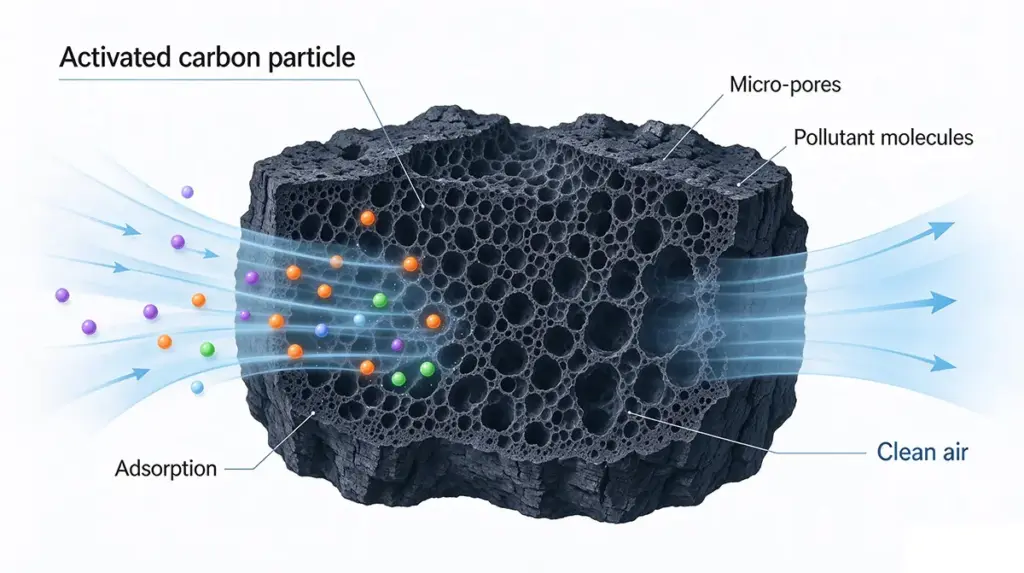
The key to activated carbon’s performance is its porous structure and high internal surface area.
During the activation process, carbon is treated under controlled conditions to develop a network of pores. These pores can range from very small micropores to larger pores that help contaminants move through the carbon structure.
The result is a material with a much greater available surface area than ordinary carbon.
This is important because adsorption takes place on the carbon surface. A greater and more suitable surface area can provide more sites for target molecules to attach.
Adsorption vs. Absorption: What’s the Difference?
The terms adsorption and absorption are sometimes confused, but they describe different processes.
| Adsorption | Absorption |
|---|---|
| Molecules attach to a surface | Molecules enter into the bulk of a material |
| Mainly a surface phenomenon | Occurs throughout the material |
| Important mechanism of activated carbon | Commonly associated with liquids or porous materials |
| Used to capture certain gases and chemicals | Different mechanism from carbon adsorption |
Activated carbon filtration primarily relies on adsorption. Contaminant molecules are attracted to and retained on the carbon’s internal surfaces.
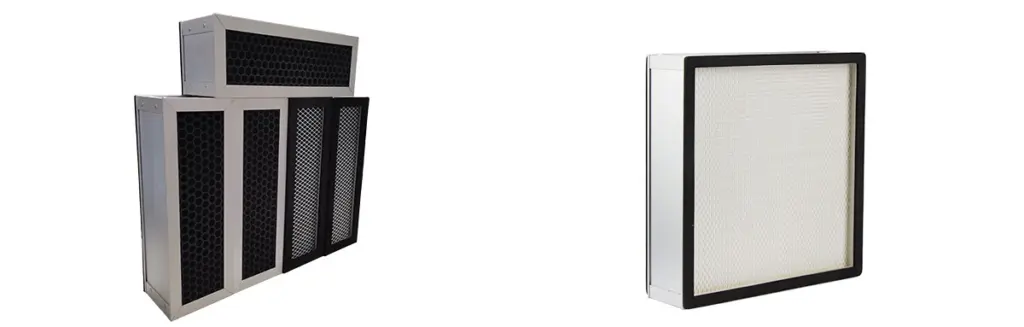
What Does an Activated Carbon Filter Remove?
Activated carbon is particularly useful for contaminants that can be adsorbed onto carbon.
Common targets in air filtration include:
Volatile organic compounds (COV)
Odors and odor-causing compounds
Certain chemical vapors
Some gaseous pollutants
Specific contaminants depending on the carbon type
In water treatment, activated carbon can also be used to reduce substances such as chlorine, taste- and odor-causing compounds, and certain organic contaminants.
The exact removal performance depends on the contaminant and the properties of the carbon. Not every activated carbon filter is designed to remove the same substances.
What Does an Activated Carbon Filter Not Remove?
Activated carbon should not be considered a replacement for every type of air filter.
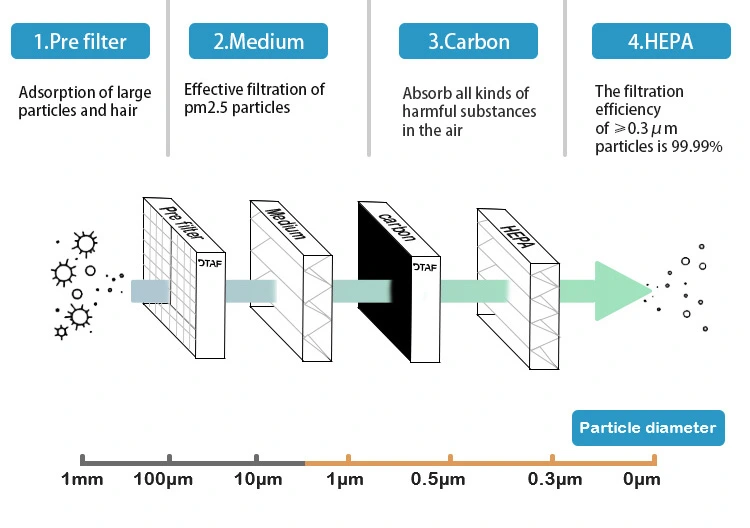
Activated carbon is built for odors, COV, and bacteria—not for trapping particles. That’s where HEPA comes in, capturing dust, pollen, and other airborne particles.
This is why many air purification systems combine different filtration technologies.
Activated Carbon vs. HEPA Filter
| Recurso | Activated Carbon Filter | HEPA Filter |
|---|---|---|
| Main target | Gases, odors, COV | Airborne particles |
| Main mechanism | Adsorption | Mechanical filtration |
| VOC removal | Sim, depending on carbon | Not its primary function |
| Odor control | Sim, depending on contaminant | Limited |
| Dust and pollen | Not its primary function | Sim |
| Typical application | Gas-phase filtration | Particle filtration |
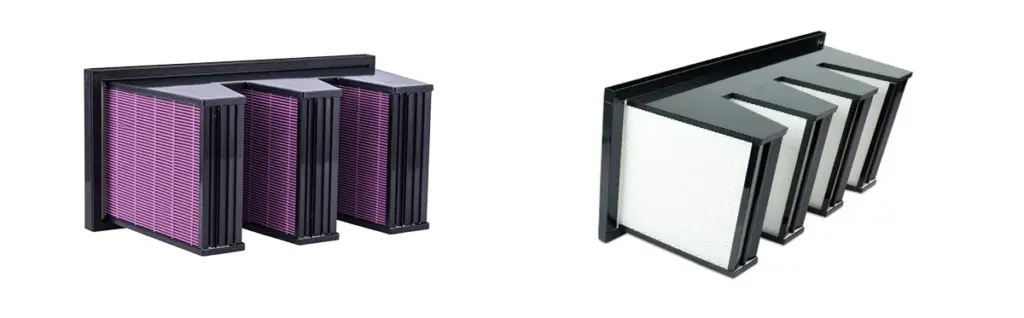
We have come across many cases where both activated carbon filters and HEPA filters are used. They have the same processing function and are usually used together.
What Factors Affect Activated Carbon Filter Performance?
Several factors determine how effectively an activated carbon filter performs.
Carbon Amount
A filter containing more suitable carbon media may provide greater adsorption capacity, although the actual performance depends on the contaminant and carbon characteristics.
Contact Time
The longer contaminated air or water remains in contact with the carbon, the more opportunity there is for adsorption to occur.
Carbon Pore Structure
Different contaminants interact differently with different pore structures. Choosing the appropriate carbon for the target contaminant is therefore important.
Airflow and Contaminant Concentration
High airflow can reduce contact time, while high concentrations of contaminants can consume the available adsorption capacity more quickly.
Temperature and humidity can also influence adsorption performance, particularly in air filtration applications.
Perguntas frequentes
How does an activated carbon filter work?
An activated carbon filter works mainly through adsorption. Certain contaminant molecules come into contact with the porous carbon surface and are retained within its internal structure.
Does activated carbon remove VOCs?
Sim. Activated carbon can adsorb many VOCs, although performance depends on the specific compound, carbon type, concentration, fluxo de ar, and operating conditions.
Is activated carbon better than HEPA?
They are designed for different purposes.
Activated carbon primarily targets certain gases, COV, and odors, while HEPA filters are primarily designed to remove airborne particles.
Many filtration systems use both technologies together.
Choosing an Activated Carbon Filter Supplier
For applications involving VOCs, odors, chemical vapors, or industrial air filtration, the filter design and carbon media need to match the actual operating conditions.
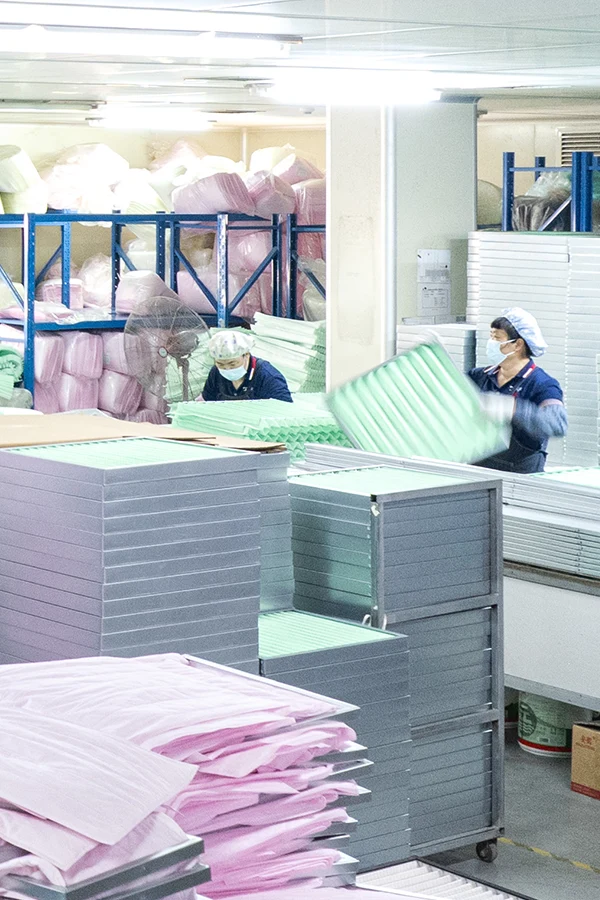
DTAF provides air filtration products and solutions for different industrial and commercial applications. When selecting an activated carbon filter, our team can work with customers to understand requirements such as fluxo de ar, target contaminants, filter dimensions, and application conditions and identify a suitable filtration solution.