Confusing EN 1822 with ISO 29463 can lead to incorrect filter specifications, compliance issues, and failed cleanroom validation. Although both standards classify high-efficiency filters using MPPS performance, their class structures and testing requirements are not fully interchangeable.
This guide compares the integral efficiency, local penetration, and individual testing requirements of both standards. It helps procurement and quality teams correctly specify HEPA and ULPA filters, compare H13 and H14 classifications, and verify supplier test documentation before placing an order.
What Are EN 1822 and ISO 29463?
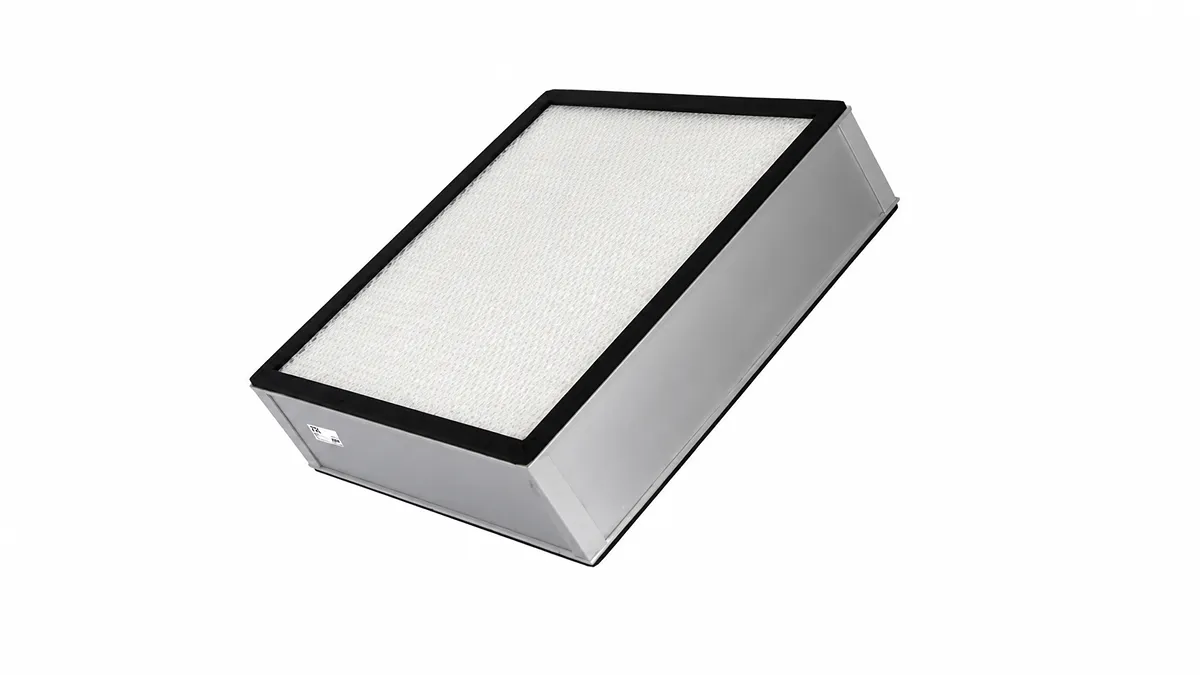
EN 1822 and ISO 29463 classify HEPA and ULPA filters according to their performance at the Most Penetrating Particle Size (MPPS), but their class structures are not fully interchangeable.
| Comparison Point | EN 1822 | ISO 29463 |
|---|---|---|
| Scope | A European standard for classifying and testing high-efficiency air filters. | An international standard covering similar filter classifications and test principles. |
| Performance Basis | Evaluates filter performance at the Most Penetrating Particle Size (MPPS). | Also uses performance at MPPS as the basis for classification. |
| Class Designations | Uses classes such as E11, H13, H14, and U15. | Uses designations such as ISO 15 E, ISO 35 H, ISO 45 H, and ISO 55 U. |
| Classification Structure | Uses the established E-, H-, and U-group structure. | Includes additional intermediate classes with no directly matching EN 1822 designation. |
| Procurement Use | State the applicable standard and edition, filter class, test airflow, and required leakage-testing method. Do not rely on a class label such as “H14” alone. | |
Some EN 1822 and ISO 29463 classes share the same integral- and local-efficiency thresholds, but matching values do not make the two classification systems fully interchangeable. The detailed MPPS testing process is explained in the next section.
For a broader introduction to filter types, MPPS performance, efficiency grades, construction options, and industry uses, see our complete guide to HEPA and ULPA filters.
How Does MPPS Testing Work?
MPPS-based testing evaluates filter efficiency at the particle size associated with maximum penetration. The applicable classification may also require unit-level leakage testing using a permitted method.
Determining the MPPS
The Most Penetrating Particle Size (MPPS) is the particle size at which a filter medium has its lowest collection efficiency. It commonly falls between approximately 0.1 and 0.3 µm, although the actual value depends on the filter media, airflow, and test conditions.
During media testing, an aerosol containing particles of different sizes passes through a flat-sheet sample. Upstream and downstream particle concentrations are measured to identify the particle-size range with the highest penetration.
Measuring Integral Efficiency
The filter element is then challenged with a test aerosol at or near the identified MPPS. Particle concentrations measured upstream and downstream are used to calculate its integral efficiency—the overall efficiency across the filter.
This result is compared with the minimum threshold for the specified EN 1822 or ISO 29463 class.
Checking for Local Leakage
H- and U-group filter elements undergo individual leakage testing to identify localized defects in the media or filter assembly. Depending on the applicable standard, class, and filter design, H-group filters may be tested using the reference scan method or a permitted alternative method, while U-group filters require MPPS scan testing.
This step evaluates local integrity rather than average filtration performance.
Assigning the Filter Class
The final classification depends on the filter meeting the applicable integral-efficiency and, where required, local-efficiency or leakage limits. For example, an EN 1822 H14 filter must achieve at least 99.995% integral efficiency at MPPS while also satisfying the applicable local-efficiency requirement.
Test reports should identify the standard and edition, filter class, test airflow, aerosol, MPPS or test particle size, efficiency result, leakage-test method, and filter serial number.
Get Certified OEM/ODM Filters From MOQ 1
How Do the Classification Systems Compare?
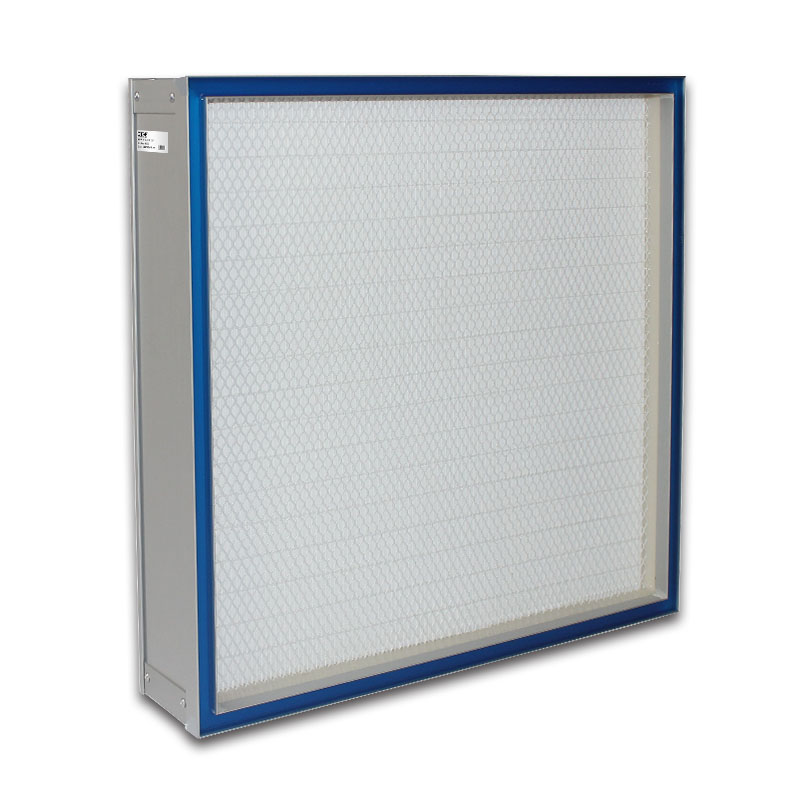
EN 1822 and ISO 29463 use closely related MPPS-based principles, but they apply different classification structures and are not fully interchangeable.
| EN 1822 Class | ISO 29463 Class with Matching Efficiency Thresholds | Minimum Integral Efficiency at MPPS |
|---|---|---|
| E11 | ISO 15 E | ≥ 95% |
| E12 | ISO 25 E | ≥ 99.5% |
| H13 | ISO 35 H | ≥ 99.95% |
| H14 | ISO 45 H | ≥ 99.995% |
| U15 | ISO 55 U | ≥ 99.9995% |
| U16 | ISO 65 U | ≥ 99.99995% |
| U17 | ISO 75 U | ≥ 99.999995% |
Note: These pairings indicate matching minimum integral-efficiency thresholds at MPPS, not complete equivalence between EN 1822 and ISO 29463. Buyers should also verify the applicable local-efficiency requirements, test methods, and standard editions.
Filter class alone does not determine the right choice for an application. Buyers comparing airflow resistance, operating cost, and contamination-control requirements can refer to this practical guide to HEPA vs ULPA filter selection.
Matching Thresholds Do Not Mean Full Equivalence
EN 1822 and ISO 29463 both classify filters according to performance at the Most Penetrating Particle Size (MPPS). Several classes share the same integral- and local-efficiency thresholds, including EN H14 and ISO 45 H.
However, the two classification systems are not fully interchangeable. ISO 29463 includes additional intermediate classes—such as ISO 20 E, ISO 30 E, ISO 40 H, ISO 50 U, ISO 60 U, and ISO 70 U—that have no directly matching EN 1822 designation.
Buyers should therefore specify the applicable standard, edition, filter class, test airflow, and leakage-testing requirements instead of relying on a class name alone.
Which Efficiency Values Should Buyers Check?
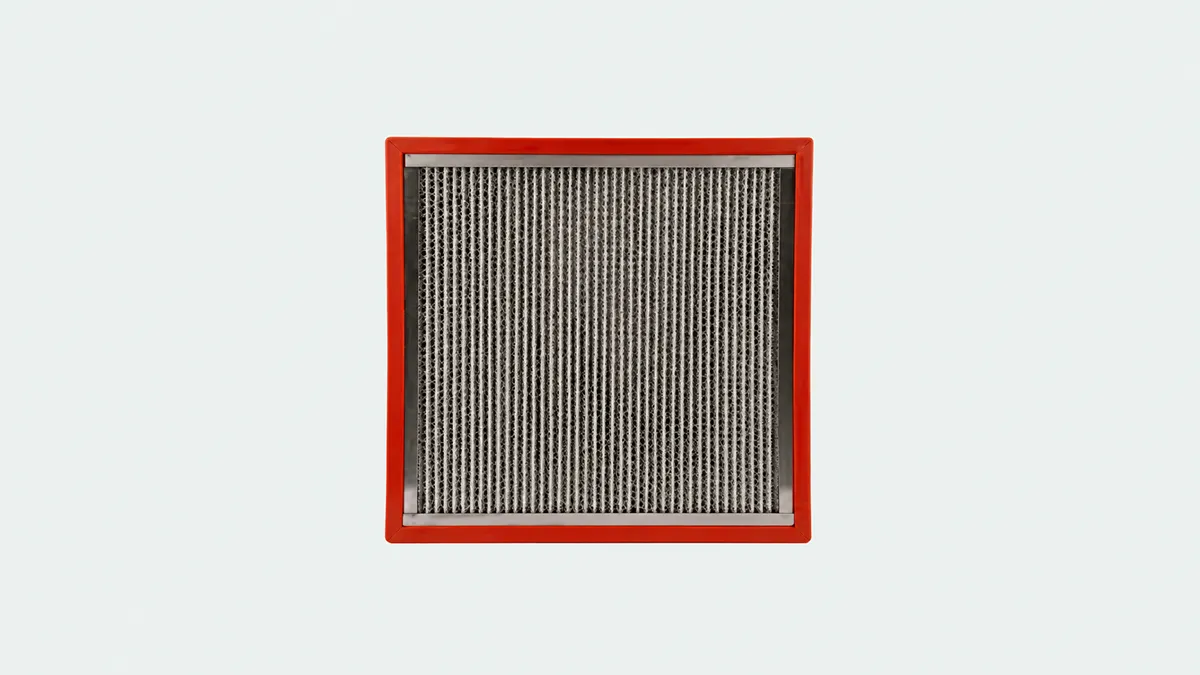
Look past the marketing label. Verify both integral efficiency and local penetration on the official test certificate to confirm true filter performance and integrity.
| Value | What It Shows | What Buyers Should Verify |
|---|---|---|
| Integral Efficiency | Average efficiency of the complete filter | Minimum efficiency at MPPS and the stated test conditions |
| Integral Penetration | Percentage of particles passing through the complete filter | Whether the value corresponds correctly to the reported efficiency |
| Local Efficiency | Performance at the weakest measured area | The applicable minimum limit for the stated filter class |
| Local Penetration | Particle penetration measured at a specific location | The permitted maximum value and the applicable leakage-test method |
| Initial Pressure Drop | Airflow resistance of a new filter | The measured value at the stated airflow or face velocity |
Efficiency and penetration express the same result from opposite directions. An integral efficiency of 99.995% corresponds to an integral penetration of 0.005%. These values are meaningful only when linked to the applicable standard, test airflow, aerosol, and particle-size basis.
What Is the Difference Between Type Testing and Individual Testing?
Type testing evaluates a representative filter design, while individual testing checks each manufactured unit for performance and local defects.
| Comparison Point | Type Testing | Individual Testing |
|---|---|---|
| Test Object | Representative samples from a filter model or product family | Each manufactured filter unit where required |
| Main Purpose | Evaluates whether the filter design can meet the claimed classification | Checks a specific unit for leakage or manufacturing defects |
| What It Evaluates | Filter media, construction, dimensions, sealing design, and overall performance | Localized defects, damaged media, incomplete bonding, frame leakage, and assembly errors |
| Typical Documentation | A type-test report linked to the tested model and configuration | A unit-level test report linked to the filter’s serial number |
| Main Limitation | Does not confirm that every production unit is free from defects | Confirms the tested unit’s performance only under the stated factory test conditions |
Type-test and individual-test records are not interchangeable. Buyers should define which documents must be supplied for the specified filter class and application.
What Test Reports Should Be Included with a Filter?
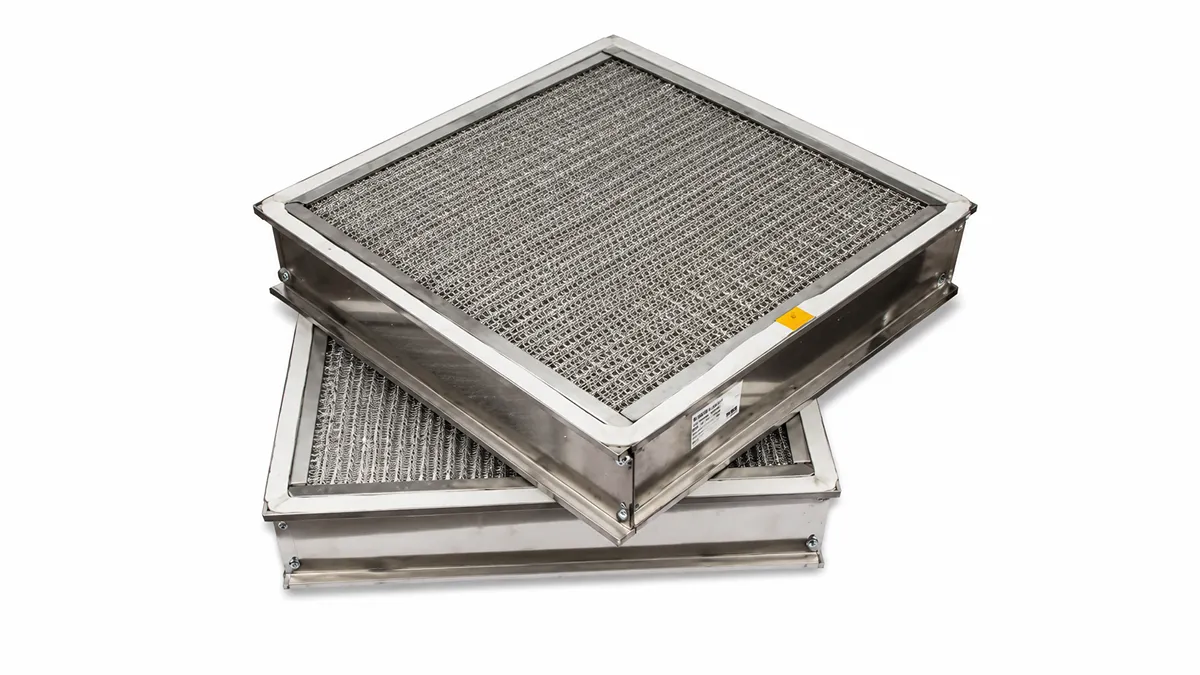
A filter test report should identify the tested unit, applicable standard, test conditions, measured results, and conformity with the specified filter class.
Factory documentation should provide enough information to connect the reported results with the filter supplied. The required level of detail depends on the filter class, application, applicable standard, and purchase specification.
Essential Report Information
A filter test report should normally include:
- manufacturer and testing location;
- filter model, dimensions, and serial or production number;
- applicable standard, edition, and filter class;
- rated or test airflow;
- test aerosol and particle-size information;
- measured integral efficiency or penetration, where applicable;
- leakage-test method and result, where required;
- initial pressure drop at the stated airflow;
- test date and equipment or procedure reference;
- conformity or pass/fail conclusion.
For H- and U-group filters, buyers should request unit-level test documentation traceable to the filter serial number. The report should distinguish between integral-efficiency testing and leakage testing rather than using a general statement such as “HEPA tested.”
Test Reports and Supporting Documents
The supplier may provide the required information in one combined report or several linked documents. Depending on the project, the documentation package may include:
- a unit-level factory test report;
- a certificate of conformity referencing the applicable standard;
- leakage-test results, if not included in the main report;
- a filter label or serial-number record matching the supplied unit.
A certificate of conformity alone confirms the supplier’s declaration but may not contain the measured values needed for technical review. The purchase specification should therefore state which test results and supporting documents must accompany each filter.
When More Detailed Documentation Is Needed
More detailed reporting is appropriate when filter performance forms part of cleanroom qualification, commissioning, or regulatory documentation. This commonly applies to pharmaceutical production, biosafety facilities, semiconductor manufacturing, and other contamination-controlled environments.
In these cases, buyers may need actual efficiency, penetration, leakage, airflow, and pressure-drop results for each specified unit. Documentation requirements should be agreed before production, including the standard and edition, accepted test method, unit-level traceability, report format, and whether electronic or printed copies must accompany the shipment.
How to Write Standards into a Purchase Specification
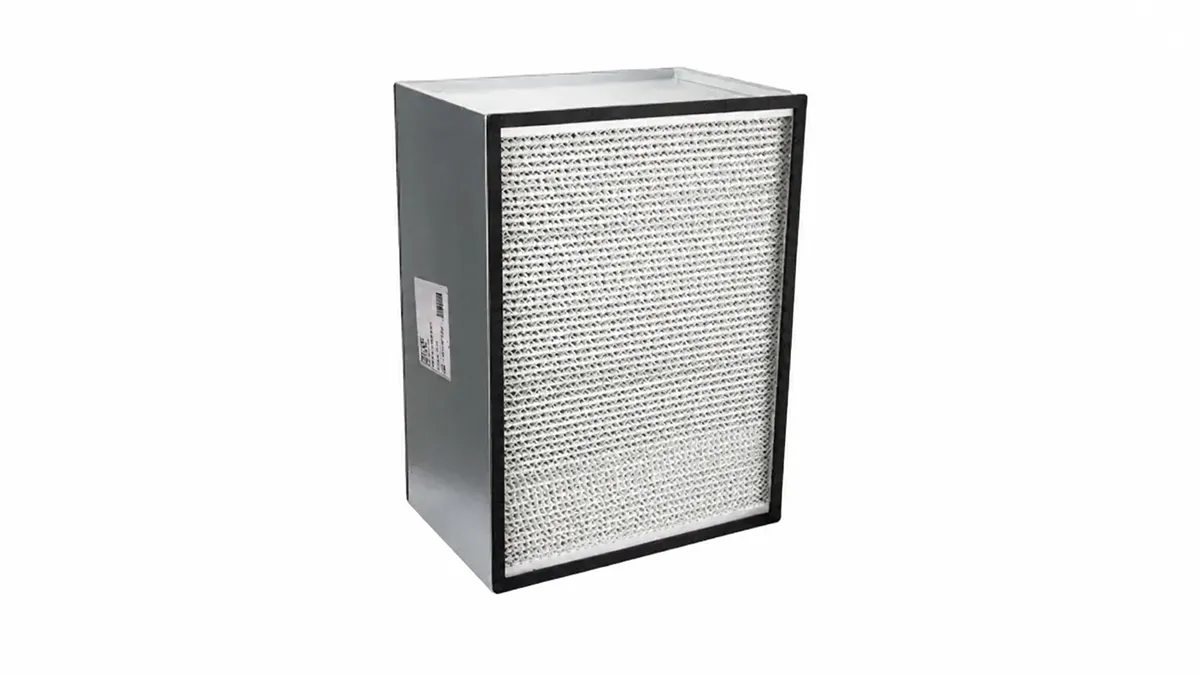
A clear purchase specification should define the applicable standard, filter class, test conditions, acceptance criteria, and required documentation.
Class names alone may not provide enough information for procurement. The specification should state both the required classification and the evidence the supplier must provide before shipment.
State the Applicable Standard and Edition
EN 1822-1:2019 retains the European E-, H-, and U-group classification system, while the applicable test procedures are covered by EN ISO 29463 Parts 2–5. This relationship is explained in Freudenberg’s overview of the EN 1822 standard for HEPA filters. Buyers should therefore identify both the classification standard and the applicable test-method parts in the purchase specification.
The specification should also identify any relevant test parts or methods. This prevents suppliers from relying on a different standard edition or interpreting a general requirement such as “HEPA compliant” in different ways.
Define the Filter Class and Performance Requirements
State the required class using the designation from the selected standard, such as EN H14 or ISO 45 H. Where necessary, also specify:
- minimum integral efficiency or maximum penetration at MPPS;
- applicable local-efficiency or leakage limit;
- rated airflow and test airflow;
- maximum initial pressure drop;
- filter dimensions, frame construction, and gasket arrangement;
- approved test aerosol and leakage-test method, where required.
For example, an EN H14 specification should not state only an integral efficiency of at least 99.995%. It should also address the applicable local-efficiency requirement and test conditions. Filters with matching efficiency thresholds under EN 1822 and ISO 29463 should not automatically be treated as fully equivalent.
Define Testing, Documentation, and Traceability
For H- and U-group filters, specify the required unit-level testing and accepted leakage-test method according to the governing standard, filter design, and application. Do not use scan report as a universal requirement unless scanning is the specified test method.
The documentation requirements may include:
- test records traceable to each filter serial number;
- measured integral efficiency or penetration;
- leakage-test method and result;
- initial pressure drop at the stated airflow;
- applicable standard, edition, and filter class;
- test date and conformity conclusion;
- a certificate of conformity, if required.
The specification should also require the filter label and test documentation to carry matching model and serial-number information. Acceptance and rejection criteria should be agreed before production rather than determined only when the shipment arrives.
Define How Alternatives Will Be Evaluated
Avoid undefined terms such as HEPA-grade, HEPA-type, or or equivalent. If alternative classifications or test methods are permitted, define the evidence required for technical review.
An alternative should be accepted only after the supplier demonstrates that it meets the specified integral efficiency, local leakage, airflow, pressure-drop, dimensional, and documentation requirements. Final approval should remain subject to the buyer’s written confirmation.
Example Purchase Specification
Supply EN 1822-1:2019 H14 filters with a minimum integral efficiency of 99.995% and the applicable local-efficiency requirement at MPPS. Each filter shall be tested using an accepted method under the specified standard and identified by a unique serial number. Provide unit-traceable records showing test airflow, efficiency or penetration, leakage-test result, initial pressure drop, test date, and conformity status. Alternative classifications or methods require the buyer’s written approval before production.
Frequently Asked Questions
What are EN 1822 and ISO 29463?
EN 1822 is the European standard and ISO 29463 is the international standard for testing and classifying high-efficiency particulate air (HEPA) and ultra-low penetration air (ULPA) filters. Both standards evaluate filter performance based on its efficiency at capturing the Most Penetrating Particle Size (MPPS), which is the particle size that is most difficult for the filter to stop.
Are the EN 1822 and ISO 29463 standards equivalent?
No, they are not fully equivalent. While ISO 29463 was developed from EN 1822 and uses the same core testing principles, the classification names and some performance thresholds differ. A single filter can receive different class labels under each standard, so you cannot always treat them as interchangeable.
How do EN 1822 and ISO 29463 classify HEPA filters?
Both standards classify filters based on their efficiency at the Most Penetrating Particle Size (MPPS). Under EN 1822, HEPA filters fall into classes H13 (≥99.95% efficiency) and H14 (≥99.995% efficiency). The corresponding ISO 29463 classes are ISO 35 H and ISO 45 H, which align with the same efficiency requirements.
What does MPPS mean in filter testing?
MPPS stands for Most Penetrating Particle Size. It is the particle size that a filter captures with the lowest efficiency, representing its worst-case performance scenario. Certifying a filter based on its performance at the MPPS ensures it meets its stated efficiency level even under the most challenging conditions. For HEPA filters, the MPPS is typically in the 0.1 to 0.3 micron range.
Does every H13 or H14 filter require an individual leak test?
H13 and H14 filters are subject to individual leakage testing as required by the applicable standard. The scan method is the reference method for identifying localized defects, but other permitted methods may apply depending on the filter class, design, and governing standard. Buyers should specify the required test method and request results traceable to each filter’s serial number.
What is the difference between efficiency testing and scan testing?
Efficiency testing measures the integral performance of the complete filter. Scan testing is the reference method for detecting localized leakage across the filter face. Where another leakage-test method is permitted, the filter must satisfy the applicable integral and local-integrity requirements rather than necessarily undergoing a scan test.
What should a compliant HEPA filter test report include?
A test report should identify the filter, applicable standard and edition, class, test airflow, aerosol or particle-size basis, measured efficiency or penetration, and the leakage-test method and result where required. For unit-tested H- and U-group filters, the documentation should be traceable to the filter’s model and serial number.
Final Thoughts
Clear test documentation helps buyers confirm filter performance and reduce compliance risks. Purchase specifications should define the applicable EN 1822 or ISO 29463 requirements, testing method, traceability, and required reports before production.
For help reviewing your specification or qualifying an OEM filter, contact our engineering team to discuss your technical requirements.