Перейти к содержимому

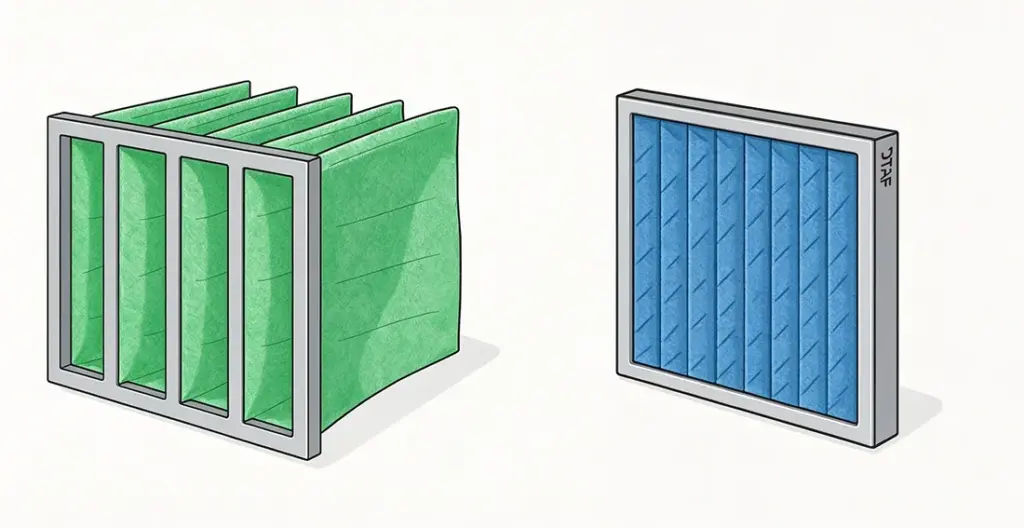
Unlike disposable fiberglass or pleated filters that end up in landfills every few months, an electrostatic air filter is designed to be washed, dried, and reinstalled for years. (If you are new to this technology, read our complete guide on what is an electrostatic air filter to understand how static attraction works). However, its greatest strength is also its biggest vulnerability: an electrostatic filter only works when it is clean.
Over time, dust, pet hair, and airborne grease coat the collection plates and synthetic fibers. Once this insulating layer forms, the static magnetic field weakens, allowing fine dust and allergens to blow straight through your HVAC system while straining your blower fan.
Here is the exact step-by-step cleaning procedure recommended by filtration engineers, whether you maintain a residential washable filter or a commercial electronic precipitator cell.
Cleaning Frequency: When Is It Due?
As a baseline, check and clean your filter every 30 к 90 дни.
The quickest check is the Daylight Test: slide the filter out and hold it up against a bright ceiling light or the sun. If light easily passes through the media, your system airflow is healthy. If the light is completely blocked or hazy, it is past due for a wash.
Step-by-Step Cleaning Guide
1. Shut Off the HVAC System
Never pull the filter out while the HVAC unit is actively blowing. Running the system naked pulls loose duct dirt, hair, and pollen directly into your evaporator coil and blower wheel, causing expensive coil fouling.
2. Note the Airflow Arrow and Remove
Look closely at the outer metal frame for an engraved or printed Airflow Direction Arrow (→). Note whether it points toward the furnace or down the duct run. Slide the filter out horizontally to prevent loose dust clumps from dropping onto the floor.
3. Dry Pre-Cleaning
Take the filter outside. Tap the frame gently against your lawn or a trash bin to dislodge heavy lint and pet hair. You can also run a handheld vacuum across the intake face. This simple step keeps dirt clumps from turning into wet sludge that clogs your drain or binds deeper into the media.
4. The Golden Rule: Reverse-Rinse
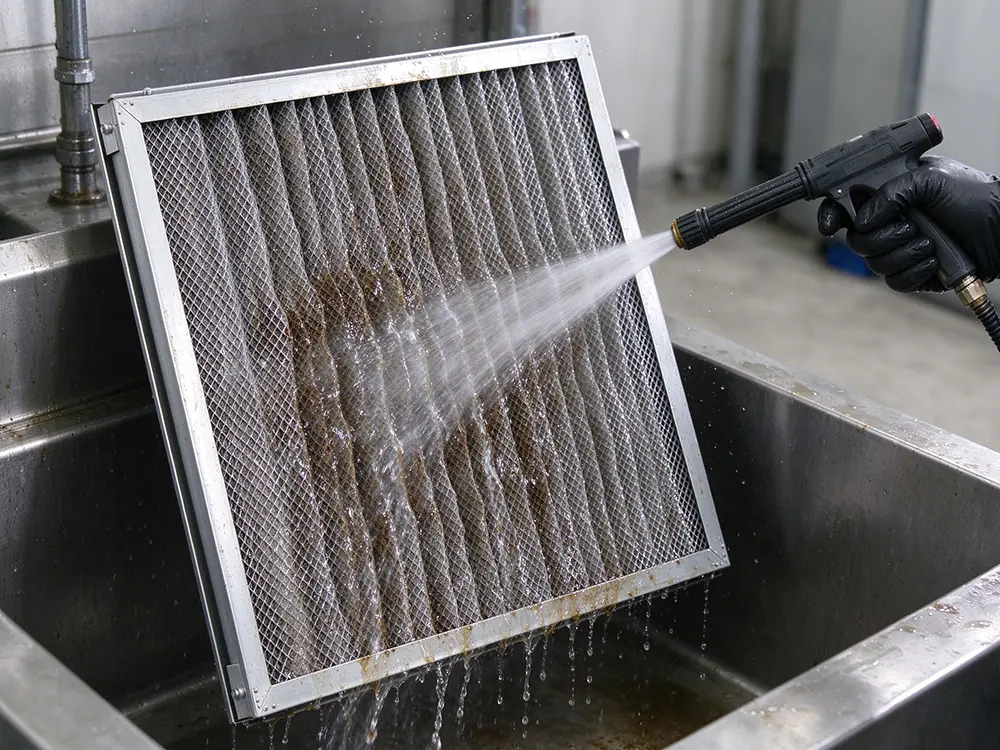
Always rinse from the clean side (exhaust face) through to the dirty side (intake face). Spraying water onto the dirty side forces dust deep into the microscopic channels, packing it tight. Use a standard garden hose with a gentle spray nozzle or a low-pressure utility sink sprayer. Rinse until the runoff water transitions from murky brown to crystal clear.
5. Clear Grease and Grime with Mild Detergent
If the filter has trapped kitchen cooking grease, tobacco smoke, or sticky soot, plain cold water will not dissolve the oily film.
- Mix warm water with a few drops of mild dish detergent (or an HVAC-approved aluminum-safe cleaner).
- Spray both sides generously and let it soak for 5 к 10 minutes.
- Gently stroke the surface with a soft-bristle nylon brush—never scrape or press hard.
- Flush thoroughly with clean water until all soap bubbles disappear. Residual soap acts as a sticky trap for dust once reinstalled.

Commercial ESP & MESP Cells: Key Differences
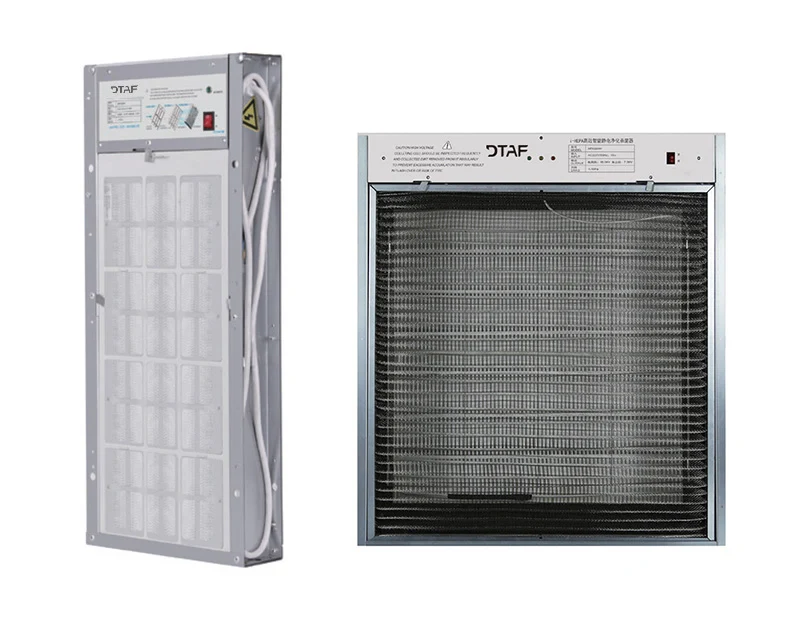
While lightweight residential screens only need a quick hose rinse, commercial HVAC facilities running modular systems like our two-stage commercial electrostatic filter require industrial care, including residual voltage discharge and soak-tank degreasing.
Similarly, ceiling-recessed units such as the inlet-type electrode microstatic air purifier feature dense micro-channel dielectric matrices that can be restored with a gentle warm-water spray, eliminating the need to replace costly commercial filters.
| Parameter | Residential Washable Screen | Commercial Two-Stage ESP Cell | Ceiling-Type Micro-Electrostatic (MESP) |
|---|---|---|---|
| Power Source | Passive (No wiring) | Active (High Voltage 6–8 kV) | Active Micro-Field (Low Voltage Matrix) |
| Core Material | Полипропилен & Aluminum mesh | Heavy-duty Aluminum plates & Tungsten wire | Micro-channel Dielectric Composites |
| Discharge Safety | None needed | Must discharge residual voltage for 60s | Auto-bleed power supply |
| Метод очистки | Garden hose spray | Soak tank with industrial degreaser | Low-pressure warm spray rinse |
| Typical Drying Time | 4 к 8 часы | 12 к 24 часы | 8 к 12 часы |
| Critical Check | Frame seal & mesh tears | Broken ionization wires & cracked insulators | Micro-channel blockages & dry contacts |
4 Critical Mistakes That Ruin Electrostatic Filters
- Mistake 1: Reinstalling While Wet (The Worst Hazard)Moisture acts as a conductor, neutralizing static charge and causing active electronic units to short out or arc violently. In passive systems, a damp filter inside a warm, dark HVAC duct turns into an active mold incubator within 48 часы. Let the filter air-dry completely on edge in a well-ventilated spot.
- Mistake 2: Pressure WashingHigh-pressure sprayers easily bend aluminum collector plates, snap thin tungsten ionizing wires, and rupture woven dielectric fibers. Normal tap water pressure is all you need.
- Mistake 3: Harsh Chemicals or BleachNever use chlorine bleach, oven cleaners, or heavy industrial acids. They strip the protective oxidation layer off aluminum frames, leading to structural corrosion and flaking.
- Mistake 4: Dishwashers and High HeatNever run these filters through a dishwasher cycle or dry them with space heaters and hair dryers. High heat warps the frame and melts inner synthetic polymers, destroying the airtight seal.

Pro Tip: The Two-Filter Rotation System
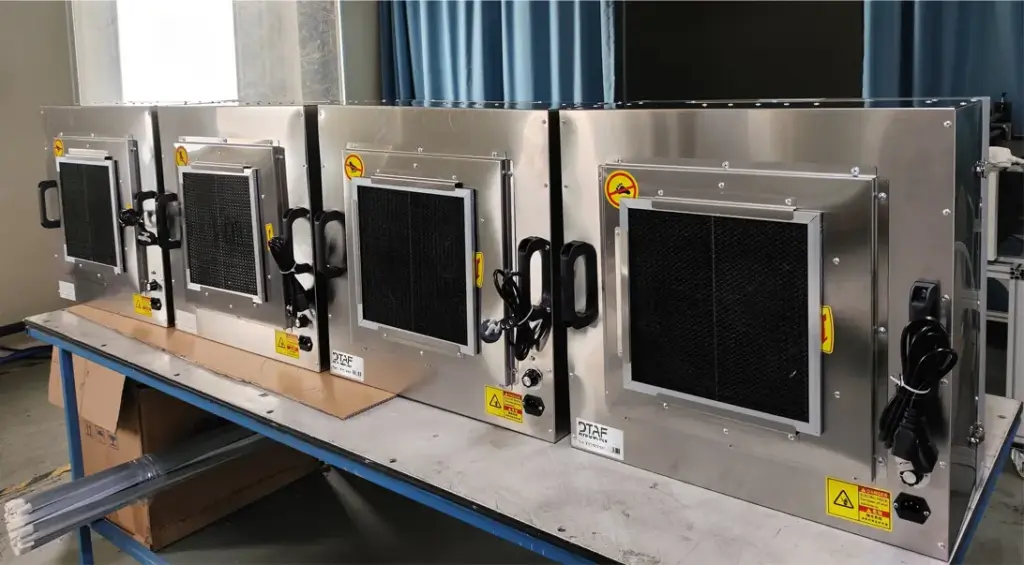
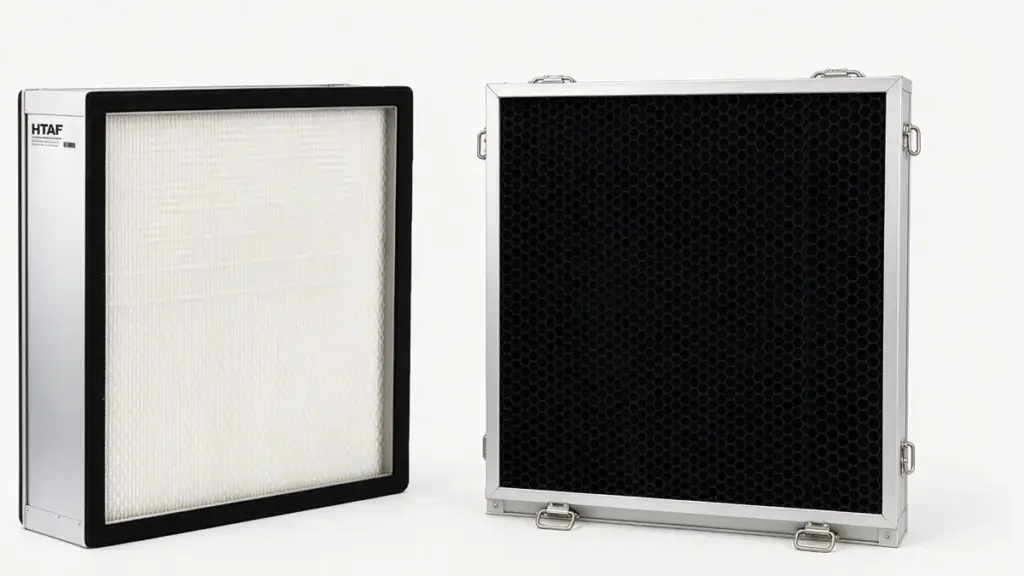
Pro Tip for Odor & Pathogen Control: While washing keeps electrostatic plates free of dust, electrostatic units cannot remove stale smells or VOCs. Pairing your filtration with an inlet-type full-section nano photocatalytic air purifier breaks down gaseous chemical odors, while adding a plug-in ultraviolet and hydrogen ion disinfection device delivers continuous active sterilization without adding wash-cycle maintenance.
Need heavy-duty washable filtration for an upcoming commercial project? Explore air cleaning solutions from DTAF Air Filtration, a leading commercial HVAC air filtration manufacturer specializing in custom-engineered ESP and low-pressure-drop systems.
Часто задаваемые вопросы (Часто задаваемые вопросы)
1. Can I use vinegar or bleach to clean an electrostatic air filter?
No, avoid both bleach and concentrated vinegar. While diluted white vinegar is sometimes used as a mild household deodorizer, acids can cause pitting on untreated aluminum collection plates over time. Chlorine bleach is far worse—it actively corrodes the metal frame, strips protective oxidation coatings, and can degrade synthetic micro-fibers. Standard mild dish soap, simple warm water, or an HVAC-approved, non-corrosive foaming coil cleaner is the safest and most effective choice.
2. Can I run my HVAC system while the electrostatic filter is drying?
It is strongly recommended not to run the system without a filter. Operating your blower with an empty filter slot pulls loose airborne dust, pet fur, and construction debris directly into the air handler. These particles quickly coat the evaporator coil and blower motor fins, causing efficiency loss and expensive maintenance down the road. If you cannot shut off heating or cooling during extreme weather, implement a “two-filter rotation” by popping in a dry spare while washing the dirty one.
Can EC FFUs Reduce Cleanroom Operating Costs?
They can, especially in facilities with long operating hours or many FFUs. Calculate the expected savings using actual power data, annual operating hours, and local electricity rates before making a decision.
3. How long does an electrostatic air filter actually take to dry?
Under typical indoor conditions (around 70°F / 21°C and moderate humidity), a passive residential filter dries on edge in 4 к 8 часы. Dense commercial two-stage ESP cells and micro-electrostatic (MESP) matrix cassettes require 12 к 24 hours to ensure water trapped between narrow plate channels and high-voltage contact points has evaporated entirely. You can accelerate drying by placing a small oscillating floor fan nearby, but never use high-heat hair dryers or space heaters.
4. Why does my filter still show stains or discoloration after washing?
Discoloration is completely normal and does not mean your filter is failing. Over years of use, microscopic aluminum oxidation, mineral deposits from hard tap water, and deep airborne soot can tint the metal gray, brown, or yellowish. As long as water runs clear from the reverse-rinse, airflow passes freely (passes the daylight test), and the plates are physically clean of oily film, the electrostatic capture efficiency remains intact.
5. Why is my commercial ESP unit clicking, snapping, or sparking after being cleaned?
If an electronic air cleaner sparks, clicks, or trips the power-pack indicator light immediately after maintenance, the culprit is almost always residual moisture. Water droplets act as conductive bridges, causing high-voltage arcing across the ionization wires and ground plates. Power off the unit, pull the cell out, let it dry for another 12 часы, and inspect for any bent collection plates or broken ionizing wires before powering it back up.