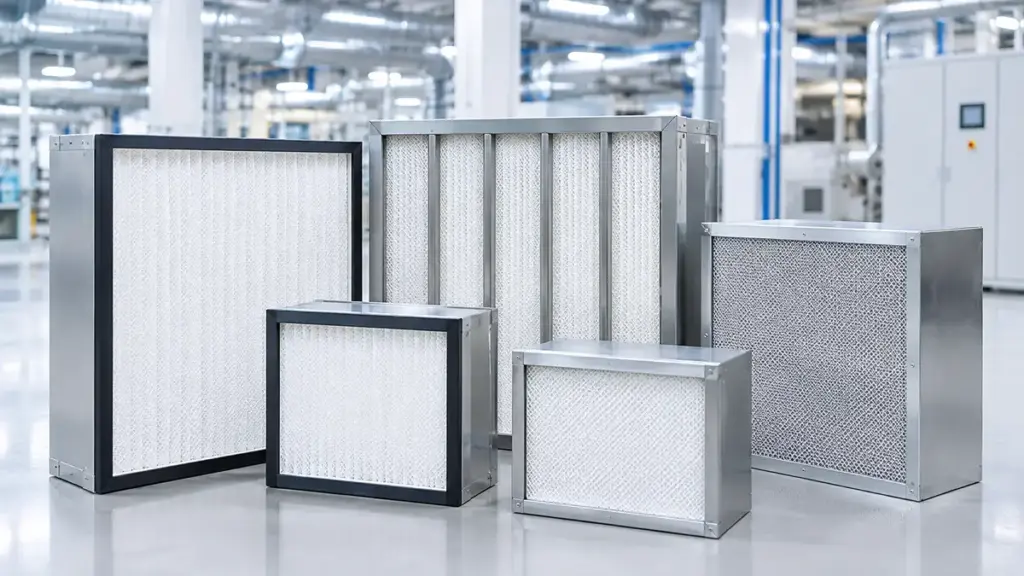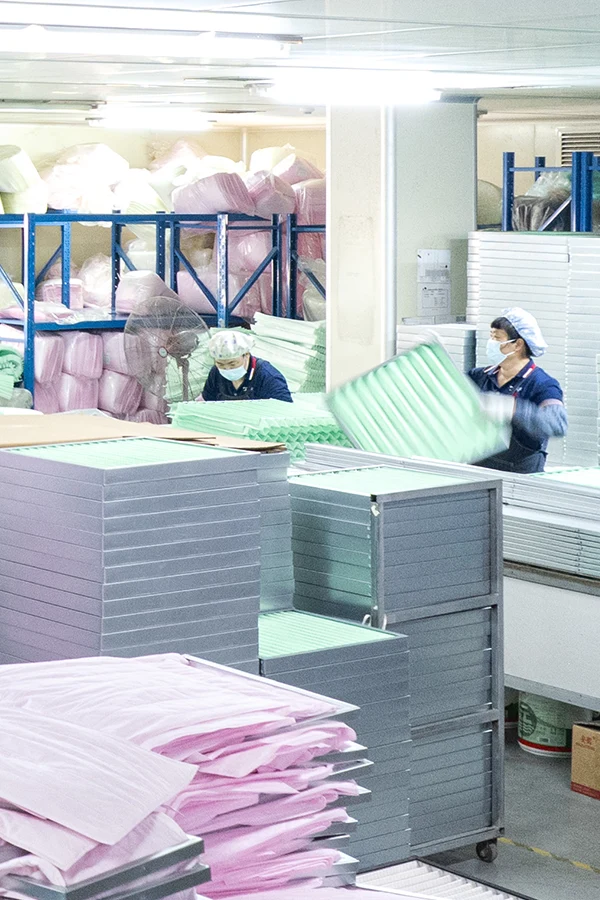
Improper cleanroom HEPA filter selection is a direct path to costly project delays and validation failures. Specifying a filter based on its grade alone, without accounting for the entire system’s dynamics, risks creating an environment that cannot meet its required ISO classification.
This analysis benchmarks H13, H14, and ULPA filter grades against industry standard requirements for pharmaceutical, semiconductor, and medical applications. We evaluate the critical trade-offs between filter grade, pressure drop, seal configuration, and the evidence required for in-situ leak testing to ensure your specification delivers a compliant and validated result. For a broader overview, see our complete guide to HEPA and ULPA efficiency grades.
What Does the Cleanroom Process Need to Control?
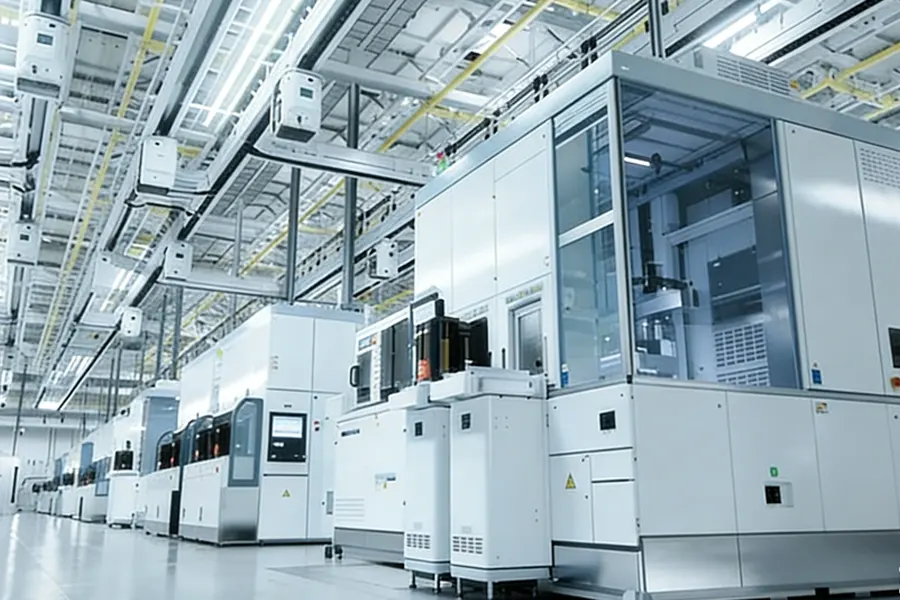
A cleanroom process controls the entire contamination picture: environment (air, pressure, temp), workflow (people, materials), equipment sources, and ongoing validation to protect the product.
Achieving a validated cleanroom is not just about installing HEPA filters. The process must manage four critical areas: airborne particles and microorganisms within strict ISO or GMP limits; airflow patterns and air change rates sufficient to sweep or dilute contaminants; personnel and material movement through defined pathways and gowning protocols; and continuous environmental monitoring with periodic requalification. A cleanroom is a dynamic, validated system — not a static clean space — and every change, from filter replacement to HVAC adjustment, triggers requalification.
How Do Cleanroom Classification and Filter Grade Differ?
Cleanroom classification defines the air cleanliness you must achieve in the room. Filter grade specifies the performance of a tool, like a HEPA filter, used to reach that goal.
What Is Cleanroom Classification?
Cleanroom classification defines the required level of air cleanliness for a room. It sets the maximum allowable concentration of airborne particles within a specific volume of air, verified by physically measuring particle counts inside the finished space. Standards like ISO 14644-1 establish classes from ISO 1 (cleanest) to ISO 9, while the EU GMP framework uses Grades A through D. Each class has specific particle limits that must be met under defined operating states such as “at rest” or “in operation.”
What Is Filter Grade?
Filter grade is a performance rating for a single component: the air filter itself. It specifies how efficiently a HEPA or ULPA filter removes particles of a certain size from the air that passes through it. These grades are determined by test standards like EN 1822, which result in ratings like H14 (a common high-efficiency HEPA grade). The filter is a critical part of the HVAC system, but its grade only describes its own capability, not the room’s final performance.
The Core Relationship: Target vs. Tool
The cleanroom classification is your performance target — the level of environmental cleanliness you are required to meet. The filter grade defines one of the most important tools you use to hit that target. A high-grade filter does not automatically create a high-class cleanroom. The entire system design matters: air change rates, airflow patterns, seal integrity, and operational discipline all contribute. Simply installing an H14 filter in a poorly designed room will not result in an ISO 5 environment. The final proof of compliance is always the measured particle concentration in the completed room — not the specification printed on the filter box.
When Should You Use H13, H14, or U15–U17?
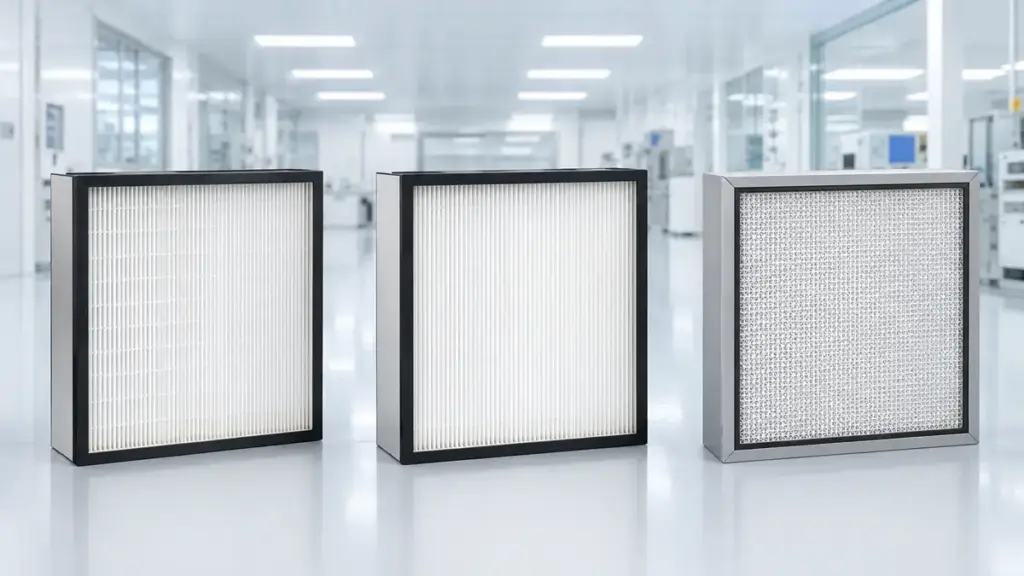
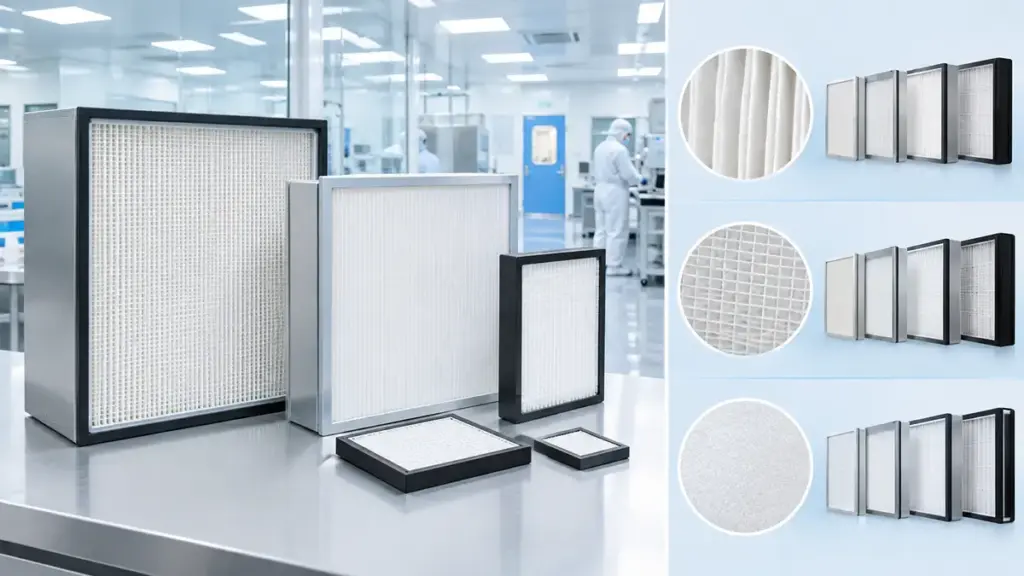
Choosing between H13, H14, and ULPA filters depends entirely on your cleanroom’s required ISO class, process criticality, and acceptable contamination risk.
H13: For ISO 7–8 and General Controlled Environments
An H13 filter is the workhorse for standard cleanrooms and controlled spaces. It provides a baseline of HEPA performance sufficient for many applications without the higher cost and energy demands of more efficient filters.
- ISO Class: The correct choice for environments classified as ISO 7 or ISO 8, with processes that can handle a modest airborne particle load.
- Performance: Delivers a minimum filtration efficiency of 99.95% at the Most Penetrating Particle Size (MPPS), with lower pressure drop than higher grades to help manage operating budgets.
H14: For ISO 5–6 and Critical Contamination Control
When process risk increases, the H14 filter becomes the industry standard. The jump from H13 to H14 represents a tenfold reduction in allowable particle penetration, offering a significant boost in protection. For a detailed comparison, see our H13 vs H14 filter analysis.
- Critical Applications: Routinely specified for pharmaceutical manufacturing, medical device assembly, and biosafety laboratories requiring ISO 5–6 environments.
- Efficiency: Provides a minimum efficiency of 99.995%, striking a balance between high performance and practical system design for many critical industries.
U15–U17: For ISO 1–4 and Ultra-Clean Applications
ULPA filters (grades U15 to U17) are reserved for the most demanding applications where even microscopic contamination can derail a process. Their selection implies that process sensitivity outweighs the higher initial cost and operational demands.
- ISO Class: Required for the cleanest environments, typically classified from ISO 1 to ISO 4, including advanced semiconductor fabrication and EUV lithography.
- ULPA Performance: Offers efficiencies starting at 99.9995% for U15 and increasing with each grade, chosen only when the HVAC system can support the filter’s higher pressure drop.
How Do Air Changes, Face Velocity, and Pressure Drop Interact?
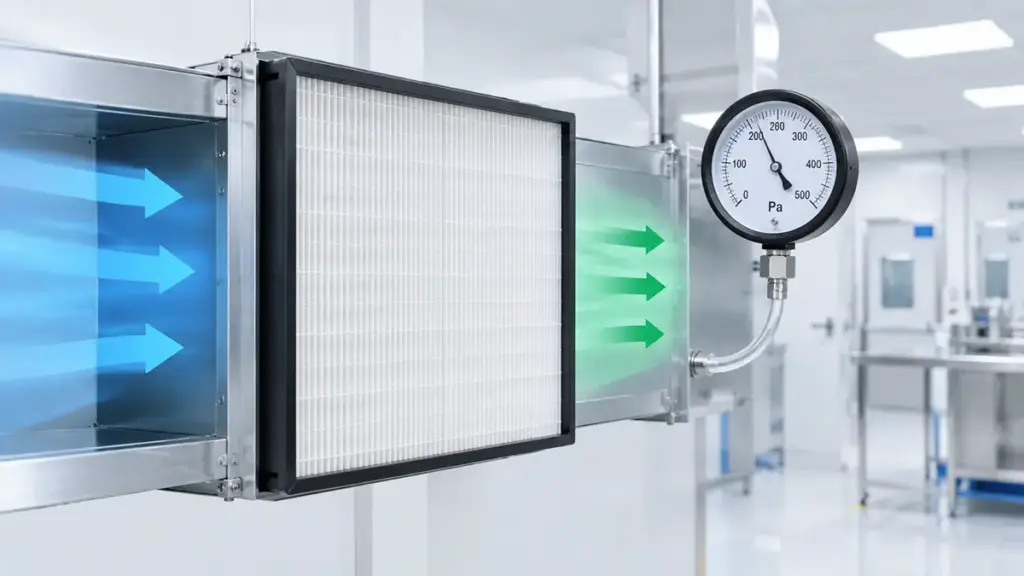
These three factors are locked in a balancing act. Achieving required air changes (ACH) means trading off filter area against air speed, which directly dictates fan energy use (pressure drop).
The Core Relationship: Airflow, Filter Area, and Velocity
The interaction between these variables is governed by a straightforward formula: Total Airflow = Filter Area × Face Velocity. To achieve a higher number of air changes per hour (ACH) and keep the room clean, you must increase the total volume of filtered air. You have only two ways to do this: increase the surface area of your filters or increase the speed of the air moving through them.
How Face Velocity Influences Pressure Drop
Pressure drop is the resistance a filter creates against airflow. As air moves faster through the filter media, this resistance climbs. The relationship is not linear; doubling the face velocity through a filter can cause an exponential increase in pressure drop. This higher resistance forces the HVAC system’s fan to work much harder and consume significantly more energy to maintain the required airflow.
Design Priority and Practical Trade-Offs
In highly-controlled ISO 5 and cleaner unidirectional rooms, face velocity is the primary metric. The goal is a consistent downward sweep of air, typically between 0.36 and 0.54 m/s, to push particles away from critical surfaces. In ISO 6 to ISO 8 non-unidirectional rooms, ACH is the main design driver, relying on high-volume air turnover to dilute contaminants.
Using more filter area allows the system to achieve the target airflow at a lower face velocity, reducing pressure drop, cutting fan energy consumption, and extending filter life — but at a higher initial cost and larger footprint. Conversely, using less filter area reduces upfront cost but requires a higher face velocity, increasing long-term energy costs.
Which Seal and Frame Configuration Fits the System?
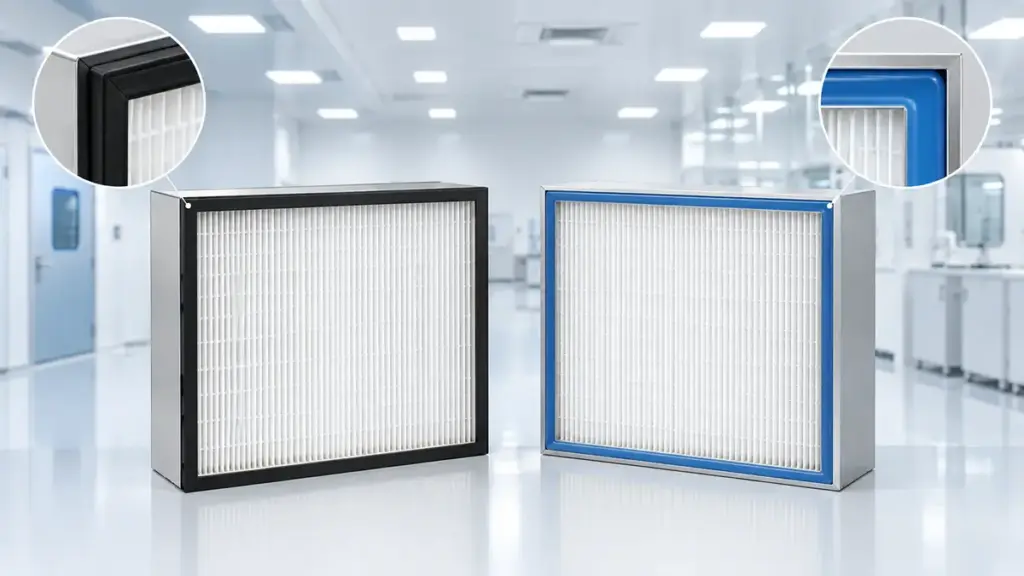
The choice between gasket and gel seals depends entirely on the cleanroom’s required leak tightness. Gaskets are for standard use; gel seals are for critical, validated environments.
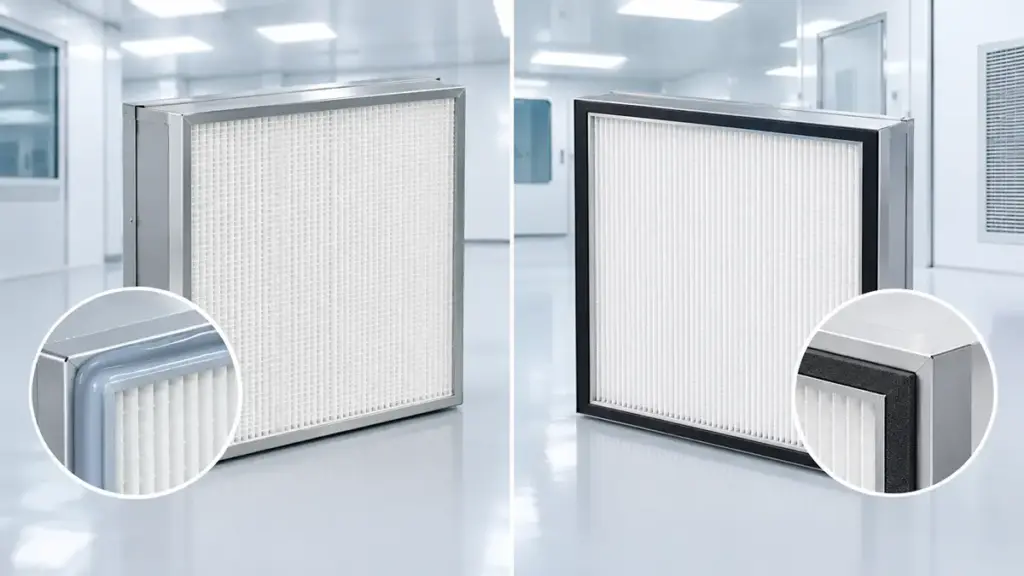
Gasket vs. Gel Seals: The Core Difference
Gasket seals are used in general HVAC and controlled environments where a moderate level of leak control is acceptable. In contrast, gel seals form a positive, self-healing seal when mated with a knife-edge frame, significantly reducing air bypass at the filter perimeter. This makes them the standard for applications that cannot tolerate leaks. For high-purity environments like pharmaceutical and semiconductor manufacturing, low-outgassing polyurethane-based gel is the common specification to prevent chemical contamination.
Frame Construction and Material Requirements
A filter frame must be rigid enough to maintain its shape under operating pressure. Any distortion or warping creates leakage paths that compromise the entire system. Because most leaks occur at the filter’s perimeter rather than through the media itself, the frame’s geometry is critical. Cleanroom specifications typically mandate noncombustible or listed materials for filter frames, housings, and ceiling grids.
Impact on System Verification and Leak Testing
The entire seal and frame assembly must be designed to support post-installation integrity testing using an aerosol challenge and test methods outlined in ISO 14644-3. A filter can meet its stated efficiency rating on paper but still fail an in-situ (installed) test if the seal at the housing interface is poor. Gel-sealed systems are generally easier to validate because they provide a more reliable and repeatable perimeter seal compared to field-applied gaskets, which are highly dependent on installation quality.
What Testing and Validation Evidence Is Required?
Evidence for cleanroom filters must prove more than the spec sheet. It requires a complete package showing the filter is certified, installed correctly, and performs under operational conditions.
Filter Certification and Factory Test Reports
Your supplier must provide a full package that proves the filter meets specifications and is traceable from the factory to your facility:
- Filter efficiency certification stating the HEPA class (e.g., H13/H14) and its performance level, with factory test documentation showing the filter was individually tested before shipment, including its downstream penetration results.
- A complete documentation package with traceable serial numbers and clear maintenance instructions, confirming compatibility with the intended leak-tight housing.
On-Site Integrity and Performance Test Data
Once installed, on-site testing verifies that the filter, housing, and seal perform together to protect the controlled environment:
- In-situ leak test results using an aerosol challenge like PAO to verify the installed filter and housing are free from bypass leaks, with airflow velocity and uniformity data confirming correct airflow pattern.
- Particle count classification data showing the room achieves its target ISO 14644-1 cleanliness class while in operation, plus baseline differential pressure measurements establishing a benchmark for loading.
Formal Qualification and Ongoing Requalification
For any regulated environment, formal qualification is non-negotiable. Completed IQ/OQ/PQ reports or equivalent commissioning documents tie all testing into a formal validation package, with calibration traceability certificates for all instruments used. A defined periodic requalification schedule — often every 6 months for Grade A/ISO 5 areas and 12 months for lower grades — demonstrates sustained compliance. Immediate re-testing is required after filter replacement, housing maintenance, or significant HVAC changes.
Cleanroom Filter Selection by Industry
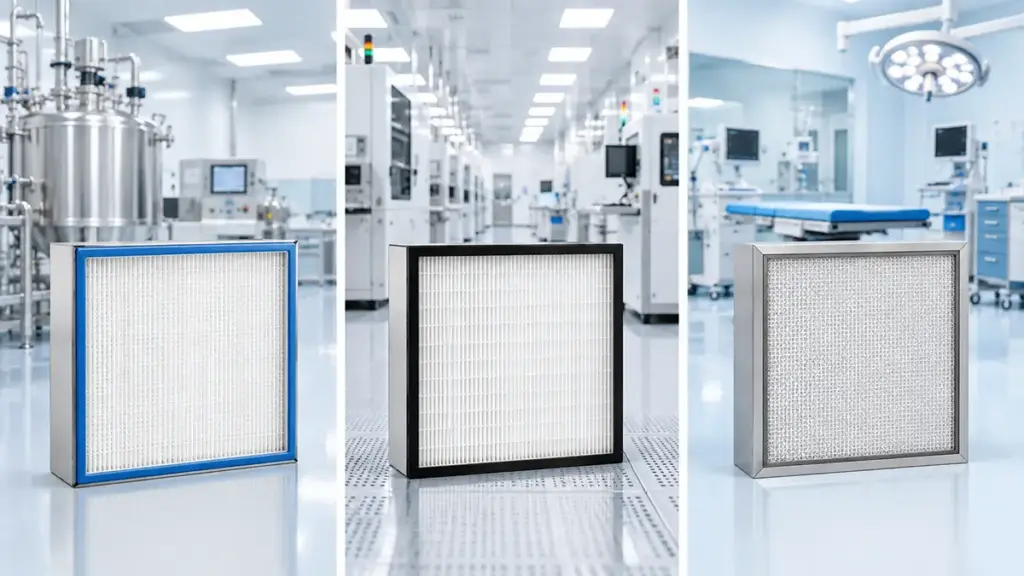
Filter selection isn’t one-size-fits-all. The right choice — ULPA, H14, or H13 HEPA — directly maps to your industry’s specific ISO class requirements and contamination risks.
Semiconductors and Microelectronics
This industry’s need for extremely low particle counts pushes filtration requirements to the highest level, typically targeting ISO Class 3 to 5. For critical processes like photolithography, ULPA filters (U15 and higher) are the standard, providing protection for sensitive wafers and electronic components. In less critical support areas, H13 or H14 HEPA filters balance performance with cost.
Pharmaceutical and Aseptic Processing
In pharmaceutical manufacturing, filter selection is dictated by cGMP regulations designed to ensure sterility. For Grade A/B environments, H14 HEPA filters are the industry workhorse, especially for terminal filtration in unidirectional airflow systems over sterile filling lines. ULPA filters are often specified for contained systems like isolators and RABS where an even higher degree of protection is required.
Biotechnology and Life Sciences
Cleanrooms for cell and gene therapy, tissue engineering, and sensitive biological research typically use H13 or H14 HEPA filters to create ISO Class 5 to 7 environments for aseptic handling. The final filter choice is a balance between achieving robust contamination control and managing operational costs, based on a risk assessment of the specific biological process.
Medical Devices and Healthcare
For medical device assembly and packaging in ISO Class 7 or 8 cleanrooms, standard H13 HEPA filtration is usually sufficient. In hospitals, critical areas like operating theaters, protective isolation rooms, and compounding pharmacies commonly use H14 HEPA filters to minimize both particulate and microbial contaminants, directly protecting patient health.
General Manufacturing and Packaging
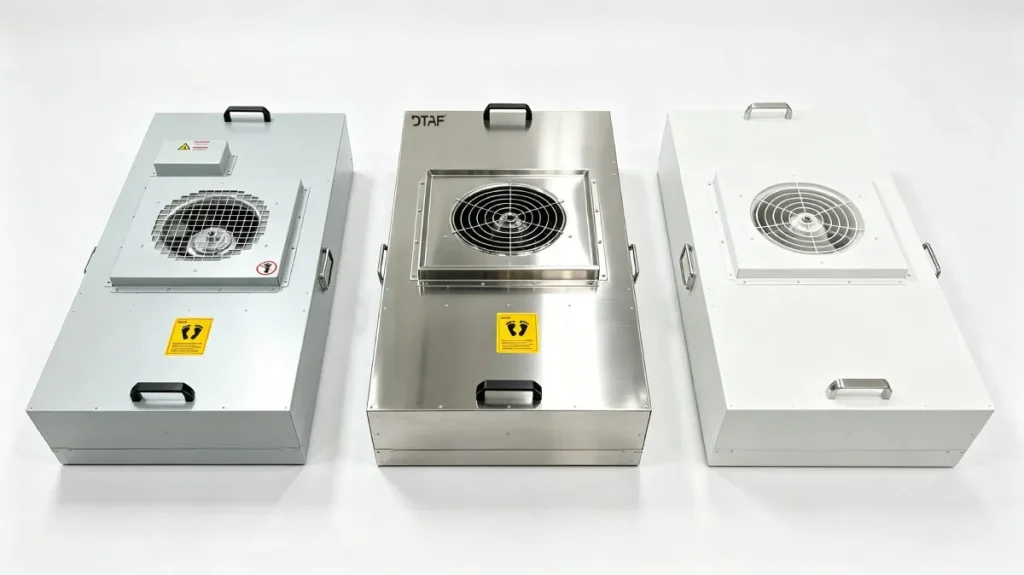
For optics, quality control labs, or high-end packaging to ISO Class 8, HEPA filters are frequently installed in the main air handling units (AHUs) rather than as terminal filters in the ceiling. This central filtration approach provides a cost-effective solution when the process does not demand the absolute purity of a terminal system.
The following checklist consolidates the key specification items you should verify when selecting cleanroom HEPA and ULPA filters:
| Specification Item | Key Requirements & Considerations |
|---|---|
| Filter Class and Room Application |
|
| Airflow and Pressure Drop |
|
| Mechanical Construction and Sealing |
|
| Leak Testing and Validation |
|
| Certification and Documentation |
|
Frequently Asked Questions
Which HEPA grade is commonly used in cleanrooms?
The most common HEPA grades are H13 and H14. H13 (99.95% efficiency) is standard for ISO 7 and ISO 8 cleanrooms. H14 (99.995% efficiency) is used for more critical areas like ISO 5 or pharmaceutical Grade A/B zones that require stricter particle control.
Does an ISO Class 5 cleanroom always require an ULPA filter?
No, an ISO Class 5 cleanroom does not automatically require an ULPA filter. A well-designed system using high-quality HEPA filters, like H14, combined with unidirectional airflow is often sufficient to meet the ISO 5 particle concentration limits. ULPA is typically reserved for processes with even stricter contamination requirements.
How are cleanroom class and HEPA filter grade related?
The cleanroom class (e.g., ISO 5) defines the maximum allowable particle concentration in the air. The HEPA filter grade (e.g., H14) defines the filter’s capture efficiency. A stricter cleanroom class requires higher-performance filtration and better airflow control. Achieving ISO 5 often requires H13 or H14 filters, while less strict classes like ISO 7 or 8 may use H13.
How do air changes, face velocity, and pressure drop affect filter selection?
Air changes per hour (ACH) determine the air recirculation rate needed for particle dilution. Face velocity, the speed of air through the filter, affects efficiency and airflow patterns. Pressure drop is the resistance the filter adds, which impacts fan energy costs and indicates when a filter is loaded and needs replacement. All three must be balanced for an effective and efficient system.
What leak and integrity tests are required after installation?
After installation, HEPA filters require an in-situ integrity or leak test. This is typically done by introducing an aerosol challenge (like PAO) upstream and measuring downstream penetration with a photometer to verify that the filter media, frame, and gasket are free of leaks. It is required upon initial installation and at periodic intervals, such as annually.
A filter built to a verified standard is the only way to safeguard your operation. It provides documented proof of performance, protecting your process against contamination events and failed regulatory audits.
Verify the performance for your specific application by requesting our full specification catalog. Contact our engineering team to review your project’s validation requirements or to discuss OEM specs.